
SC freezes UGC rules on Caste discrimination after student protests
The Supreme Court on Thursday stayed the implementation of the University Grants Commission ’s (UGC) Promotion of Equity in Higher Education Institutions Regulations, 2026, observing that the rules are prima facie “vague” and “capable of misuse” and could have a dangerous impact on society if allowed to operate in their present form.
A Bench comprising Chief Justice Surya Kant and Justice Joymalya Bagchi issued notices to the Centre and the UGC on petitions challenging the constitutional validity of the regulations. The court directed that the 2026 regulations shall remain in abeyance for now and that the earlier UGC Regulations of 2012 will continue to operate.
“Prima facie, we say that the language of the regulation is vague. Experts need to look into it so that it is not exploited,” the Bench observed orally during the hearing, adding that judicial intervention was necessary to prevent social division and misuse of the framework.
The regulations, notified on January 13, mandate all higher education institutions to constitute “equity committees” to address complaints of discrimination and promote equity on campuses. These committees are required to include representatives from the Scheduled Castes (SC), Scheduled Tribes (ST), Other Backward Classes (OBC), persons with disabilities and women.
The new framework replaces the UGC (Promotion of Equity in Higher Educational Institutions) Regulations, 2012, which were largely advisory in nature and did not provide for mandatory enforcement mechanisms.
Petitioners, including Mritunjay Tiwari , advocate Vineet Jindal and Rahul Dewan , have challenged the regulations on the ground that they adopt a “non-inclusionary” definition of caste-based discrimination. They argued that the rules define discrimination strictly as acts committed against SC, ST and OBC communities, thereby excluding students and faculty belonging to the general or non-reserved categories from institutional protection and grievance redressal, even if they face harassment or bias based on caste identity.
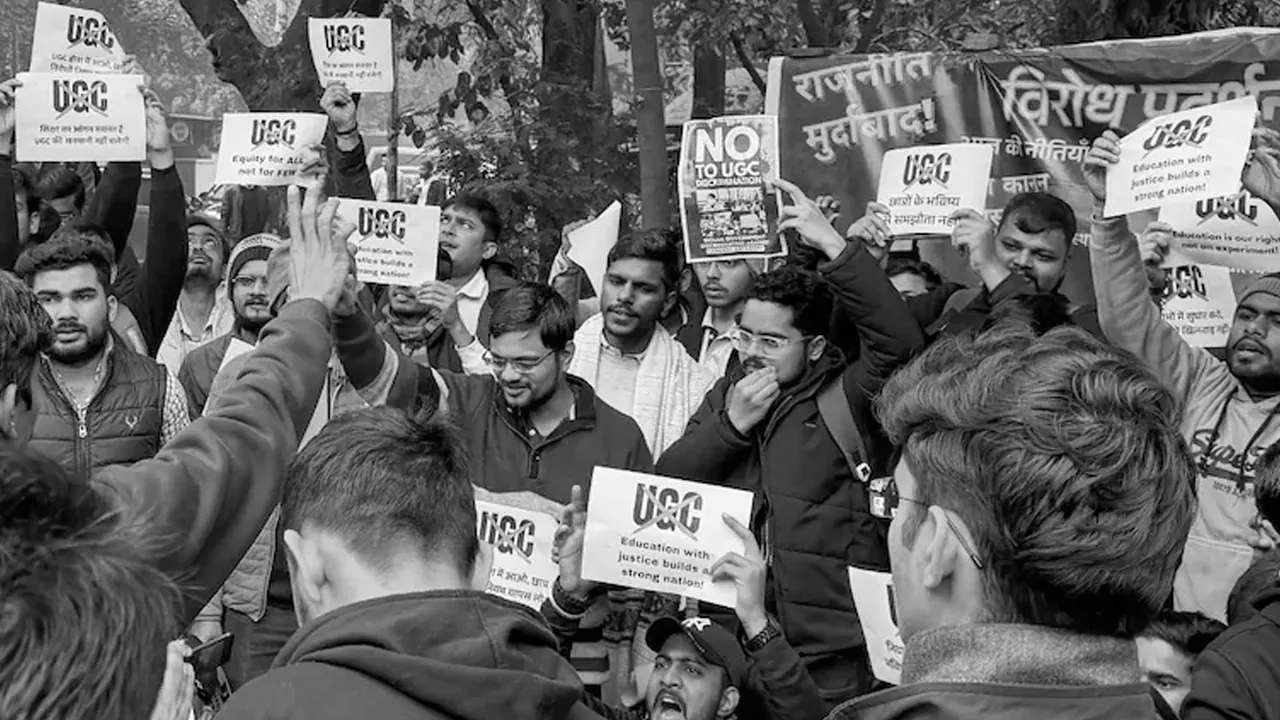
The regulations had triggered protests at several places across the country, with student groups particularly from the general category demanding their immediate rollback. Protesters contended that while the objective of preventing caste-based discrimination is necessary, the present structure is flawed and could lead to selective application and misuse.
While issuing notice returnable on March 19 , the Bench suggested that the regulations should be revisited by a committee comprising eminent jurists to reassess their language and scope. The Solicitor General accepted notice on behalf of the Centre and the UGC.
The Supreme Court is now set to examine the rationale behind framing the regulations in their present form and whether they align with constitutional guarantees of equality and fairness. The outcome of the case is expected to have significant implications for how discrimination complaints are addressed on university and college campuses across the country.