
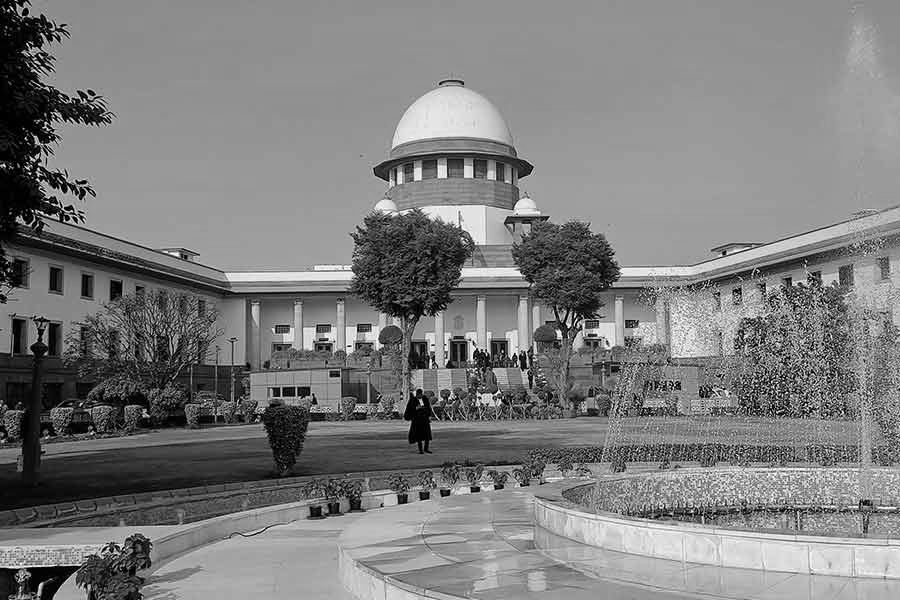
SC flags threats to BLOs, seeks detailed report from EC on state cooperation in SIR 2.0
The Supreme Court on Tuesday voiced serious concern over alleged threats to booth-level officers (BLOs) and other field personnel engaged in the Special Intensive Revision (SIR 2.0) of electoral rolls, cautioning that failure to address the situation could “cause anarchy.” The Court also sought detailed responses from the Election Commission (EC), the Centre, and the West Bengal government regarding the safety of officials and the level of cooperation being extended by states during the ongoing voter list revision.
A bench of Chief Justice of India Surya Kant and Justice Joymalya Bagchi noted that the SIR 2.0 exercise was launched to rectify large-scale discrepancies in electoral rolls, update outdated entries through house-to-house verification, include missing eligible voters, and reduce the voter load per polling station from 1,500 to 1,200. These objectives, the bench said, required uninterrupted cooperation from state authorities in providing field support and police protection to BLOs.
Senior advocate Rakesh Dwivedi
, appearing for the EC, submitted that the Commission had written a strong letter to the West Bengal government after receiving reports of BLOs being threatened, obstructed during field visits, and the state election office being gheraoed. He argued that state governments were obligated to extend protection during the SIR process and warned that if cooperation remained inadequate, the EC would be forced to requisition local police under deputation, and eventually central forces.
However, the bench emphasised that it would act strictly on the basis of verifiable evidence. Justice Bagchi pointed out that the petitioners had cited only a single FIR relating to obstruction of BLOs, while other allegations were historical or based on media reports. “Apart from a single FIR, nothing is there. The rest are presumptive references,” the judge said, questioning whether the situation could be deemed unique to West Bengal without broader proof of obstruction.
Senior advocate V Giri, appearing for petitioner Sanatani Sangsad,
argued that there had been a spate of violence against BLOs in West Bengal, necessitating central force deployment. He said past election cycles had also seen similar reports of intimidation across several states, including Kerala, Uttar Pradesh and parts of the Northeast, indicating a recurring pattern of pressure on field officials. The EC has previously issued advisories urging states to safeguard BLOs during intensive revision periods.
The bench told Dwivedi that the EC must document and present specific instances of non-cooperation from all states. “Bring to our notice instances of hindrance to the functioning of BLOs and we will deal with it. If BLOs are getting threatened, that is a serious issue,” CJI Kant said. The Court underscored that while it was prepared to intervene, it would not issue broad or state-specific directions without sufficient evidence.
Legal experts noted that the Supreme Court’s close monitoring is likely to improve on-ground safety conditions for officials, as states typically respond more promptly when judicial scrutiny increases. Enhanced reporting by the EC and clearer accountability frameworks are expected to strengthen protection for BLOs during the SIR 2.0 exercise.
Concluding the hearing, the Court issued notices to the EC, the Union government and the West Bengal government, seeking detailed explanations regarding threats faced by BLOs, the extent of state cooperation, and the measures being taken to ensure a glitch-free SIR process. The matter will be taken up once the responses are filed.