
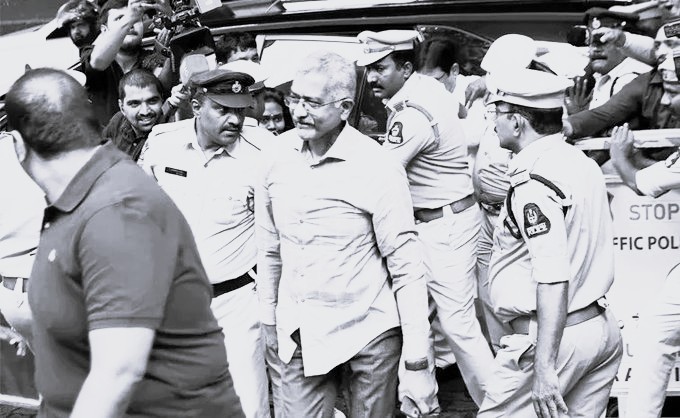
SC directs Prabhakar Rao to surrender in Telangana phone-tapping case
The Supreme Court on Thursday directed former Telangana Special Intelligence Bureau (SIB) chief T. Prabhakar Rao - an accused in the state’s phone-tapping case - to surrender before the police by 11 a.m. on Friday. A bench of Justices B.V. Nagarathna and R. Mahadevan issued the order, stating that his surrender would help investigators carry the probe forward more effectively.
According to the court’s instructions, Prabhakar Rao must appear before the investigating officer at the Jubilee Hills Police Station at 11 a.m. Custodial procedures must follow the law, and he will be allowed to receive food and medication brought from his home.
During the hearing, senior advocate Siddharth Luthra, representing the Telangana government, informed the court that the iCloud accounts Prabhakar claimed to have opened contained no data, and the associated email account was also inaccessible. The state government further alleged that Prabhakar had not shared access to his iCloud accounts despite earlier court directions.
In May, the Supreme Court had granted Prabhakar Rao temporary protection from arrest, instructing him to return to India within three days of obtaining his passport and to file an undertaking accordingly. Prabhakar approached the Supreme Court challenging the Telangana High Court’s refusal to grant him anticipatory bail.
Earlier, on May 22, a Hyderabad court had issued a proclamation order requiring him to appear by June 20, warning that he could be declared a proclaimed offender - a status that could also lead to attachment of his properties.
The phone-tapping case dates back to March 2024, when Hyderabad police arrested four officials, including a suspended DSP from the SIB. The arrests were linked to allegations that, during the previous BRS government’s tenure, SIB resources were misused to illegally tap phone calls, gather personal information without authorization, and destroy evidence connected to these activities.
Police claim that the accused officers engaged in unauthorized surveillance for political purposes and attempted to erase electronic intelligence data to cover their tracks.