
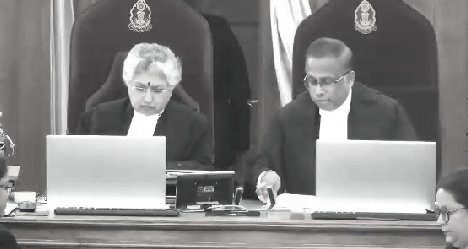
SC delivers split verdict on section 17A of prevention of corruption act
The Supreme Court on Tuesday delivered a split verdict on the constitutional validity of Section 17A of the Prevention of Corruption Act, 1988, a 2018 amendment that mandates prior sanction before initiating a probe against government servants in corruption cases.
While Justice BV Nagarathna held the provision to be unconstitutional , stating that it blocks investigations and protects corrupt officials , Justice KV Viswanathan upheld its constitutionality, emphasizing the need to shield honest officers from frivolous or politically motivated probes . Justice Nagarathna observed, “Requirement of prior sanction is contrary to the Prevention of Corruption Act, forecloses inquiry and protects corrupt.” Justice Viswanathan countered, “Striking down Section 17A will be akin to throwing the baby out with the bath water; the cure will be worse than the disease.”
The case arose from a Public Interest Litigation (PIL) filed by the NGO Centre for Public Interest Litigation (CPIL), challenging the 2018 amendment. CPIL argued that the provision contradicts the purpose of anti-corruption law, delays investigations, and effectively shields corrupt officers, undermining enforcement. Under the amendment, no inquiry or investigation can be conducted against a public servant for recommendations made in the discharge of official duties without prior approval from the competent authority. Central government officers require sanction from the central government, while state government officers require approval from the state government. Investigating agencies such as the CBI, state police, or Lokayuktas must wait for this written sanction before initiating a formal probe. Critics argue this requirement creates administrative bottlenecks, delaying or blocking investigations.
If upheld, Section 17A could limit investigations against senior bureaucrats, affecting high-profile corruption cases at both central and state levels. Agencies may face delays due to sanction refusals or procedural hurdles, potentially reducing the effectiveness of anti-corruption enforcement. The SC has previously ruled on prior sanction requirements. In K. Veeraswami v. Union of India (1991), the court held that sanction is mandatory for prosecuting high-ranking officials under the PCA, protecting them from harassment. In B.P. Sharma v. State of U.P. (2012), the court emphasized that the sanction process should not become a shield for corrupt officials. Section 17A expanded these requirements, prompting the current review to assess whether it tilts the balance excessively in favour of protection at the cost of accountability.
Given the split verdict, the matter will now be placed before Chief Justice of India Surya Kant , who will constitute a larger bench of three or more judges to deliver a final ruling . A hearing is expected in the coming weeks or months, after which the constitutional validity of Section 17A will be settled. In essence, the court is weighing the balance between preventing corruption and protecting honest public servants , a decision that could have far-reaching implications for investigations conducted by the CBI, Lokayuktas, and other anti-corruption agencies .