
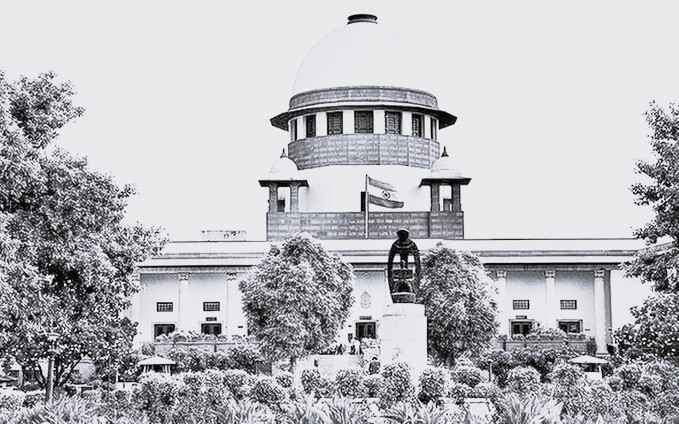
SC blinks for Centre: No timelines for Governors, strict scrutiny for Speakers
In a ruling that reshapes Centre–State dynamics, the Supreme Court has held that Governors and the President face no constitutionally mandated timelines when acting on Bills passed by State Legislatures. Delivered days before Chief Justice B.R. Gavai’s retirement, the judgment is being interpreted as a final institutional concession to the Union government at a time when Opposition-ruled States are struggling with stalled legislation.
Responding to a rare Presidential Reference under Article 143(1), the Court clarified that Governors have only three options when presented with a Bill grant assent, return it (if not a Money Bill), or reserve it for the President. Indefinite silence, it stressed, is not a permissible option. Once a legislature re-passes a Bill, the Governor must either assent or reserve it, with no scope to return it again. The ruling directly impacts States such as Tamil Nadu, Kerala, Punjab and Telangana, where Raj Bhavans have held Bills for long periods.
Yet the Court declined to introduce any enforceable deadlines for Governors. While acknowledging that delays undermine constitutional expectations, it held that the judiciary cannot insert timelines where the Constitution is silent. In practice, this allows Bills reserved for the President to remain pending indefinitely, especially since Presidential assent under Article 201 is immune from judicial review. The Court also rejected deemed assent, ensuring that silence does not automatically translate into approval.
This hands-off approach stands in stark contrast to the Court’s treatment of Assembly Speakers under the Tenth Schedule. Speakers, especially in Opposition-ruled States, have regularly been directed to act within “reasonable timeframes” on disqualification petitions. In cases such as Mukul Roy in West Bengal and the Telangana merger of ten Congress MLAs into the TRS, the Court criticised Speaker delays as distortions of democratic mandates and warned that persistent inaction could justify transferring anti-defection powers to tribunals.
The Constitution, however, does not prescribe timelines for Speakers either. Yet the Court’s willingness to compel rapid action from Speakers, while permitting Governors expansive discretion, has produced an uneven constitutional landscape. Practically, this asymmetry benefits the Centre: Raj Bhavans can freeze legislation in Opposition States, while Speakers in those same States are expected to move swiftly under judicial scrutiny.
The Tamil Nadu confrontation, where Bills remained pending for months, triggered the present reference. But the ruling, framed as a clarification, ultimately entrenches the Centre’s leverage. With no timelines for Governors and strict expectations for Speakers, the Court has created a system where one set of delays is tolerated while the other is treated as a constitutional violation raising concerns about selective restraint at a moment of heightened federal tensions.