
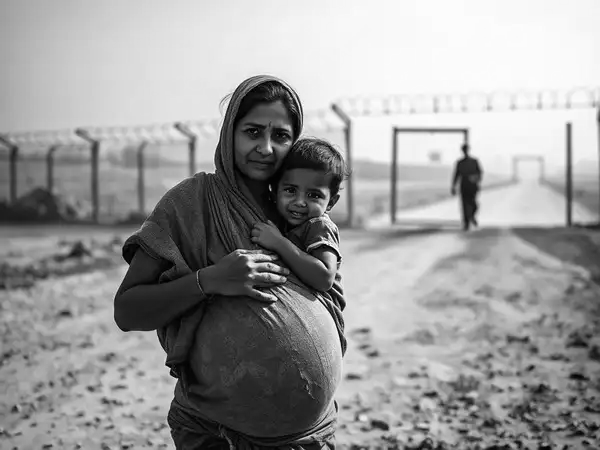
SC allows Pregnant Woman, Child entry into India on humanitarian grounds
The Supreme Court on Wednesday allowed a pregnant woman, Sunali Khatun, and her eight-year-old child to enter India from Bangladesh on “humanitarian grounds,” months after they were deported.
A bench comprising Chief Justice Surya Kant and Justice Joymalya Bagchi directed the West Bengal government to ensure the minor’s welfare and asked the chief medical officer of Birbhum district to provide full medical assistance to Sunali Khatun. Solicitor General Tushar Mehta, representing the Centre, informed the court that the competent authority had allowed their entry purely on humanitarian grounds, with both to be kept under surveillance. The bench noted that they would eventually be brought back to Delhi, from where they were initially deported.
Senior advocates Kapil Sibal and Sanjay Hegde highlighted that other family members, including Sunali’s husband, remain in Bangladesh. They suggested that legal steps could be taken to bring them back to India, while Mehta said the government would contest any claim of Indian citizenship, maintaining that the family are Bangladeshi nationals. The entry of Sunali and her child is therefore being permitted solely on humanitarian grounds, not as recognition of Indian citizenship.
Sunali’s father alleged that the family, who had lived and worked in Delhi’s Rohini area as daily wage earners for over 20 years, were picked up by police on June 18 on suspicion of being Bangladeshi nationals and were subsequently pushed across the border on June 27.
The case underscores the judiciary’s willingness to balance humanitarian concerns with national security and could set a precedent for future decisions on deportation and temporary humanitarian entry, particularly for vulnerable individuals such as pregnant women and children. It may also guide authorities in establishing protocols for care and medical assistance for those allowed entry under humanitarian considerations.