
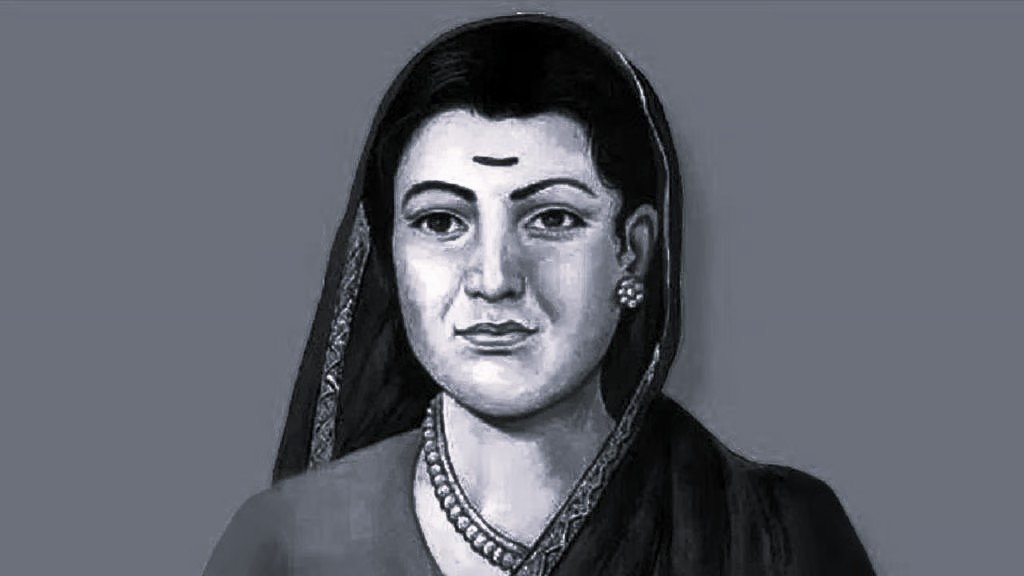
Savitribai Phule: A Social Revolution Through the Weapon of Education
It was an era dominated by darkness.. a time when society believed education was the exclusive property of the upper castes and the kitchen was the only destiny for women. On such soil, Savitribai emerged as a North Star, breaking the shackles of ignorance. As she walked to school carrying the fragrance of knowledge, traditionalists pelted her with stones and dung. While these attacks bruised her body, they could not shake her resolve. Though drenched in the weight of humiliation, her sharp eyes were filled with the light of a bright future for millions of downtrodden children. The struggle of this "Mother of Literacy," who wiped tears with one hand and taught alphabets with the other, was not just one woman's persistence; it was a great revolution aimed at ending generations of slavery.
In the history of India, Savitribai Phule's name is written in letters of gold for her struggle for women's education and equality. She was not just a teacher but a ray of light for millions of women and marginalized communities languishing in ignorance. Let us explore the highlights of her life.
Early Life and Marriage
Savitribai was born on January 3, 1831 , in a small village called Naigaon in the Satara district of Maharashtra. Her parents were Lakshmibai and Khandoji Nevase Patil. According to the social norms of that time, she had no opportunity to study. At the tender age of 9, she was married to 13 year old Jyotirao Phule .
When Savitribai entered her in-laws' house, she was illiterate. However, her husband Jyotirao recognized her thirst for learning. Jyotirao was himself a man passionate about doing something for the marginalized. He believed, "If a man is educated, only one individual gains knowledge, but if a woman is educated, an entire family becomes enlightened." Thus, he personally began teaching Savitribai the alphabet.
Savitribai’s journey to education was not easy. The upper castes of society vehemently opposed her studies. Nevertheless, Jyotirao ensured she received teacher training at Miss Farrar’s school in Ahmednagar and the Normal School in Pune. Upon completing her training, she created history as India's first female headmistress.
Bhidewada: The Launch of the First School
On January 1, 1848 , Jyotirao and Savitribai together started the country’s first school for girls at Bhidewada in Pune. At that time, girls going to school was considered a sin and against religious norms. On her way to school, Savitribai faced immense humiliation. Reactionaries threw stones, dung, and mud at her. Undeterred, she carried an extra saree in her bag. After reaching school, she would change out of her soiled clothes and teach the children. She firmly stood her ground, saying, "The stones you throw for the education of my sisters are like flowers to me."
Social Reforms - Satyashodhak Samaj
Beyond education, Savitribai fought against numerous social evils. In those days, widows were forced to shave their heads. To protest this inhuman practice, she organized a strike of barbers. In 1863, she started a care center for orphaned children and pregnant women who had been exploited. She adopted a boy born there, named Yashwant, and raised him as her own.
She played a key role in the Satyashodhak Samaj , founded in 1873, to fight for the rights of the underprivileged. She challenged caste discrimination by conducting weddings without priests. In 1852, she established the Mahila Seva Mandal to create awareness among women and provide a platform for discussion regardless of caste or religion.
The Weapon of Words: Revolutionary Poetry
Savitribai Phule did not limit herself to the classroom. She used her pen to roar against social injustice. Her poems served as mantras of self-confidence for the oppressed. Her work 'Kavya Phule' , published in 1854, stands as a testament to her talent. Her poem "Go, Get Education," which urges people to free themselves from ignorance, remains an inspiration today. Her message was clear:
"Do not sit idle, go and get an education…
Achieve self-reliance, work hard…
Without knowledge, you lose everything and become like animals…
Therefore, without delay, become conscious."
She emphasized that education is not just for employment but a weapon to liberate humans from the bonds of slavery.
The Plague and Martyrdom
In 1897, a severe plague epidemic broke out in Pune. To serve those affected, Savitribai and her son Yashwant opened a clinic. Even at the age of 66, she carried patients on her back to the hospital. In the process, she contracted the disease herself. This legendary woman breathed her last on March 10, 1897.
Legacy and Honors
The Government of India has officially declared January 3, her birth anniversary, as "Women’s Teachers’ Day."
Postal Stamp:
A special postage stamp was released in her honor on March 10, 1998.
University Renaming:
In 2015, the University of Pune was renamed "Savitribai Phule Pune University."
International Recognition:
On her 186th birth anniversary in 2017, Google honored her with a dedicated Google Doodle .
Savitribai Phule is not just a person; she is a magnificent idea. She is called the "Mother of Modern Indian Education." The freedom and empowerment women enjoy today are the fruits of the sacrifices she made back then. She did not just teach alphabets, she taught women the meaning of 'Self-Respect.'