
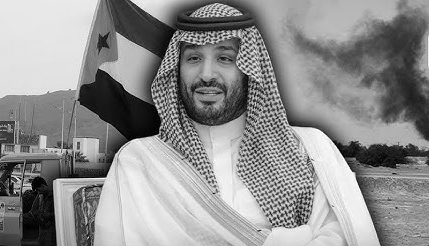
Saudis launch airstrikes on southern Yemen as separatist delegation disappears in Riyadh
Yemen’s decade-long conflict has taken a dangerous new turn as tensions between Saudi-backed forces and southern separatists escalate. The country remains divided: the north is controlled by Iran-aligned Houthis, while the south hosts the internationally recognized government, supported by Saudi Arabia. Complicating matters, the UAE-backed Southern Transitional Council (STC) has sought an independent southern state, challenging both Yemen’s unity and Saudi interests.
The latest crisis erupted when a 50-member STC delegation traveled to Riyadh for talks aimed at de-escalating the growing confrontation. One member posted a brief message on X before the delegation went silent, their phones switched off and their whereabouts unknown . The Saudi-backed Presidential Leadership Council (PLC), which leads the internationally recognized government, accused the STC leader Aidarous al-Zubaidi of refusing to attend the talks and subsequently expelled him from the council, charging him with treason. Saudi officials claimed intelligence showed al-Zubaidi mobilizing armed forces, moving weapons, and distributing ammunition . The STC, however, insists he remains in Aden, overseeing security operations.
“This is unjustified and unfortunate,” said Amr al-Bidh, an STC representative. “We went to Riyadh to talk. What we received was a bombing.” Overnight, Saudi airstrikes targeted STC positions in al-Dhale governorate, al-Zubaidi’s home region, hitting camps and military vehicles. Witnesses reported flames and explosions, with at least two civilians killed and 14 injured.
The Southern Transitional Council has long demanded the restoration of southern Yemen as an independent state, claiming marginalization since unification in 1990 . Their December 2025 offensive seized control of resource-rich southern governorates, including Aden, where members of the internationally recognized government were forced to flee to Riyadh. The STC has since announced a constitution for the proposed southern state, further heightening tensions.
Saudi Arabia views the STC’s ambitions as a direct threat to Yemen’s unity and its own national security. The kingdom shares a long, porous border with Yemen and fears instability spilling across. The crisis has exposed a deep rift between two former allies: Saudi Arabia and the UAE, who previously fought together against Houthi rebels but now support rival factions in the south.
The PLC, headed by Rashad al-Alimi, accused al-Zubaidi of “damaging the republic’s military, political, and economic standing” and of forming an armed gang responsible for the deaths of officers and soldiers. Maj. Gen. Turki al-Malki, a spokesperson for the Saudi-led coalition, said the STC leader had fled to an unknown location. Al-Bidh countered that al-Zubaidi remained in Aden because “an environment conducive to dialogue does not exist.”
The renewed airstrikes mark a significant escalation. More than 15 attacks struck al-Dhale overnight, while Saudi-backed forces advanced on Mukalla, retaking Hadramout’s capital after weeks of bombardment. The UAE reportedly withdrew its forces following Saudi pressure and a stern ultimatum, but shipments of weapons from Abu Dhabi had already reached STC positions.
Yemen’s war, now over 10 years long, has killed more than 1,50,000 people, including fighters and civilians, and has created one of the world’s worst humanitarian crises. The STC claims roughly 80 of its affiliates have been killed since its December operations began, mostly in Saudi airstrikes. As Saudi-UAE tensions play out on Yemeni soil, the risk of a wider conflict between rival southern factions grows, further complicating the country’s already fragmented political landscape.
The STC has called on the international community to facilitate dialogue between northern and southern forces, but with each side accusing the other of aggression, prospects for immediate peace appear dim. Yemen stands at a precarious crossroads, where regional rivalries and internal divisions threaten to plunge the south into a new chapter of violence.