
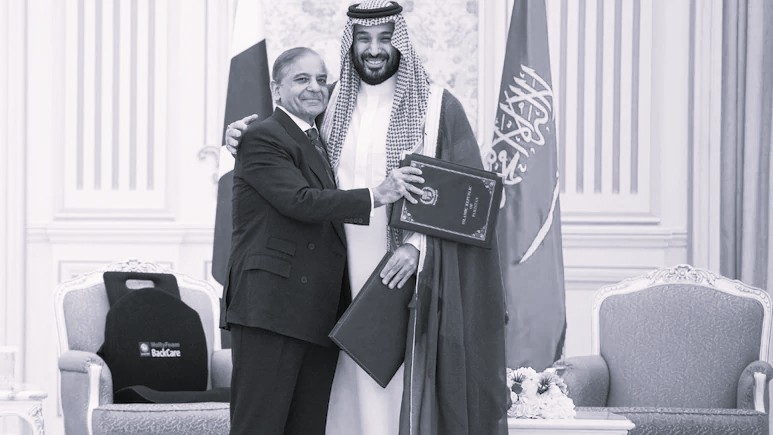
Saudi-Pakistan Defence Pact: A nuclear shadow over the Middle East
This week’s “Strategic Mutual Defence Agreement” between Saudi Arabia and Pakistan marks a dramatic shift in the Middle East’s security landscape. Riyadh, is signaling that it now has, at least implicitly, a nuclear-armed ally at its side. While Islamabad insists its nuclear arsenal is India-specific, Saudi officials describe the pact as “comprehensive,” covering “all military means.”
Pakistani Defence Minister Khawaja Asif said that the deal does not involve nuclear weapons, yet hinted it could be extended to other Gulf states. The agreement states that an attack on either country would be treated as an attack on both.
Why now?
Gulf Arab states are increasingly anxious about Israel’s regional posture, especially after its unprecedented strikes on Qatar. Riyadh also remains wary of Iran’s nuclear ambitions, vowing to match Tehran if it crosses the nuclear threshold. Analysts say Saudi Arabia’s move reflects diminishing faith in U.S. security guarantees, pushing it to build an independent deterrent.
Hasan Alhasan of the International Institute for Strategic Studies noted: “From the Saudi perspective, it is intended to plug the deterrence deficit vis-à-vis nuclear-armed Israel.”
Pakistan’s strategic leap
For Pakistan, this is more than just another security pact,it is a power projection into the Middle East. Long reliant on Saudi loans and investments, Islamabad now leverages its 600,000-strong army and nuclear status for strategic and economic gain.
Though Pakistan’s nuclear doctrine is India-centric, experts acknowledge its longest-range missiles could, in theory, reach Israel. That possibility will not be lost on Jerusalem.
Mushahid Hussain, former chair of Pakistan’s Senate defence committee, put it bluntly: “Pakistan has the military capability and, in turn, what we get is economic strengthening. Pakistan is the new strategic option for these Gulf nations.”
Regional ripples
India reacted cautiously, saying it would “study the implications” of the pact for its own national security. Iran, too, will watch nervously. The deal could tilt the Gulf’s fragile balance, particularly if Saudi funding bolsters Pakistan’s defence capabilities against India.
Ultimately, this pact entwines South Asia’s nuclear power with the Arab world’s richest monarchy, an alignment with implications far beyond the Gulf.