
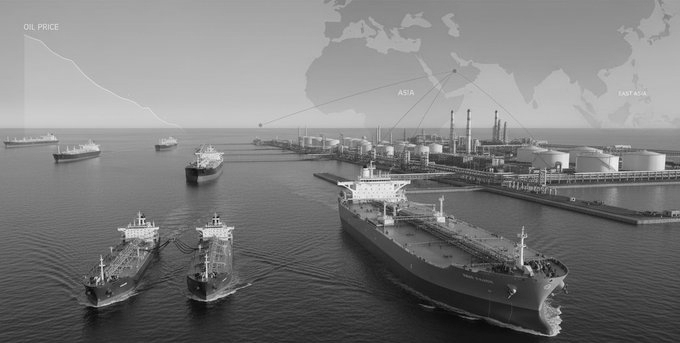
Saudi Arabia Cuts Asia Oil Prices By $3 A Barrel To Six-Year Low
Saudi Arabia has cut the November price of its flagship Arab Light crude for Asian buyers to its biggest discount since 2020, even as geopolitical tensions keep global oil prices above $100 a barrel. The move comes as Middle Eastern oil flows recover but shipping costs and security risks remain elevated.
Saudi Aramco set the November official selling price (OSP) of Arab Light for Asia at $5 a barrel below the Oman-Dubai benchmark, a $3 reduction from October and the widest discount since June 2020. Aramco also cut prices for Arab Medium and Arab Heavy grades by $5 a barrel.
The decision was unexpected. Analysts had anticipated a $3 increase, given higher regional crude benchmarks. Saudi Arabia, however, raised November prices for northwest Europe and the Mediterranean by $3 a barrel, while leaving US prices unchanged, highlighting the kingdom's focus on maintaining its position in the crucial Asian market.
The price cuts come against a complicated backdrop. Middle Eastern crude exports have recently climbed to their highest levels since the start of the Iran war, with shipments reaching about 98 per cent of pre-war levels. But transporting crude remains significantly more expensive, with very large crude carrier rates from the Gulf to China reportedly reaching around $1.2 million a day, compared with about $80,000 a year ago.
Saudi Arabia has also been using alternative shipping arrangements, including ship-to-ship transfers, while operations at the Yanbu port have resumed following earlier disruptions. Meanwhile, Yemen's Iran-backed Houthis claimed attacks on Saudi Aramco facilities, briefly pushing Brent above $103 a barrel.
For India, the lower Saudi OSP could offer some relief to refiners. West Asian crude regained ground in India's import basket in September, with regional imports rising 74 per cent month-on-month to 2.10 million barrels per day. Saudi Arabia was among India's leading West Asian suppliers.
However, the benefit will depend on freight costs, insurance, global crude prices and the rupee-dollar exchange rate. A cheaper Saudi barrel does not automatically translate into an equivalent reduction in India's import bill or domestic fuel costs.
There is also a broader supply concern. OPEC+ agreed on October 4 to keep November production targets unchanged, while the G7 announced plans to release 100 million barrels of oil and fuel from emergency reserves to ease supply pressures.
For India, therefore, Saudi Arabia's discount is positive but not a complete shield against expensive crude. If Middle Eastern supply continues recovering, the lower OSP could help Indian refiners. But renewed attacks or disruption around key shipping routes could quickly push global prices higher and erase the benefit.