
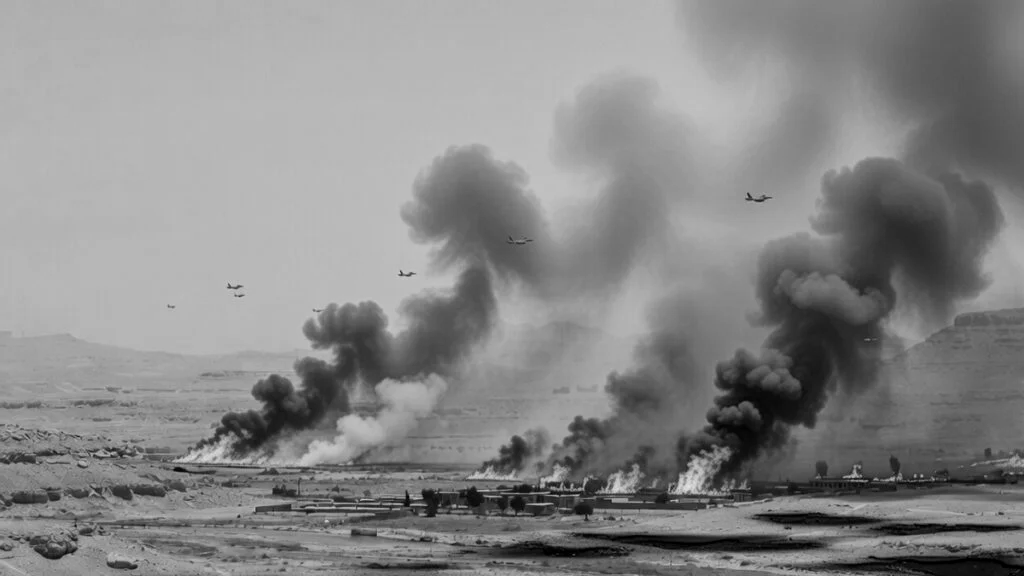
Saudi airstrikes target Southern separatists as Yemen tensions escalate
Southern separatists in Yemen said Saudi warplanes carried out fresh airstrikes on Saturday targeting military positions in the port city of Mukalla and surrounding areas, as Saudi-backed forces moved to reassert control over the strategic city. There was no immediate comment from Saudi Arabia.
The strikes reportedly hit the Barshid Brigade camp west of Mukalla in Hadramout province, according to the Aden Independent Channel (AIC), a satellite broadcaster aligned with the Southern Transitional Council (STC), a UAE-backed separatist movement seeking an independent South Yemen. Hadramout is one of two eastern governorates seized last month by STC forces.
An STC official, speaking on condition of anonymity, told The Associated Press that more than 100 Saudi airstrikes struck multiple locations across Hadramout over the past 24 hours, causing deaths and injuries. The claims could not be independently verified.
Mukalla residents Ahmed al-Faradi and Salem Maadan said the city is now under the control of the Hadramout Tribes Confederacy and the Saudi-backed National Shield forces, following clashes that pushed STC fighters out of key areas. Col. Ahmed Baqatyan , a commander in the Hadramout Tribes Confederacy, said the Barshid Brigade camp was targeted because it lies on the main route to the southern port city of Aden. Clearing the camp, he said, was aimed at preventing STC forces from regrouping and launching a counteroffensive.
The Saudi strikes came a day after the STC announced a draft constitution for an independent southern state, escalating tensions within the anti-Houthi coalition. Last month, STC forces moved into Hadramout and Mahra, seizing control of an oil-rich region and displacing allies of the National Shield forces, a Saudi-supported group.
Yemen’s Transportation Ministry, aligned with the STC, condemned Saudi airstrikes late Friday, alleging they targeted Seiyun International Airport and put its infrastructure at risk, potentially disrupting flight operations.
Meanwhile, Saudi Arabia’s foreign ministry said it plans to host a conference in Riyadh bringing together southern Yemeni factions to “discuss just solutions to the southern cause.” The move followed a request for dialogue from Rashad al-Alimi , head of Yemen’s Presidential Leadership Council, which leads the internationally recognised government.
Signs of strain within the anti-Houthi camp have intensified. On Friday, clashes erupted between National Shield forces and southern fighters and their allies in Hadramout, killing at least eight people, according to paramedic Ahmed al-Ketheri.
Political analyst Hilal Khashan of the American University of Beirut said the latest escalation reflects long-simmering differences between Saudi Arabia and the United Arab Emirates that have emerged over Yemen’s decade-long civil war. While both countries entered the conflict as allies to counter Iran-backed Houthi rebels who continue to control much of northern Yemen Saudi Arabia has primarily focused on securing its northern border and preventing further Houthi expansion. The UAE, by contrast, has concentrated on southern Yemen, backing separatist forces and prioritising control of key ports such as Aden and strategic maritime routes along the Red Sea. Khashan said these diverging goals have repeatedly surfaced through proxy clashes, culminating in the current confrontation following the STC’s advance into eastern Yemen and its renewed push for southern independence.
“The situation spiraled when UAE-backed forces expanded into Hadramout, which borders Saudi Arabia,” Khashan said, describing it as a “red line” for Riyadh. Saudi leaders, he added, felt increasingly squeezed between the Houthis in the north and UAE-aligned separatists in the south.