
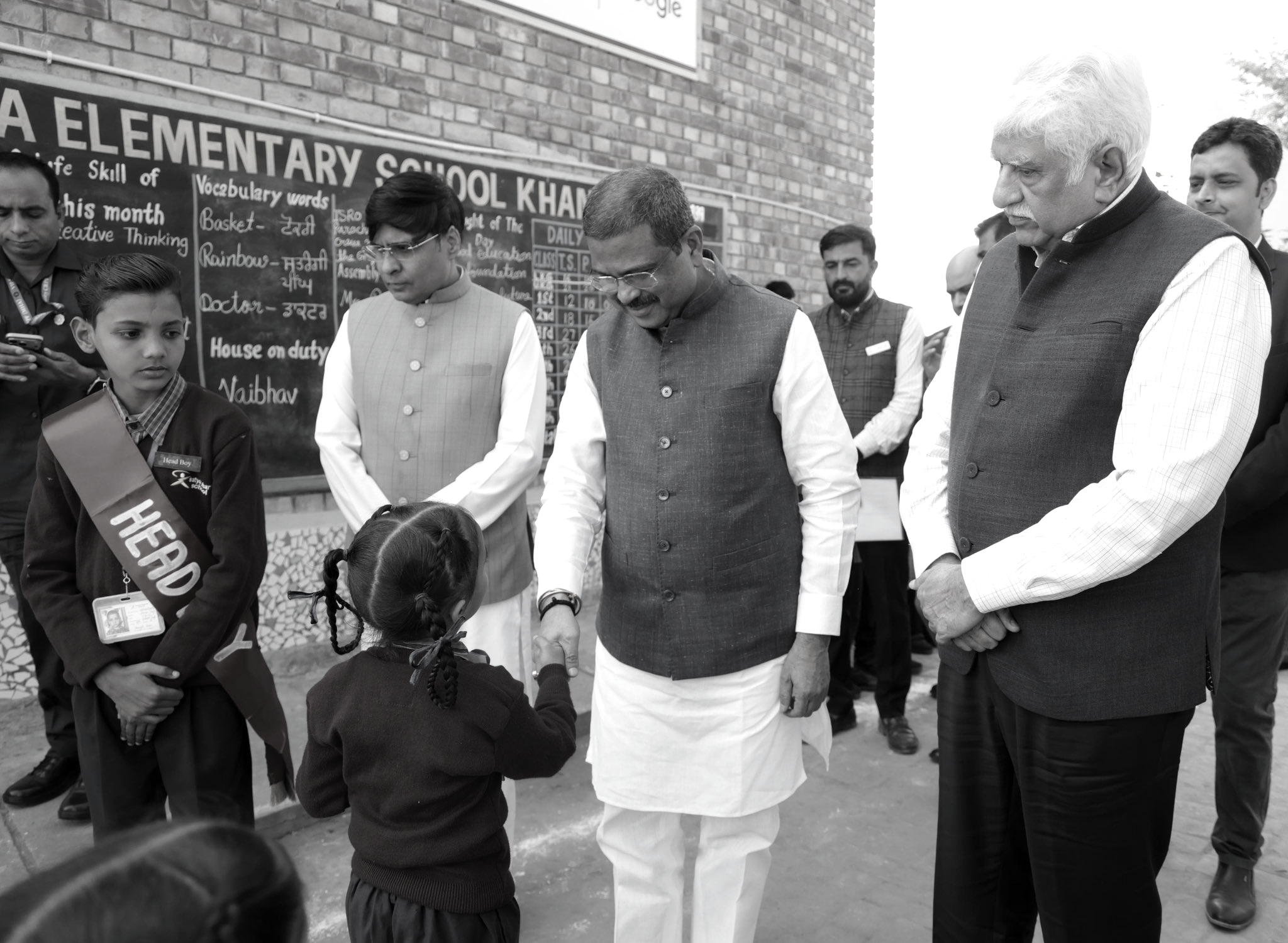
Satya Bharti schools bringing quality education to India’s rural heartlands
The Satya Bharti Elementary School in Khanpur, Ludhiana, run by the Bharti Foundation, has been recognised as a model of inclusive and quality education in rural Punjab. The school, established under the Foundation’s flagship Satya Bharti School Program, has been providing free education to children from underprivileged and rural backgrounds, helping them realise their potential through modern learning methods.
Located in rural Ludhiana, the Khanpur school currently accommodates over 250 students. It has been designed to promote creative thinking, innovation, and problem-solving skills among young learners. The school’s curriculum is aligned with the Punjab State Education Board (PSEB) and is enriched with interactive, activity-based learning practices inspired by the National Education Policy (NEP) 2020.
The initiative forms part of the Bharti Foundation’s broader mission to improve access to quality education in India’s rural areas. The Foundation, which is the philanthropic and Corporate Social Responsibility (CSR) arm of Bharti Enterprises, launched the Satya Bharti School Program in 2006 with the aim of bridging the educational gap between urban and rural communities.
Since its inception, 173 Satya Bharti Schools have been established across six states — Punjab, Haryana, Rajasthan, Uttar Pradesh, Tamil Nadu, and West Bengal. Of these, around 155 elementary schools are currently operational. More than 37,000 students are being educated under the program, supported by over 1,300 teachers, most of whom are recruited from local rural communities.
All Satya Bharti Schools offer completely free education, including uniforms, books, stationery, and in some states, mid-day meals. The learning environment is enhanced through smart classrooms, digital tools, and life skills development programs. The Foundation’s approach combines the state education board syllabus with value-based education, focusing on nurturing both academic excellence and moral development.
The program’s success is reflected not only in enrollment figures but also in its emphasis on empowering girls and marginalized communities. By providing equal access to education, the Foundation seeks to create a generation of students who are equipped to meet real-world challenges.
Beyond the Satya Bharti Schools, the Bharti Foundation operates several complementary initiatives. The Satya Bharti Quality Support Program (QSP) has been implemented in over 800 government schools across India to enhance infrastructure, train teachers, and improve learning outcomes. Another major initiative, the Satya Bharti Abhiyan, has contributed to rural sanitation by constructing over 36,000 toilets in Punjab.
Education experts have noted that the Satya Bharti model represents one of the most extensive CSR-led education networks in India. Several other Indian companies have also taken up similar initiatives under their CSR programs. The Tata Steel Foundation runs the Thousand Schools Project in Odisha and Jharkhand; the Reliance Foundation supports Education for All through scholarships and digital learning; the Infosys Foundation assists rural schools through infrastructure projects; and the Adani Foundation manages Adani Vidya Mandir schools offering free CBSE education to economically weaker students. The Wipro and Mahindra Foundations are also involved in teacher training and girl child education programs respectively.
Through these collective efforts, corporate India has increasingly played a role in strengthening the nation’s educational landscape, particularly in rural and underserved regions.
As part of this ongoing effort, the Satya Bharti Elementary School in Khanpur continues to serve as an example of how partnerships between private foundations and communities can transform rural education. The school’s success demonstrates that with consistent investment and innovative learning practices, quality education can indeed reach the grassroots.