
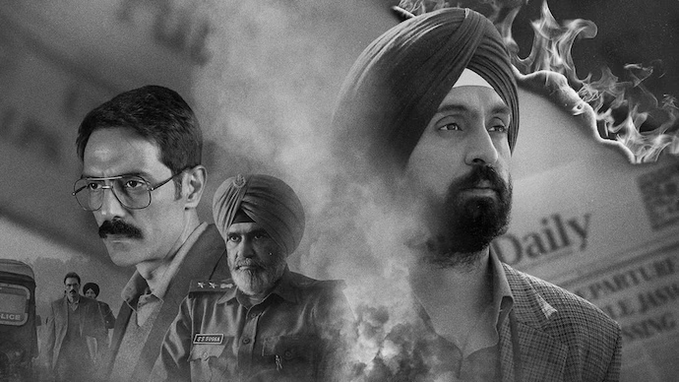
‘Satluj’ Row Escalates: Ravneet Bittu Says Punjab’s Painful Past Cannot Be Selectively Rewritten
The controversy surrounding Diljit Dosanjh-starrer ‘Satluj’ has intensified, with Union Minister Ravneet Singh Bittu accusing the film’s makers of presenting disputed claims as established history and asserting that Punjab’s painful past cannot be selectively edited to support a particular narrative.
Bittu said filmmakers cannot take shelter behind “creative freedom” while showing contested claims without adequate evidence. He challenged the producers and director Honey Trehan to present documentary proof, official records, judicial findings and authenticated data to support the film’s portrayal of historical events.
The film, earlier titled ‘Punjab ’95’ , is based on the life of human rights activist Jaswant Singh Khalra , who investigated allegations related to the cremation of unidentified bodies in Punjab between 1984 and 1994 . Khalra was abducted from outside his Amritsar home in September 1995 and was later found to have been murdered.
The movie was removed from the Indian catalogue of OTT platform ZEE5 shortly after its release on July 3 after the Ministry of Information and Broadcasting raised concerns over security issues.
Questioning the film’s claims, Bittu demanded clarification from the makers over the figure of 25,000 missing or illegally cremated bodies shown in the narrative. He asked whether the number was based on officially verified records or merely estimates and allegations.
Bittu said history should be presented with facts and evidence, adding that Punjab’s story cannot be rewritten through selective storytelling. He stressed that every innocent victim of the state’s troubled years deserved recognition, irrespective of religion, community or ideology.
The minister also questioned why the suffering of innocent civilians, including victims of terrorist violence, security personnel and families affected by the conflict, was not portrayed with similar focus in the film.
His remarks came after Sikh organisations and political groups, including the Shiromani Gurdwara Parbandhak Committee (SGPC) and the Shiromani Akali Dal (SAD) , criticised the removal of the film, saying Punjab’s history must be confronted honestly.
The controversy has now become a major political issue in Punjab, with demands for the film’s screening continuing. Meanwhile, the legal proceedings related to Khalra’s murder saw convictions of police officials, with the Supreme Court upholding the verdicts in 2011.