
Sathankulam verdict triggers political fallout, renews focus on police accountability
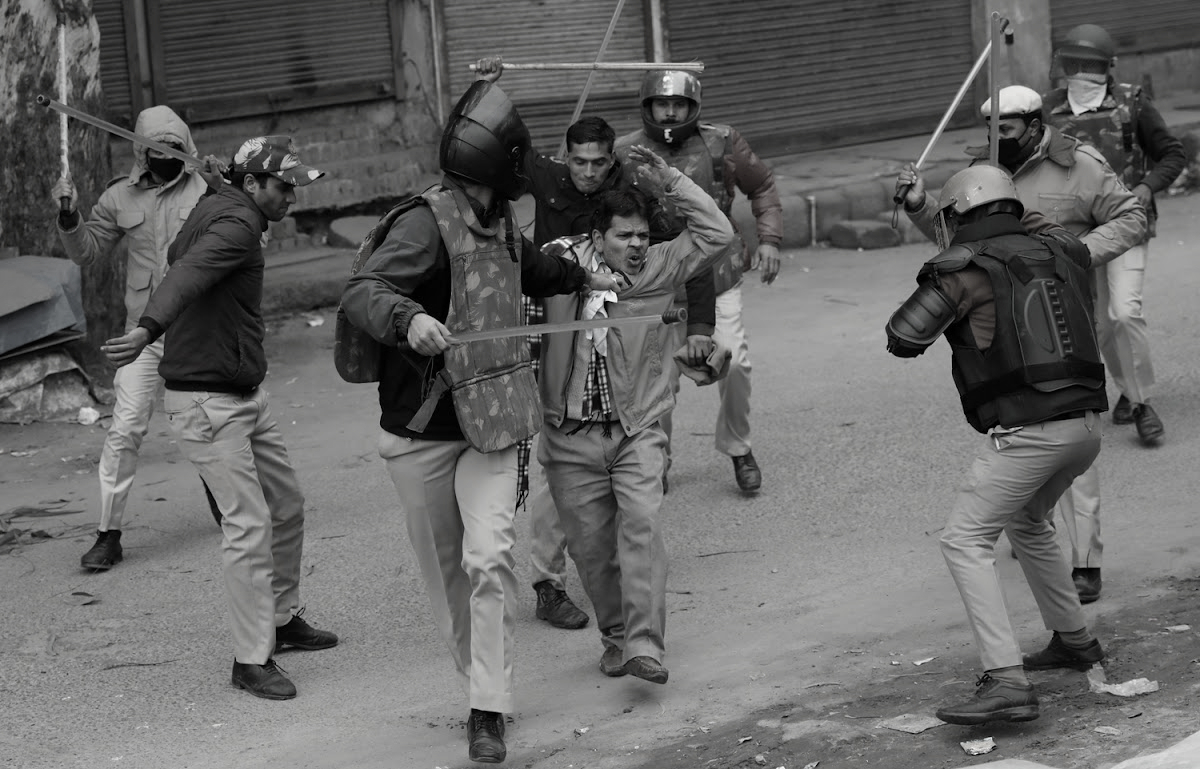
The conviction of nine policemen in the 2020 Sathankulam custodial deaths case has intensified political exchanges in Tamil Nadu while bringing renewed attention to systemic issues in policing and custodial violence.
The case dates back to June 2020 in Sathankulam town of Tuticorin district, where a father-son duo , P. Jeyaraj and J. Fenix, were detained by local police for allegedly violating COVID-19 lockdown restrictions related to shop timings. They were taken into custody by personnel of the Sathankulam police station and were later alleged to have been subjected to prolonged and brutal custodial torture through the night. Reports of severe physical abuse emerged, with allegations that the victims suffered extensive injuries. Both men were subsequently remanded to judicial custody and admitted to hospital, where they died within days of each other, triggering widespread outrage across the country and drawing attention from civil society, media, and the judiciary.
Initial handling of the case by the then AIADMK government led by Edappadi K Palaniswami came under criticism, particularly over statements that were later seen as inconsistent with the gravity of the incident. As public pressure mounted, the probe was first handled by state authorities before being transferred to the Central Bureau of Investigation (CBI), following sustained demands from opposition parties and activists. The DMK has maintained that intervention by its leader M K Stalin, who was Leader of Opposition at the time, played a key role in ensuring the transfer of the investigation to an independent agency.
After a prolonged trial, the First Additional District and Sessions Court in Madurai on March 23 found all nine accused policemen guilty, holding that the prosecution had successfully established their involvement in the custodial deaths. The court accepted evidence pointing to sustained physical assault while in police custody. The quantum of punishment is scheduled to be pronounced on March 30.
Following the verdict, the DMK, through its party organ Murasoli , launched a sharp attack on Palaniswami, accusing his administration of attempting to downplay the incident and shield those responsible. The party has demanded that he issue a public apology, arguing that the court’s findings have exposed serious lapses in governance and accountability during his tenure.
The verdict reinforces the principle that law enforcement officials are not above the law and can be held accountable for custodial violence. It also illustrates how political narratives tend to shift after judicial findings, with parties re-evaluating earlier positions and assigning responsibility based on established facts.
The case further underscores the importance of independent investigative agencies like the CBI in ensuring credibility in sensitive matters, particularly when allegations involve state machinery. The transfer of the probe is widely viewed as a turning point that strengthened the integrity of the investigation.
At a broader level, the incident highlights custodial violence as a persistent governance challenge in India. Despite legal safeguards and judicial oversight, recurring instances of abuse in custody point to structural deficiencies in policing. The judgment is expected to renew calls for systemic reforms, including stricter enforcement of custodial protocols, enhanced accountability mechanisms, and institutional safeguards to prevent abuse of power.
While the ruling delivers a measure of justice in a case that shocked the nation, it also serves as a reminder that enduring solutions lie in comprehensive police reforms rather than isolated prosecutions.