
'Satan II' Rises: Putin Hails Russia's New Missile as the Most Powerful the World Has Ever Seen
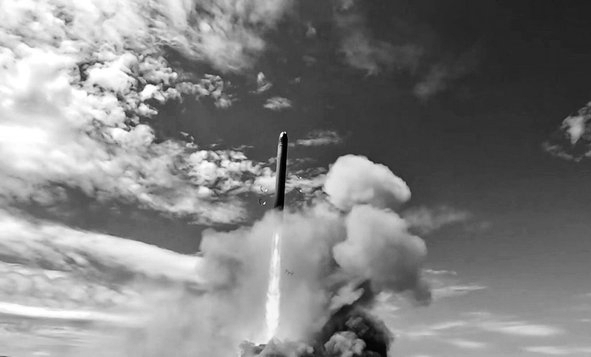
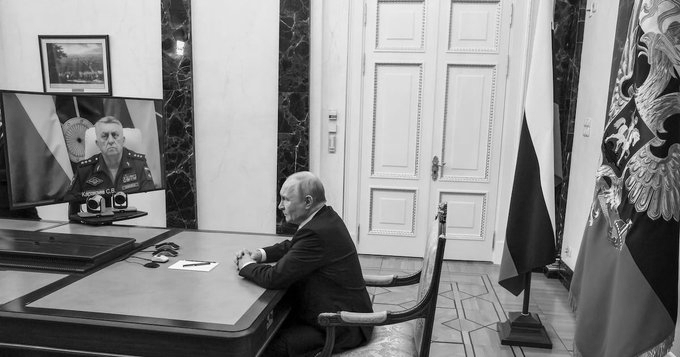
Russia conducted a landmark test launch of its RS-28 Sarmat intercontinental ballistic missile on Tuesday, with Russian President Vladimir Putin personally overseeing the event via video link from the Kremlin and declaring it “the most powerful missile in the world” , a weapon, he claimed, whose destructive capacity dwarfs anything the West has ever built.
Its combined warhead yield, Putin stated, is more than four times greater than that of the most powerful Western equivalent currently in service. If accurate, no missile deployed by the United States, the United Kingdom, or France comes anywhere close to matching it.
The launch took place at 11:15 a.m. Moscow time, when the Strategic Missile Forces fired the heavy liquid-fuelled Sarmat missile from the Plesetsk Cosmodrome in the Arkhangelsk region. Around half an hour later, Russian officials confirmed the missile had hit its designated target at the Kura test range on the Kamchatka Peninsula in Russia’s Far East. Colonel General Sergei Karakayev , commander of Russia’s Strategic Missile Forces, reported to Putin via video link that all mission objectives had been fully accomplished .
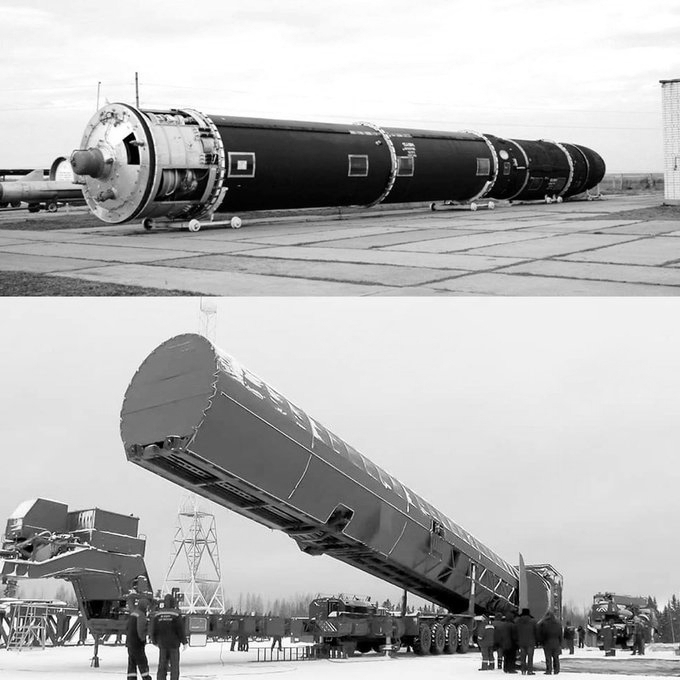
Designated “Satan II” in NATO terminology, the Sarmat is a three-stage, silo-launched, liquid-fuelled ICBM capable of carrying up to 10 tonnes of payload , including ten 750-kiloton independently targetable warheads, or a combination of warheads and hypersonic glide vehicles, and provides Russia with a fractional orbital bombardment capability that can approach targets via the South Pole, effectively bypassing Northern Hemisphere missile defence systems.
Putin underscored that the missile can travel not only along a standard ballistic trajectory but also along a suborbital one, extending its operational range to over 35,000 kilometres while simultaneously doubling accuracy, making it capable of penetrating any missile defence system currently in service or in development. Russia plans to deploy the first regiment equipped with the Sarmat at the Uzhur missile division in Krasnoyarsk Krai by the end of 2026, replacing the Soviet-era R-36M2 Voyevoda systems.
The test comes after a deeply troubled development history. The first successful test launch from Plesetsk took place in 2022 , but a test in February 2023 failed, and another in September 2024 was also reported unsuccessful. Development began in 2011 , and the programme was originally intended to reach operational status as early as 2020 , making Tuesday’s successful launch a significant, if long-delayed, milestone for Moscow.
The announcement also came just a week after the chief executive of the plant producing the missile was reportedly arrested on corruption charges, creating an awkward backdrop to the Kremlin’s triumphant messaging.
The launch arrives against the backdrop of the collapse of the global nuclear arms control framework that governed Russian and American arsenals for decades. The expiration of the New START treaty earlier this year left the world’s two largest nuclear powers without formal strategic limits for the first time in more than half a century. With no successor agreement in sight, arms control experts warn that an unconstrained nuclear competition between Washington and Moscow is no longer a distant fear, it is now a growing reality.
The political timing is equally charged. Russian military analysts have claimed that the Sarmat is capable of penetrating the United States’ proposed “Golden Dome” missile defence system , and that a single missile could devastate major military infrastructure in the United Kingdom.
Just days before the test, Putin stood on Moscow’s Red Square during Victory Day celebrations and declared the war in Ukraine was “nearing an end.” Tuesday’s launch, however, served as a stark reminder that even while peace is publicly discussed, Russia’s nuclear ambitions continue to accelerate.
Western security analysts have cautioned that Putin has previously made exaggerated claims regarding the capabilities of some of Russia’s next-generation nuclear weapons, and the full results of Tuesday’s test have not been independently verified.
Alongside the Sarmat, Russia has also commissioned the Oreshnik intermediate-range ballistic missile and is continuing development of the Poseidon nuclear underwater drone and the Burevestnik nuclear-powered cruise missile , weapons designed to strike with near-unlimited range while evading existing defence systems.
For the world watching from outside the Kremlin, Tuesday’s launch was not merely a weapons test. It was a statement, cold, calculated, and impossible to ignore.