
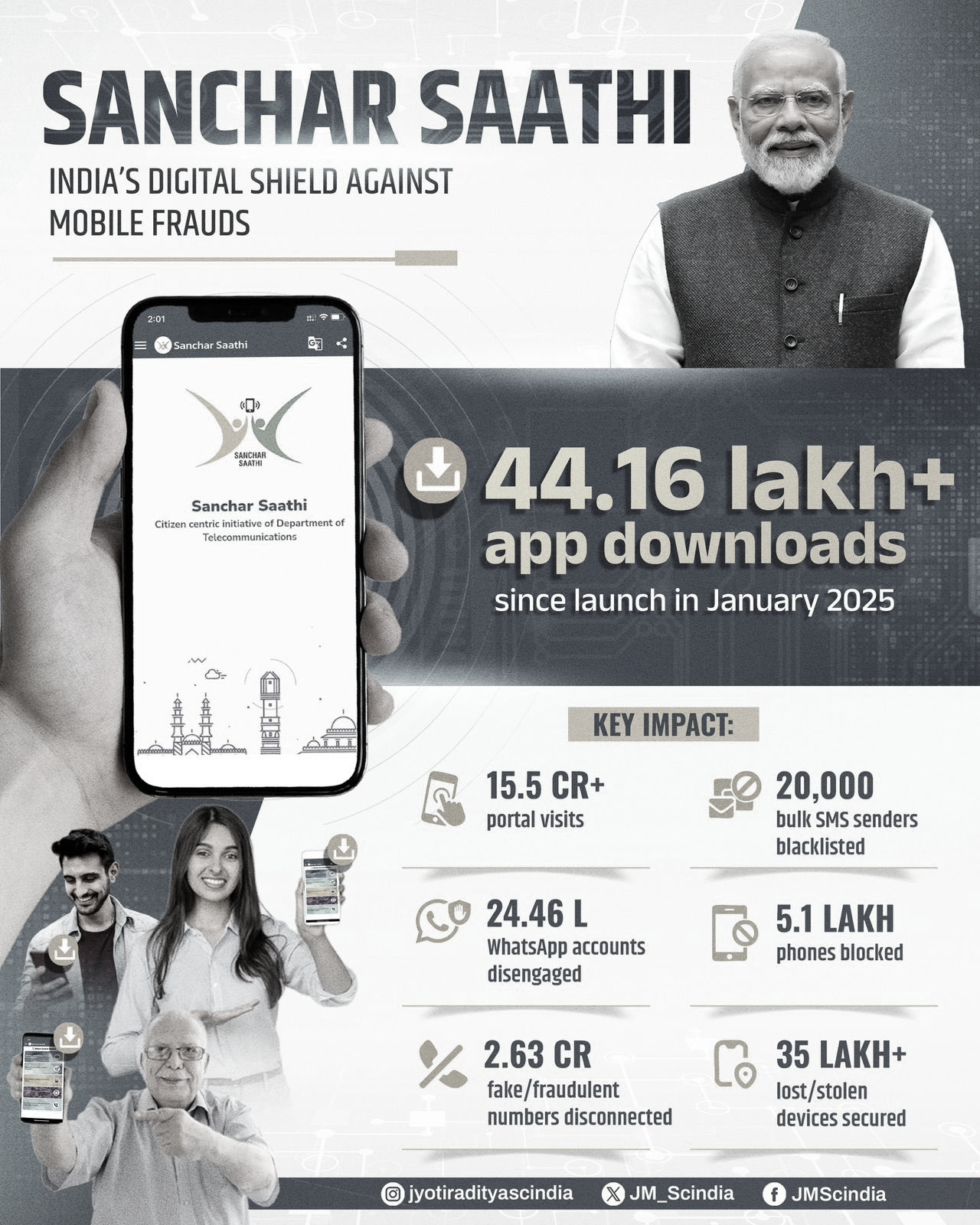
Sanchar Saathi downloads surge amid controversy, User-initiated installs drove 10-fold spike
The government’s cyber-safety application Sanchar Saathi recorded an extraordinary 10-fold surge in downloads on Tuesday, jumping from a daily average of nearly 60,000 to close to 6,00,000 installs, according to media reports citing unnamed Department of Telecommunications (DoT) sources . The DoT has not yet released official, verified download statistics.
The surge comes against the backdrop of escalating debate over the government’s directive mandating smartphone manufacturers to pre-install the app on all new devices and to deploy it to existing phones via software updates. Opposition leaders and several experts have criticised the mandate, calling it an intrusion into user privacy.
Despite the controversy, overall adoption of the app has remained strong. DoT sources cited in media reports stated that Sanchar Saathi has amassed around 1.5 crore total downloads since its launch, even before the pre-installation order was issued. Officials said the sudden spike this week reflects manual user-initiated downloads from app stores not, pre-installed copies.
Manufacturers have not yet rolled out devices carrying the app by default, and no large-scale software updates have been pushed. “Play Store and App Store data only reflect voluntary downloads. The increase is from citizens who installed it themselves,” an official was quoted as saying. The heightened public debate and Telecom Minister Jyotiraditya Scindia’s assurance that the app can be deleted freely are believed to have contributed to the spike.
Sanchar Saathi enables users to verify a phone’s IMEI number, block stolen devices, and report fraudulent calls or messages. The government argues that the app is critical in addressing cyber fraud, especially with the rise of digital arrest scams and cloned mobile devices. The Supreme Court recently ordered the CBI to probe such scams nationwide, bypassing the usual requirement for state consent a decision that underscores the scale of the threat.
However, concerns over transparency persist. Amol Kulkarni, Director (Research) at CUTS International, said that mandating the app without public consultation undermines user trust. “People should not be expected to accept a security app automatically without clarity on its purpose and safeguards,” he said.
DoT sources quoted in multiple reports maintained that the app has “limited access” to personal data and only uses permissions granted during specific fraud-reporting interactions. They reiterated that Sanchar Saathi does not access contacts, location, microphone, Bluetooth, or any sensitive data, and that users may withdraw permissions or uninstall the app at any time.
With crore-plus downloads and a fresh wave of attention, Sanchar Saathi has become central to the national conversation on cyber safety, privacy, and the boundaries of state-backed digital tools.