
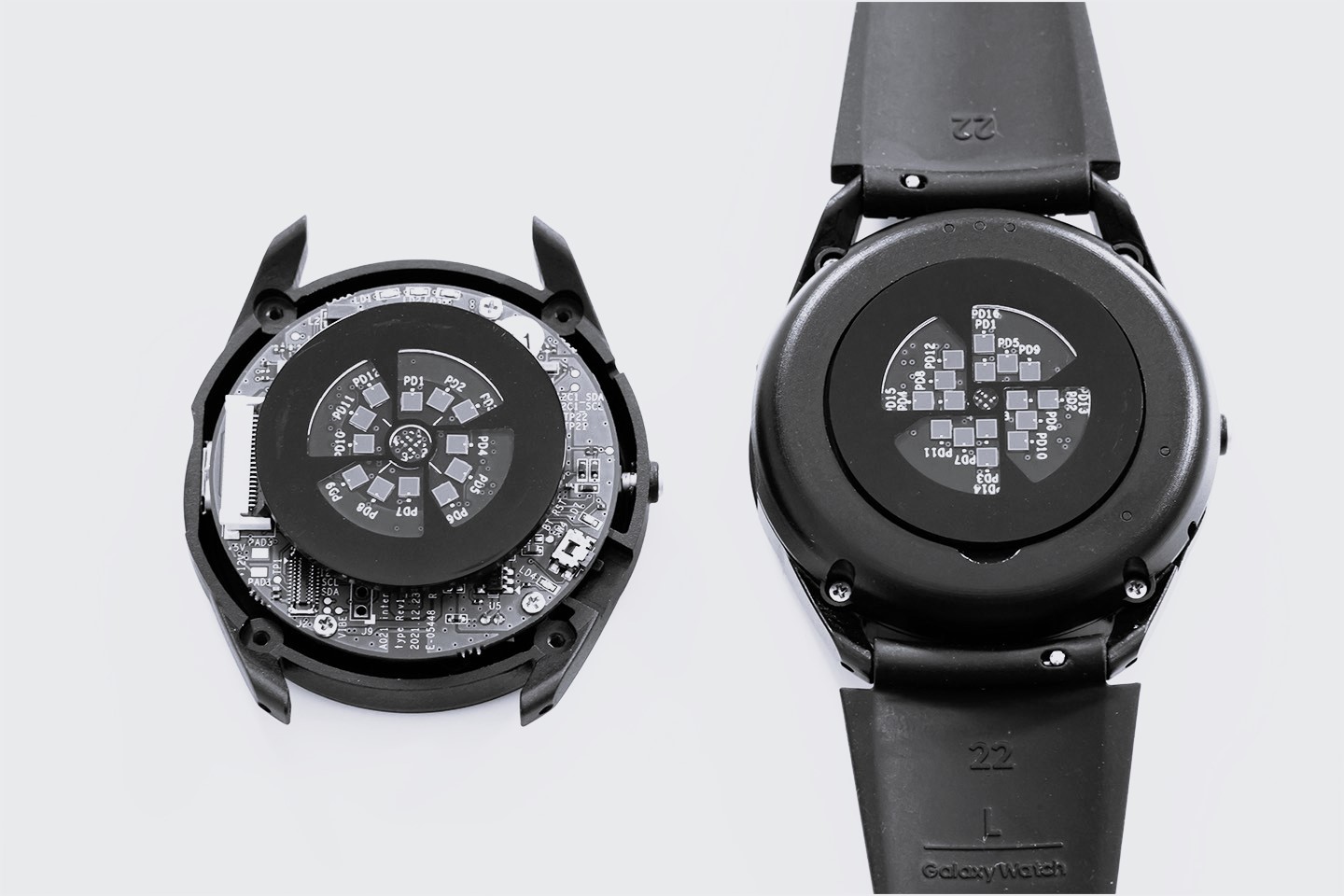
Samsung unveils first on-wrist antioxidant index: A leap in wearable biosensing
In a major leap for consumer health technology, Samsung Electronics has introduced the world’s first on-wrist Antioxidant Index with its Galaxy Watch8, redefining what wearables can measure. The feature, the result of seven years of R&D, turns lab-grade carotenoid spectroscopy once confined to medical and nutritional research into a miniaturized sensor built for everyday users.
This marks a transformative moment in the wearable industry, moving beyond activity, heart rate, and calorie metrics toward nutritional biomarkers that reflect real biological impact.
Miniaturized Spectroscopy : From Lab Benches to Wrists
At the heart of Samsung’s innovation is a miniaturized spectroscopy sensor engineered to estimate carotenoid density under the skin, a reliable, research-backed proxy for antioxidant status and fruit-and-vegetable intake.
Traditional carotenoid measurement requires Raman spectroscopy, an optical technique that uses lasers and bulky instruments. Samsung’s engineers, however, replaced Raman lasers with multi-wavelength LEDs and designed a custom photodiode array that can perform similar analysis within the confines of a watch.
This compact optical system emits light at specific wavelengths and captures the reflected spectrum from skin tissue. The reflected signals are then processed to infer carotenoid concentration tasks that previously needed benchtop instruments costing tens of thousands of dollars.
Algorithmic Intelligence and Continuous Calibration :
To make the readings clinically reliable, Samsung integrated real-time calibration algorithms that adapt to each user’s physiological and environmental variations.
These algorithms compensate for:
• Hardware variance across watch units,
• Skin tone and tissue thickness,
• Light scattering caused by melanin and hemoglobin, and
• Hand or wrist placement during measurement.
By analyzing reflected light profiles and normalizing against optical baselines, the watch continuously recalibrates its sensor performance. Measurements are typically taken at the fingertip, where optical interference is minimal, ensuring more accurate readings across diverse users.
Experts familiar with the project suggest that machine learning models are already being used to improve calibration accuracy as more data accumulates, forming a feedback loop between algorithmic baselines and user cohorts.
Data Modeling : From Raw Light to the Antioxidant Index
The output of the sensor is translated into a standardized Antioxidant Index, a numerical score aligned with World Health Organization (WHO) dietary recommendations.
This index does not simply react to short-term fluctuations; it provides a long-term measure of dietary sufficiency, reflecting how consistently users meet fruit and vegetable intake levels over time.
By quantifying carotenoid density, the Watch8 effectively connects nutrition behavior to biological response, closing the gap between calorie counting and biochemical wellness.
Integration into the Health Ecosystem :
The Antioxidant Index isn’t an isolated feature; it integrates seamlessly into Samsung’s broader Galaxy Health ecosystem, syncing across Windows, macOS, and Linux platforms.
It correlates with other physiological markers like sleep patterns, vascular load, and activity levels, enabling a multi-dimensional view of aging risk and metabolic health. This fusion of data streams reflects Samsung’s push toward multi-sensor health modeling, a direction increasingly central to preventive healthcare technologies.
Engineering Challenges and Multi-Year Development :
The development began in 2018, driven by the premise that as lifespans extend, quality-of-life indicators become more critical than raw activity metrics.
Engineers went through three generations of prototypesclinical, consumer, and skincare-grade devices before achieving a sensor compact enough for wrist integration.
Advances in low-power photonics, materials miniaturization, and signal processing made it possible to compress spectroscopy hardware into the watch’s back case without sacrificing measurement integrity.
Clinical Collaboration and Validation :
The feature underwent CERT-style validation trials at the Samsung Medical Center, involving hundreds of participants. The trials verified measurement accuracy against reference laboratory devices, ensuring data reliability before commercial deployment.
Guidance from Seoul National University and Samsung Medical Center helped establish the clinical and nutritional framework, emphasizing oxidative stress as a key upstream factor in chronic diseases such as cancer, cardiovascular illness, and diabetes.
Toward Preventive, Population-Scale Health Monitoring :
Samsung envisions this technology as more than a personal wellness feature. By enabling population-scale, non-invasive nutritional monitoring, the company aims to democratize access to metabolic health insights that were once limited to clinical studies.
Over time, as longitudinal datasets expand, the algorithms powering the Antioxidant Index could evolve into predictive health models flagging diet-related risks early or recommending personalized nutrition strategies.
This aligns with a broader industry trend: the fusion of AI, biosensing, and preventive medicine in everyday devices.
The Technology Core of the Galaxy Watch8 Antioxidant Index :
Industry Significance :
The launch of the Antioxidant Index places Samsung at the forefront of next-generation biosensing, signaling a shift from motion-centric to metabolic and molecular health wearables.
By bridging optical engineering, AI calibration, and nutritional science, Samsung has effectively brought a laboratory instrument onto the wrist, redefining the capabilities of consumer health technology.