
Samsung expands its mid-range power: Galaxy M17 5G flagship-level on a budget
Samsung has officially lifted the curtain on its latest addition to the M-series lineup the Galaxy M17 5G, a smartphone designed to bring advanced display, camera, and performance technologies to the mid-range market. Built around Samsung’s philosophy of balancing affordability with innovation, the Galaxy M17 5G introduces several upgrades over its predecessor, marking a new chapter in the company’s approach to 5G-ready smartphones for everyday users.
At the core of the Galaxy M17 5G lies Samsung’s Exynos 1330 chipset, built on a 5-nanometre process. This processor, paired with 4GB or 6GB of RAM, delivers efficient multitasking, lower power consumption, and stable 5G connectivity. The smaller transistor size allows better thermal management and performance per watt compared to older 8nm chips found in previous M-series models. The inclusion of dual 5G SIM support ensures the phone remains future-proof as high-speed mobile networks continue to expand across India and other emerging markets.
The device features a 6.7-inch Full HD+ Super AMOLED display, a significant improvement in visual technology for the segment. The AMOLED panel not only offers richer colors and deeper blacks but also comes with a 90Hz refresh rate for smoother scrolling and animation transitions. Samsung’s Vision Booster technology adjusts contrast and brightness dynamically, providing clearer visibility even in outdoor environments. This makes the Galaxy M17 5G an ideal choice for users who consume high-quality video content or play visually demanding games.
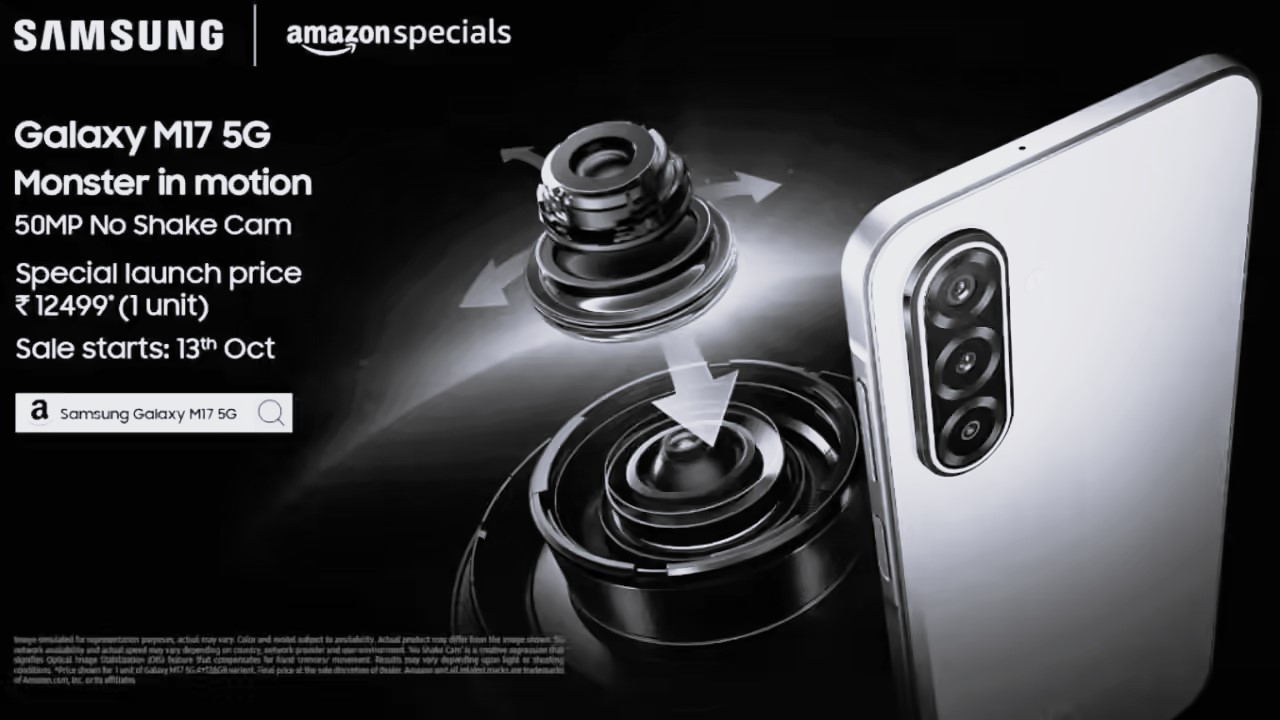
On the imaging front, the Galaxy M17 5G sports a 50-megapixel triple camera setup with Optical Image Stabilization (OIS), a feature that has been rare in mid-budget smartphones. The primary sensor benefits from Samsung’s image signal processing (ISP) improvements, delivering sharper details and reduced noise in low-light conditions. OIS stabilizes shots by compensating for hand movements, resulting in clearer photos and steadier videos. The setup is supported by an ultra-wide lens for capturing broader perspectives and a depth or macro sensor for close-up and portrait photography. On the front, a 13-megapixel selfie camera sits neatly in a centered punch-hole, backed by AI-driven scene optimization for social media-ready shots.
The smartphone runs on One UI 7 based on Android 15, introducing refined customization options, enhanced privacy controls, and improved memory optimization. One UI 7 also features Samsung’s AI-based Smart Suggestions that adapt to user habits, making multitasking and productivity smoother. The Galaxy M17 5G’s software integration ensures tight hardware-software synergy, improving overall responsiveness and efficiency.
Powering the device is a 5,000mAh battery that supports 25W fast charging. While Samsung’s charging speeds still trail behind some competitors, the company emphasizes battery longevity and thermal safety over raw charging numbers. The adaptive power management system intelligently learns user patterns to minimize background consumption, extending battery life over time.
In terms of design, the Galaxy M17 5G maintains Samsung’s clean, minimalist aesthetic. The body is crafted from polycarbonate with a matte finish that resists fingerprints and offers better grip. The flat-edge frame and balanced weight distribution enhance ergonomics without sacrificing durability. Samsung has also provided an IP54 rating, offering moderate protection against dust and splashes a practical inclusion for users with active lifestyles.
Compared to its predecessor, the Galaxy M16, the new M17 5G represents a clear technological leap. The jump from an LCD to a Super AMOLED panel, the addition of OIS in the main camera, and the shift to a more power-efficient 5nm processor collectively elevate the user experience. The earlier model relied on older chip architecture and lacked stabilization features, often resulting in inconsistent photo quality and higher battery drain during heavy use. The M17 5G addresses these pain points while introducing modern connectivity and a refined user interface.
Samsung plans to roll out the Galaxy M17 5G later this year, with an expected release in early 2026. Pricing is anticipated to start under ₹15,000 in India, positioning it as one of the most affordable 5G smartphones in Samsung’s portfolio. This competitive pricing strategy could attract users seeking reliability from a global brand without venturing into higher premium brackets.
However, despite its impressive feature set, the M17 5G is not without drawbacks. While the AMOLED display offers visual excellence, the refresh rate caps at 90Hz, whereas several competitors in the same price band have already transitioned to 120Hz panels. The Exynos 1330, although efficient, may still lag behind Qualcomm’s Snapdragon 6 Gen 1 in gaming performance and sustained GPU output. The 25W charging speed also feels conservative compared to the 33W or 45W charging seen on rival devices from Xiaomi and Realme. Additionally, the triple-camera system beyond the main lens relies on secondary sensors that may not produce equally high-quality results.
From a broader perspective, the Galaxy M17 5G embodies Samsung’s commitment to pushing mid-tier technology closer to flagship standards. The integration of OIS, a 5nm processor, and a vivid Super AMOLED display demonstrates that performance and aesthetics need not be mutually exclusive in affordable devices. Analysts suggest that Samsung’s strategy with the M17 is to strengthen its grip on the sub-₹20,000 segment, where it faces growing competition from Chinese OEMs offering aggressive specifications.
Ultimately, the Galaxy M17 5G’s success will depend on its real-world optimization, particularly thermal control, camera tuning, and battery endurance under 5G networks. If Samsung delivers on these promises, the device could set a new benchmark for mid-range smartphones in 2026, balancing innovation, reliability, and everyday usability.