
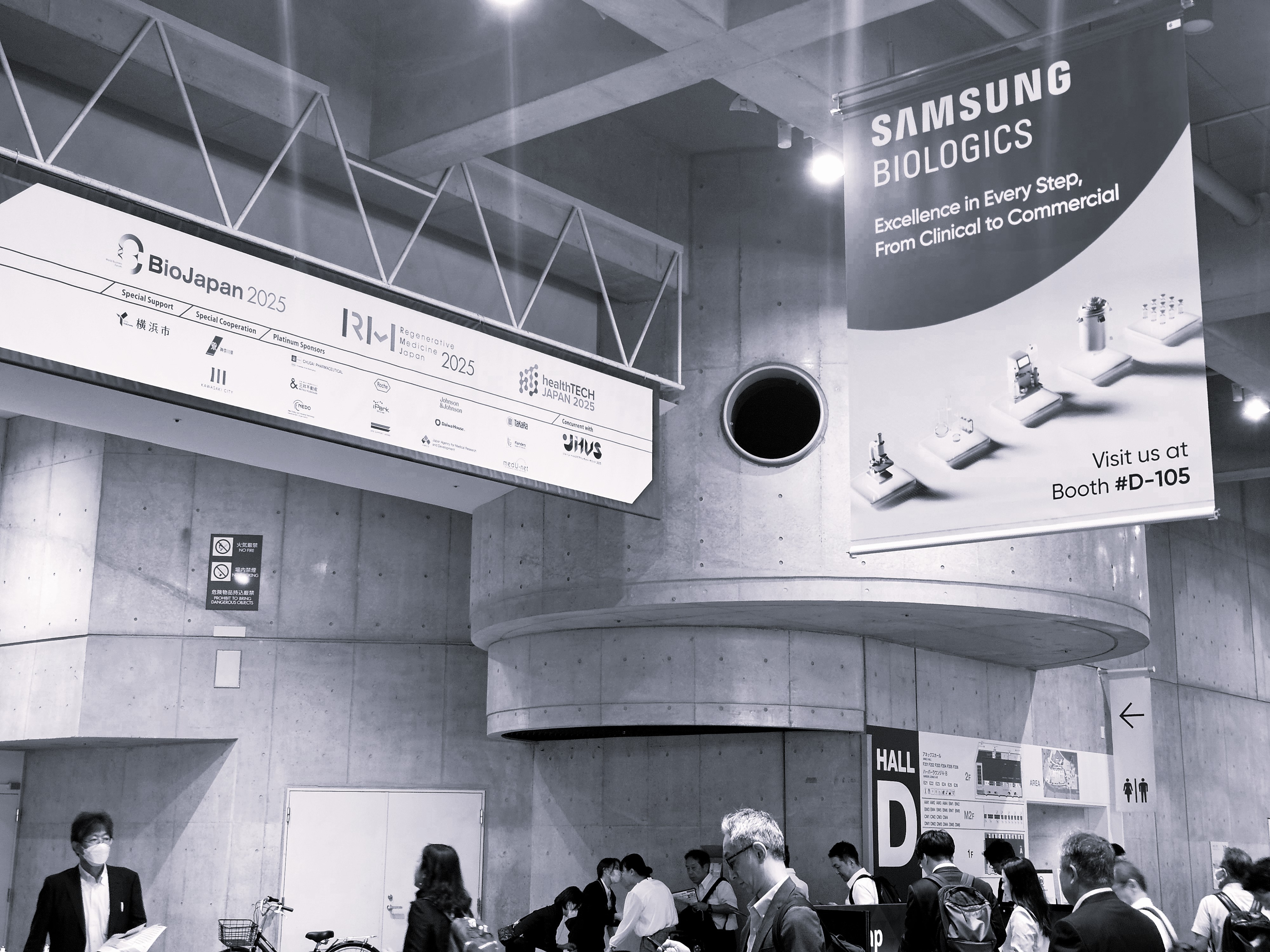
Samsung biologics taps Japan’s $19.5 billion CDMO market with new partnerships
Samsung Biologics Co. is accelerating its expansion in Japan, the world’s third-largest pharmaceutical market, as the South Korean biopharmaceutical giant strengthens its foothold through new partnerships with leading Japanese drugmakers.The company has already signed contracts with four of Japan’s top ten pharmaceutical and biotech companies and is in final discussions with one more.
“We have signed contracts with four of Japan’s top ten pharma companies and are in final talks with one more,” said John Rim, CEO of Samsung Biologics, during the BioJapan 2025 event held in Yokohama on Thursday.
Rim emphasized Japan’s strategic importance in the company’s global growth roadmap. “BioJapan is a crucial event for us. To expand our client base from the global top 20 to the top 40 pharmaceutical companies, collaboration with Japanese firms is essential. That’s why we established a Tokyo sales office and dispatched dedicated sales personnel,” he noted.
Rising Demand in Japan’s CDMO Market : Japan ranks third globally after the United States and Europe in the pharmaceutical sector, particularly noted for its technological strengths in antibody-drug conjugates (ADC) and cell and gene therapies (CGT), two fast-growing biopharma fields.
According to Research and Markets, Japan’s contract development and manufacturing organisation (CDMO) market is projected to grow at an annual rate of 6.8%, from USD 12.3 billion in 2023 to USD 19.5 billion by 2030. This growth is driven by increasing demand for outsourcing biopharmaceutical production and rising investments in advanced therapeutics.
“The demand for CDMO services in Japan is rising, and our potential partnerships with major Japanese pharmaceutical firms are expanding,” Rim said. “We are focusing on antibodies and ADC projects while building trust through face-to-face meetings.”
Reflecting the company’s strong global performance, Samsung Biologics recently raised its annual revenue growth forecast from 20-25% to 25-30%, signaling expectations of around 6 trillion won (USD 4.23 billion) in revenue for 2025 up from 4.55 trillion won in 2024.
A key contributor to this momentum is the company’s Plant 5, its latest large-scale facility equipped with automation and artificial intelligence technologies, further reinforcing Samsung Biologics’ smart factory infrastructure. The integration of AI-driven systems has enabled more efficient production, enhanced quality control, and faster scalability in biologics manufacturing.
When asked about potential expansion into the U.S. market, Rim remained measured, citing economic and trade uncertainties.“We are continuously reviewing potential entry into the U.S. market, and the likelihood is higher than it was two to three years ago,” Rim stated. “However, since labor and construction costs in the U.S. are more than 70% higher than in Korea, we will make decisions after carefully assessing demand, tariffs, and process efficiency.”
Samsung Biologics’ expansion in Japan marks a key step in its broader strategy to diversify geographically and deepen partnerships with top-tier pharmaceutical innovators. By focusing on next-generation therapeutics and leveraging AI-based manufacturing, the company aims to strengthen its leadership in the global CDMO market positioning itself as a central player in the evolving biologics supply chain.