
Salesswaram: Telangana’s Hidden Spiritual Gem in Nallamala Forests
Nestled deep within the dense Nallamala forests of Nagarkurnool district, Salesswaram stands out as a rare blend of spiritual significance and natural splendour . Located en route to Srisailam , far from urban civilization, the valley shrine is revered by devotees as the “Amarnath of Telangana.” Beyond being a pilgrimage site, it reflects millions of years of geological evolution , centuries-old history , and the enduring traditions of the indigenous Chenchu tribe .
Situated about 150 km from Hyderabad on the Srisailam highway, the route to Salesswaram begins at Farahabad junction . From there, devotees must travel nearly 32 km through dense forest , of which 25 km is motorable , while the remaining 5 km involves a difficult trek through rugged terrain. The region, located at a significant elevation, remains cool throughout the year , attracting both pilgrims and adventure enthusiasts.
Farahabad, meaning “pleasant place” in Urdu, once served as a summer retreat of the Nizam , built over a century ago after he was captivated by the area’s scenic beauty. Earlier known as Pulla Chelamala , the site now lies in ruins but continues to offer panoramic views of the Nallamala hills . In 1973 , the region was included under Project Tiger , highlighting its ecological importance.
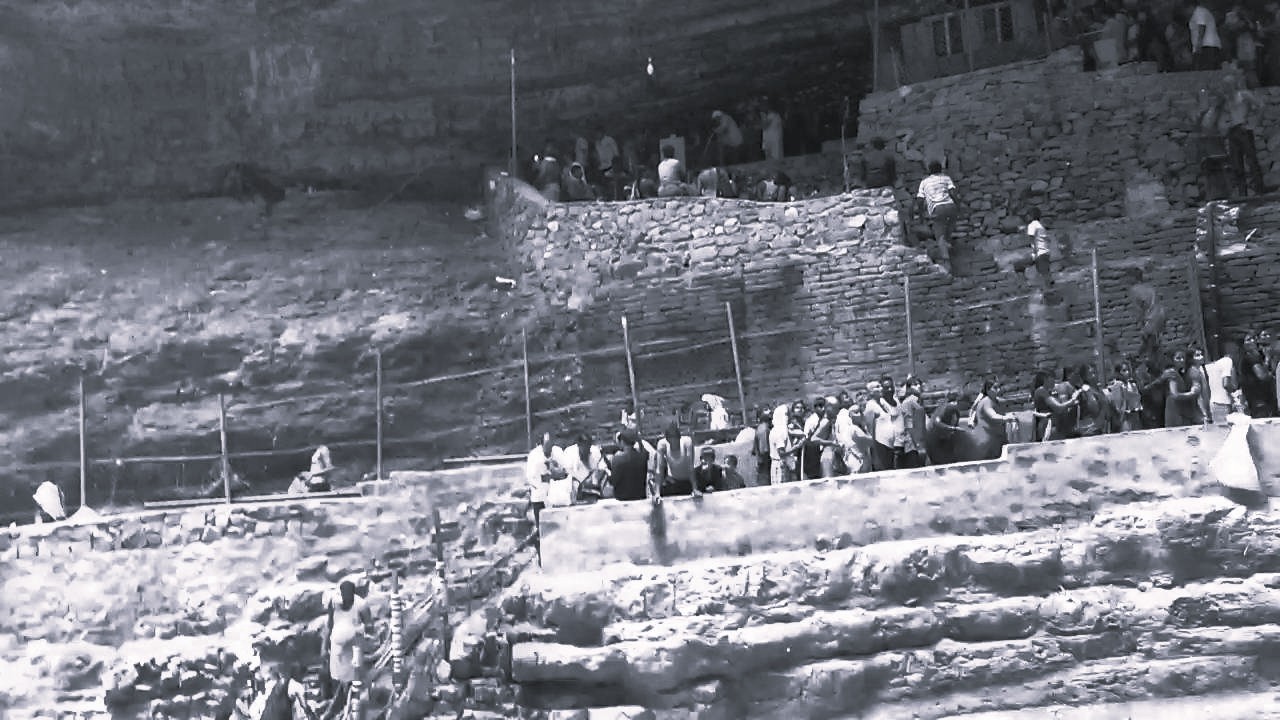
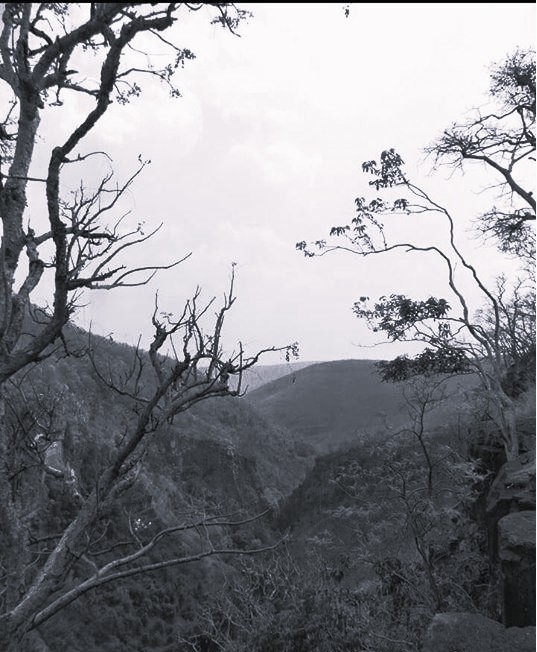
The final stretch of the journey from the base camp to the shrine is considered a test of faith and endurance . Two parallel hills form a deep valley running thousands of feet below , and devotees must walk along narrow cliff-edge paths , in some places barely wide enough for a single step. Despite the risks, locals believe that faith in Lingamayya ensures protection.
At the valley’s base lies the Salesswaram waterfall , cascading from a height of around 200 feet . Surrounded by semi-circular hills , the setting creates a striking visual where the sky appears like a narrow window above. The water, believed to pass through medicinal herbs , is considered sacred, with devotees claiming it can cure ailments , and it remains icy cold even during peak summer .
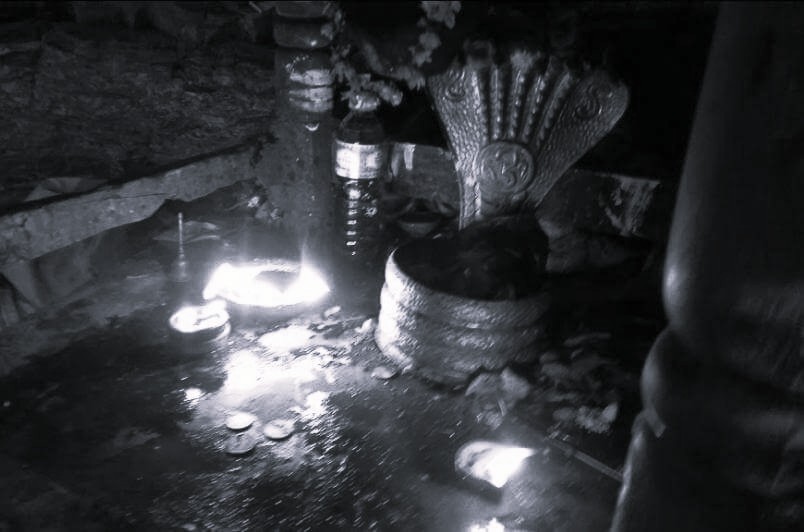
Adjacent to the waterfall, within a hill cave, is the shrine of Sri Salesswaram Lingamayya Swamy , where the deity appears in the form of a Shiva Linga . The temple comprises two vertically aligned caves , with the main deity in the upper chamber. Rituals are performed by members of the Chenchu tribe , preserving ancient traditions. Devotees believe that prayers here fulfil wishes, especially granting progeny to childless couples .
Historians note that Salesswaram also holds significant historical value . Based on brick dimensions ( 16x10x3 inches ), the structure is believed to date back to the Ikshvaku period . Some scholars identify it with Chuladammagiri mentioned in Nagarjunakonda inscriptions , suggesting it may have originally been a Buddhist site before evolving into a Shaivite shrine . The presence of the “Poolakundi” emblem associated with the Vishnukundin dynasty further strengthens this view.
Rock inscriptions at the site include 7th-century Brahmi script reading “Sri Utpatti Pidugu” and 9th-century Devanagari script reading “Sri Vishishta Kankaladhari.” Historians believe Utpatti Pidugu was a slogan of Kalamukha Shaivites , offering insights into the region’s religious and linguistic history .
The 13th-century poet Palkuriki Somanatha , in Mallikarjuna Panditaradhya Charitra , referred to Salesswaram while describing sacred sites like Rudrakundam and Vishnukundam , indicating its long-standing prominence. Local accounts also suggest that Chhatrapati Shivaji Maharaj may have taken refuge in these forests during the 17th century while evading Mughal forces.
The Salesswaram Jatara is held once a year during Chaitra Pournami , following Ugadi, and continues for five days , drawing devotees from Telangana, Andhra Pradesh, and Karnataka . The forest resonates with chants of “Vattannam Vattannam Lingamayyo… Pothunnam Pothunnam Lingamayyo.” Despite limited infrastructure, voluntary organisations provide food and drinking water for pilgrims.
As the area falls within a tiger reserve , authorities enforce strict regulations. Entry is permitted only during the five-day festival , plastic use is banned , and visitors must leave the forest before 6 pm . Ensuring ecological balance while accommodating large numbers of devotees remains a key challenge.
The dramatic terrain of Salesswaram, with its reddish cliffs and deep gorges , is often compared to the Grand Canyon in the United States , making it a unique geological formation in India and a haven for nature lovers .
Deeply connected to the site are the Chenchu tribes , who worship Lord Shiva as Lingamayya , their household deity. They play a central role in rituals and continue to uphold ancient customs , offering the sacred water as tirtham to devotees.
The journey to Salesswaram is widely regarded as a spiritual and physical expedition , where trekking through rugged paths and dense forest leads to a sense of self-realisation , with the sight of the waterfall and the serene surroundings leaving a lasting impression.
Authorities and devotees alike emphasise the need to preserve this fragile ecosystem , ensuring that the site’s spiritual, historical, and environmental significance is protected for future generations.
Visitors are advised that access to Salesswaram is restricted to the Chaitra Pournami period , and only those with adequate physical fitness should attempt the trek. From Hyderabad, pilgrims can reach Mannanur or Farahabad junction via buses from the Mahatma Gandhi Bus Station , with special services operating during the festival. From there, with forest department permission, vehicles travel about 30 km through forest routes to the base camp, followed by a 5 km difficult trek to the shrine.