
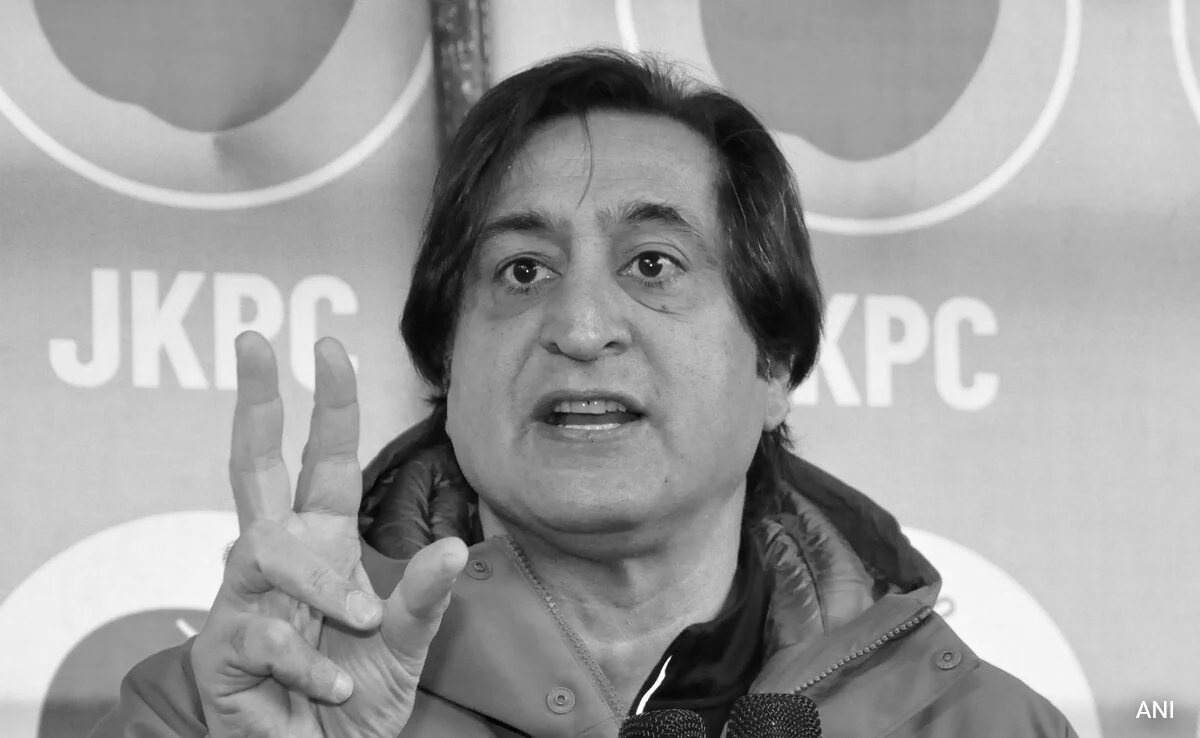
Sajad Lone Backs Separate Jammu State, Calls It ‘True Liberation’
Peoples Conference president Sajad Lone has openly backed the BJP’s renewed demand for a separate Jammu state , describing it as a “rare and golden moment” for Kashmiris and calling separation “true liberation.” Speaking as the MLA from Handwara, Lone said he prays that the split becomes possible, while cautioning that powerful political actors could attempt to derail the issue with fresh narratives. His remarks come amid rising debate after senior BJP leaders, including former minister Sham Lal Sharma, again pushed for Jammu’s statehood an idea that has resurfaced repeatedly in the region’s politics.
At the heart of Lone’s argument lies a blunt assertion: Jammu and Kashmir are fundamentally different regions , with divergent identities, political priorities, economic structures, and governance expectations. He challenged National Conference leader Farooq Abdullah’s insistence that Jammu and Kashmir must remain together, questioning who bears the cost of this “so-called unity.” Lone argued that unemployed youth in the Valley are paying the price daily, and asked why Kashmiris should carry a “disproportionate burden” in the name of lofty ideas that, he claims, were never formally agreed upon. He also cited alleged incidents involving Kashmiri students and workers outside the Valley, portraying them as proof of hypocrisy behind political slogans used to justify continued togetherness.
Lone’s critique extends to policy and economics. He claimed reservation policies have steadily redirected job opportunities away from Kashmir and towards Jammu, creating a growing sense of unfairness. He also alleged a persistent regional imbalance , arguing that while Jammu benefits from Kashmir’s economy and labour, major development projects are frequently funnelled towards Jammu at the Valley’s expense. According to Lone, separation could bring clearer accountability, region-specific planning, and an end to constant political friction over employment, budgets, and infrastructure distribution.
However, the debate has a complex underside. Splitting the Union Territory into separate political units could increase polarisation and deepen identity politics, especially if pursued in a triumphalist tone. It may also create administrative complications and fresh security concerns in an already sensitive region. Even then, Lone insisted separation must not turn into hostility. Jammu’s people would remain brothers, he said, just as people from other Indian states are welcomed in Kashmir.
Ultimately, this debate reflects a growing push to redefine governance in post-2019 Jammu and Kashmir. Supporters see separation as administrative realism; critics fear long-term instability.