
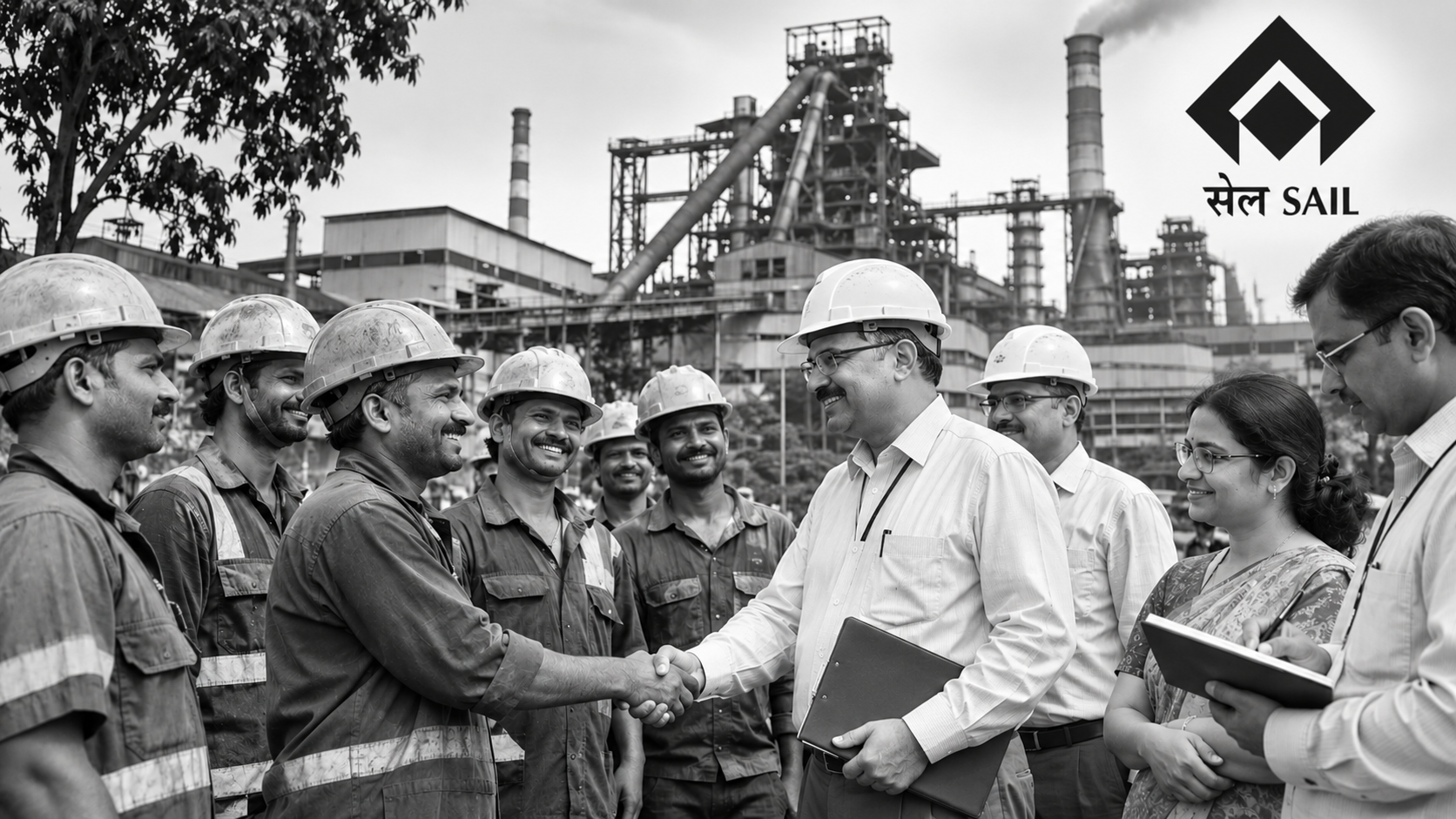
SAIL Implements Central Minimum Wages for 3,000 Durgapur Workers
Around 3,000 contract workers employed at Steel Authority of India Limited's (SAIL) Durgapur Steel Plant (DSP) are set to receive wages in accordance with applicable Central Government minimum wage rates, following an intervention by central labour authorities. The initiative is expected to provide an additional financial benefit of approximately ₹7.5 crore annually, strengthening the financial security of thousands of employees and their families.
The Office of the Deputy Chief Labour Commissioner (Central), Asansol, facilitated the implementation after identifying instances where certain categories of contract workers were receiving wages below the prescribed Central Government minimum rates. Following discussions with SAIL-DSP management and contractors, and scrutiny of wage records, the plant management issued a circular on November 20, 2026, directing implementation of the applicable wage rates.
The management has assured that workers already receiving wages above the prescribed minimum will retain their existing benefits. The initiative was supervised by K.C. Sahu, Deputy Chief Labour Commissioner (Central), Asansol, with the participation of regional and assistant labour commissioners and Labour Enforcement Officers from Asansol and Durgapur.
The development follows a wider wage-protection initiative across SAIL establishments in West Bengal. On November 17, the Ministry of Steel announced minimum-wage implementation for approximately 12,000 contract workers at SAIL Growth Kulti and IISCO Steel Plant in Burnpur, with an estimated additional annual benefit of ₹55 crore. The transition addressed a long-standing grievance involving workers who had been receiving wages under the West Bengal Government's minimum-wage framework.
With the Durgapur initiative, the two developments are expected to benefit around 15,000 contract workers, providing a combined estimated annual financial benefit of ₹62.5 crore across the three establishments.
The initiatives come amid India's labour-law reforms, particularly the Code on Wages, 2019, which came into effect on November 21, 2025. It consolidated four earlier labour laws and extended minimum-wage protection to all employees, replacing the earlier system linked to scheduled employments. The Occupational Safety, Health and Working Conditions Code, 2020, also holds principal employers accountable for unpaid or short-paid contract-worker wages when contractors default.
Established in 1959, Durgapur Steel Plant is one of SAIL's major integrated steel facilities, with annual capacities of 2.45 million tonnes of hot metal, 2.20 million tonnes of crude steel and 2.12 million tonnes of saleable steel. It also produces forged railway wheels and axles, alongside structural steel, TMT bars and other products.
The estimated ₹7.5-crore annual benefit at Durgapur works out to an indicative average of approximately ₹2,083 per worker per month. Actual increases will vary according to employment categories and applicable wage rates, which were not specified in the announcement. The initiative is expected to improve workers' financial security while strengthening statutory wage compliance at the public-sector steel plant.