
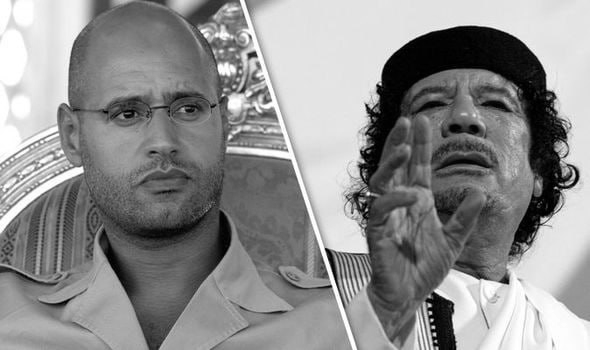
Saif al-Islam Gaddafi, son of Muammar Gaddafi, assassinated at his home in Libya
Saif al‑Islam Gaddafi, the 53-year-old son of Libya’s late dictator Muammar Gaddafi, was assassinated on February 3, 2026, at his home in the western town of Zintan. Four masked gunmen reportedly stormed his residence, disabled security cameras , and shot him in what was described as a “cowardly and treacherous assassination.” Libya’s attorney general has opened a criminal investigation, but the identities and motives of the attackers remain unclear , and no group has claimed responsibility. His lawyer and political adviser confirmed his death on social media, and former officials have called for a transparent inquiry .
Born in Tripoli in June 1972, Seif al-Islam was educated in the United Kingdom and earned a Ph.D. from the London School of Economics. Early in his career, he was seen as a potential reformist and diplomat , playing a role in improving Libya’s international relations under his father’s rule. However, during the 2011 uprising that toppled Muammar Gaddafi, he became closely associated with the violent crackdown on protesters and was widely criticised. After the fall of Tripoli, he attempted to flee to Niger but was captured by militia fighters and held in Zintan for six years. In 2015, a Libyan court convicted him in absentia of inciting violence and murder, and he was also wanted by the International Criminal Court on crimes against humanity charges . He was released in 2017 under an amnesty and remained politically active.
The assassination took place in Zintan , a town southwest of Tripoli that has long been a centre of militia influence and local political power. The town’s factions once held Seif al-Islam and remained influential, making it both his base and a complex battleground of loyalties and rivalries. His death in this location underscores the deep militia influence and fragmented authority that define modern Libya.
Saif al-Islam’s attempts to re-enter national politics highlighted the enduring divide in Libya. In 2021, he registered as a presidential candidate, capitalising on nostalgia for pre-2011 Libya and frustration with ongoing instability. His candidacy was fiercely opposed by anti-Gaddafi factions and armed groups. He was ultimately disqualified from the presidential race , and disputes over his eligibility contributed to the collapse of the election process and Libya’s political stalemate. Analysts say his assassination removes a symbolic and polarising figure but risks creating a martyr narrative that could further inflame divisions.
Libya remains divided more than a decade after Gaddafi’s fall. The country currently has no single, universally recognised head of state . A Presidency Council acts as a collective head of state , while Abdul Hamid Dbeibah leads the internationally recognised Government of National Unity in western Libya as interim prime minister. In the east, a rival administration, the Government of National Stability, is led by Osama Hammad and backed by military commander Khalifa Haftar, reflecting the persistent political fragmentation and militia dominance .
The last nationwide elections were the parliamentary polls in 2014 for the House of Representatives. Since then, presidential and parliamentary elections have been repeatedly delayed due to disputes over electoral laws, security challenges, and rival governments. While local municipal polls are planned for early 2026, national elections are tentatively targeted for mid‑April 2026 , though these dates remain uncertain pending political agreement, security arrangements, and logistical readiness.