
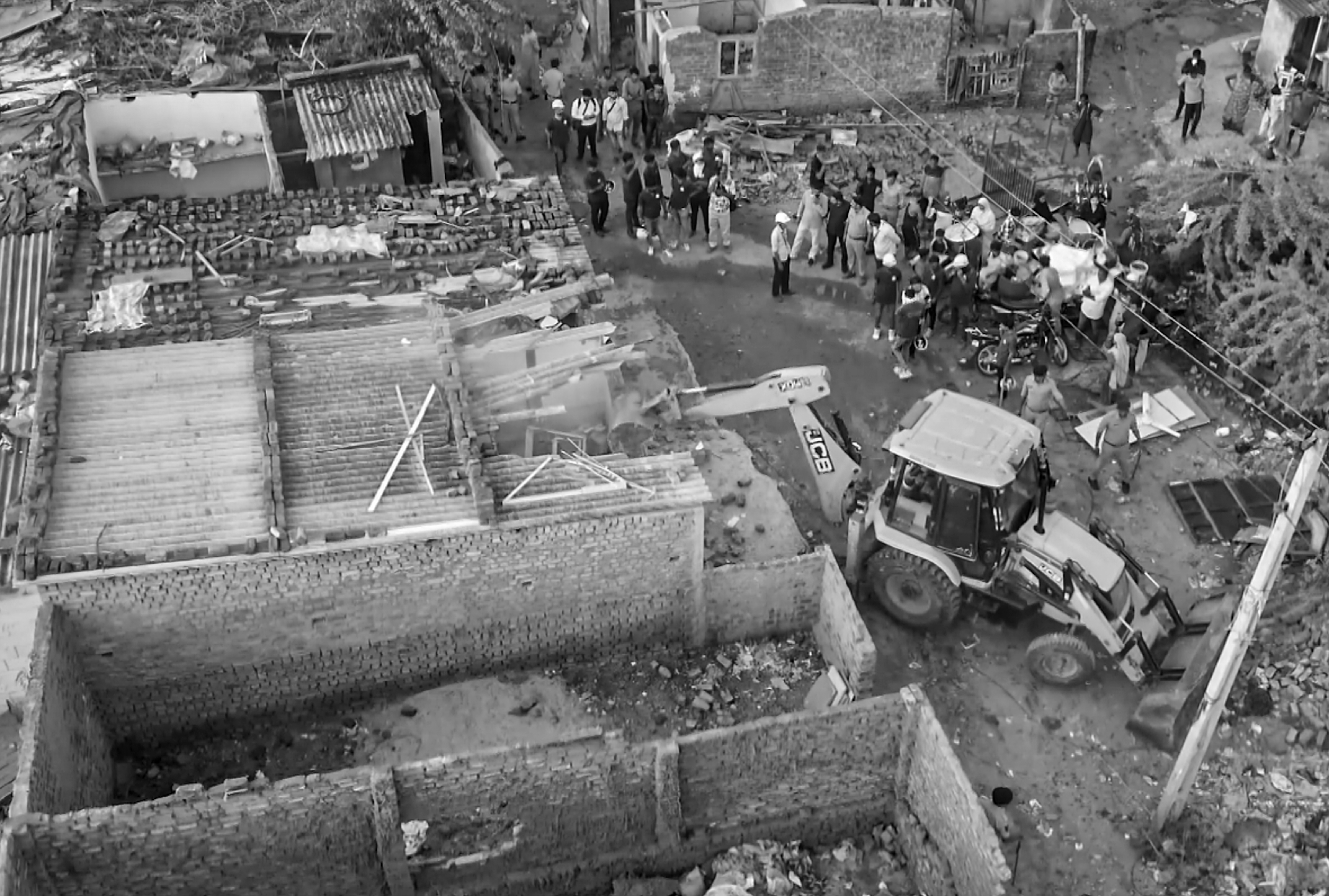
Sabarmati riverbank sees mega 700-structure demolition
In a bold move to reclaim public land, Gandhinagar authorities launched a massive demolition drive early Thursday morning, targeting nearly 700 illegal structures along the Sabarmati riverbank. The operation, covering around 1 lakh square metres of government land, is being described as one of the largest anti-encroachment efforts in the Gujarat capital. By afternoon, about 150 houses and shops had already been razed, with work continuing to clear the remaining structures.
The drive began at 4 am in the Pethapur area, led by the Gandhinagar Municipal Corporation (GMC), the state Roads and Buildings (R&B) department, and local police. Twenty teams from R&B and GMC are supervising the demolition, supported by 700 policemen, including officers, ensuring smooth execution and maintaining law and order. Officials stressed that the encroached land, valued at nearly Rs 1,000 crore, will be fully restored within the next two to three days.
This effort is more than just a removal of illegal buildings; it reflects a broader attempt to enforce urban planning and preserve the ecological and cultural significance of the Sabarmati river. Encroachments over decades have not only blocked river views and public access but also disrupted drainage and increased flood risks during monsoons. Authorities say clearing the land will enable better environmental management, improved riverfront development, and safer urban spaces.
Analysts note that while demolition drives often face criticism for displacing residents, Gandhinagar’s approach is highly organized, with teams working in coordination with law enforcement to minimize conflicts. The involvement of district magistrates and strict supervision highlights an attempt to maintain transparency and legal compliance.
The scale of the operation also sends a strong message about governance: reclaiming public land is possible when authorities take decisive action, but it must be balanced with planning for rehabilitation and public consultation. The Sabarmati riverbank drive is an example of combining law enforcement with urban vision, showing how cities can confront illegal occupation while promoting sustainable development.
The success of this drive could set a precedent for other Indian cities struggling with unplanned encroachments, emphasizing accountability, citizen access, and the protection of public assets.