
Sabarimala Case: SC Says Hinduism a Way of Life, Temple Visits Not Essential to Prove Faith
India's Supreme Court nine-judge Constitution bench , led by Chief Justice Surya Kant , declared while hearing the Sabarimala and related religious discrimination cases that Hinduism is a way of life and that a Hindu need not visit a temple or perform any ritual to remain a Hindu, saying even lighting a lamp at home proves one's faith. But if that were truly the philosophy, why does India have over 6.49 lakh registered Hindu temples , 53 temples for every one lakh persons ? The Tirupati temple alone draws over 5 crore pilgrims a year , more than the Eiffel Tower, Vatican, and Great Wall of China combined, with devotees walking barefoot up 3,500 steps just for a glimpse of the deity. Sabarimala itself sees 1 to 1.5 crore devotees every year , one of the largest pilgrimages on Earth. India's religious tourism crossed 143.9 crore visits in 2022 , generating $16.2 billion in revenue. These are not people who believe a lamp at home is enough, these are people for whom the temple is the faith.
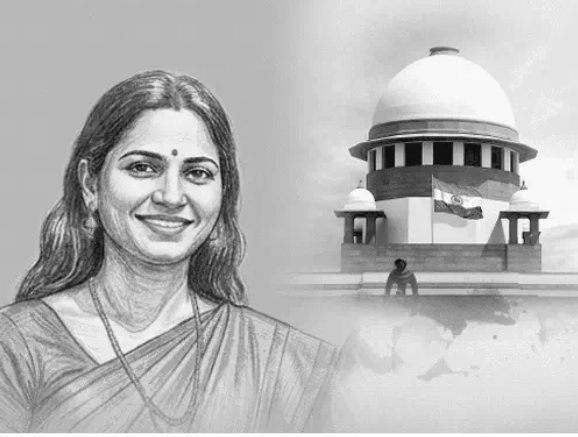
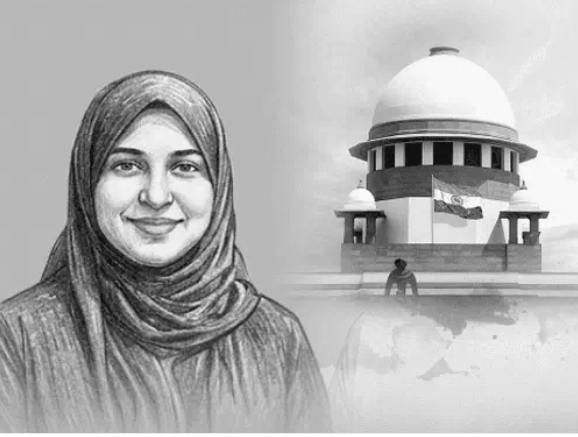
Now look at the pattern of failed justice for women in India. The Sabarimala verdict first came in September 2018 , a 4:1 ruling declaring the ban unconstitutional. Yet by November 2019 , the Supreme Court itself delayed a final ruling, referring all review petitions to a larger bench, essentially reversing momentum on a question of women's fundamental rights. That's over 7 years of litigation and counting , while women remain denied equal access. This is not an isolated failure. The Triple Talaq case took decades of suffering before the SC struck it down in 2017, and even then Parliament had to step in with a law in 2019 to criminalize it. When Muslim women sought equal entry into mosques, the Supreme Court dismissed that petition outright , the same court that spent years deliberating Sabarimala. The Dawoodi Bohra female genital mutilation case is still unresolved. In every single case where women demand religious equality, the judiciary delays, dilutes, or deflects.
India is ranked 130 out of 190+ countries in the Gender Inequality Index, a damning number for the world's largest democracy. In the Global Gender Gap Index 2025 , India slipped further to 131st out of 148 countries , with a gender parity score of just 64% . Iceland leads at #1 with 92.6% parity , followed by Finland, Norway, UK, and New Zealand, all nations where women's right to worship equally is not even a legal debate because it was never a question. In Scandinavian countries , women have been ordained as priests, bishops, and religious leaders for decades. In Canada , Sikh women worship and lead freely with full community support. In South Africa , Muslim feminist Amina Wadud led mixed-gender Friday prayers as early as 1994 , breaking centuries-old conventions and sparking global debates on women's religious authority. Even Bangladesh ranks 24th globally , higher than India with 77.5% gender parity , the highest in South Asia, while India trails behind Bhutan, Nepal, and Sri Lanka in its own region.
The contrast is stark and shameful. In nations that have genuinely progressed, religious equality for women was not a court case, it was a cultural evolution backed by legal will. In India, a woman has to fight a 7-year-long Supreme Court battle just to stand inside a temple that her tax money, devotion, and ancestors helped build. The court's argument that "temple visits aren't mandatory" was never raised when men exercised that very right freely for centuries. This philosophy of flexible faith only appears when women demand equal ground and that is not justice. States must not use religious beliefs to justify violations of women's rights and that freedom of religion and non-discrimination are mutually reinforcing rights, not competing ones. India signed CEDAW in 1993 , a UN treaty promising to eliminate discrimination against women in all walks of life and yet here we are, in 2026, still debating whether a woman can enter a temple. The constitution promised equality. The courts owe delivery, not philosophy.