
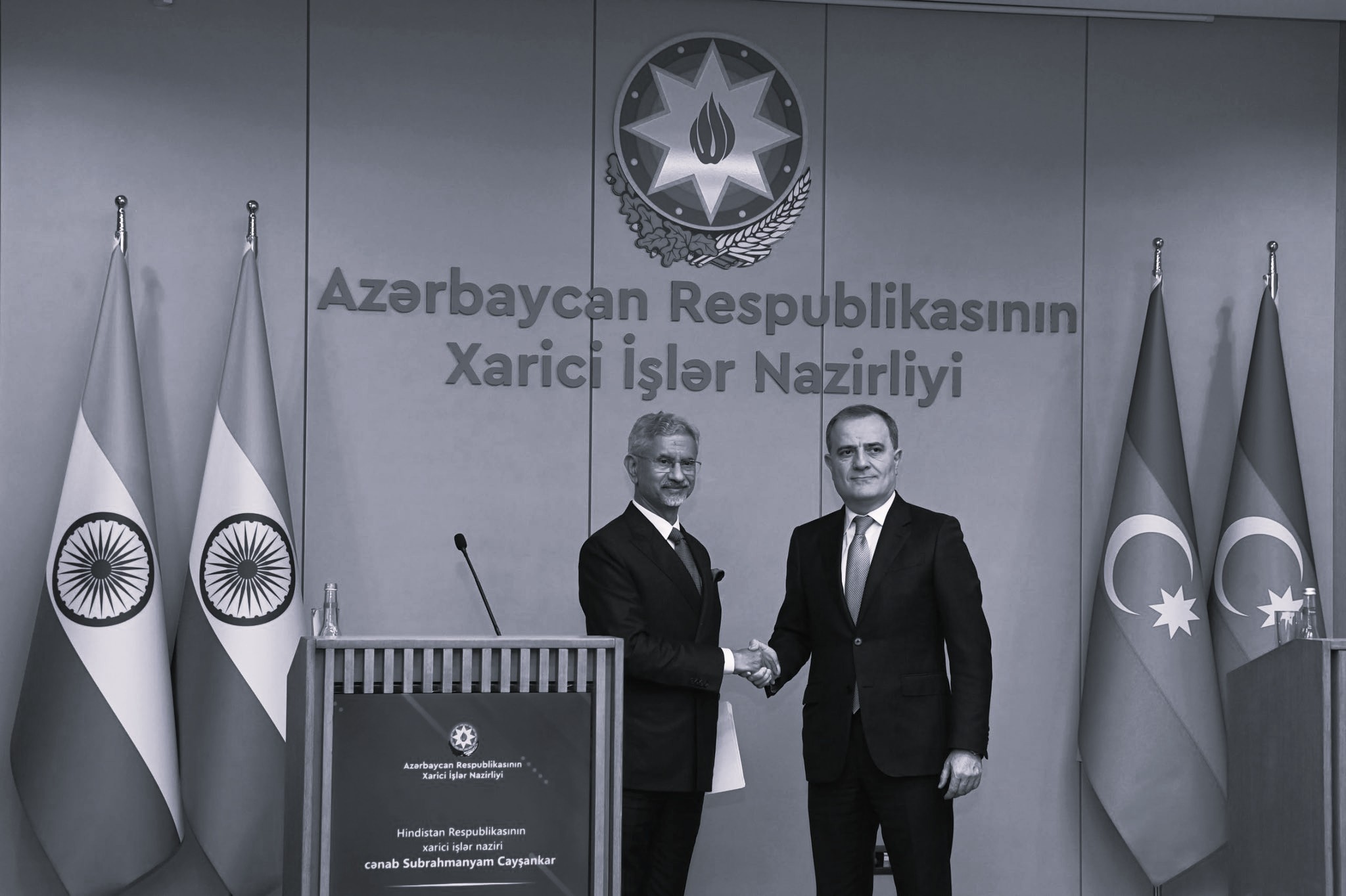
S. Jaishankar Meets Azerbaijan Leadership to Strengthen Bilateral Relations
External Affairs Minister S. Jaishankar visited Azerbaijan yesterday, to strengthen bilateral relations, expand economic cooperation and address differences over regional security. His diplomatic engagement in Baku came as India and Azerbaijan sought to maintain political dialogue and explore opportunities in trade, technology and connectivity.
During his meetings with Azerbaijani President Ilham Aliyev and Foreign Minister Jeyhun Bayramov, Jaishankar discussed trade, investment, energy, transport, pharmaceuticals, information technology, tourism and cultural exchanges. The visit, undertaken at Prime Minister Narendra Modi’s direction, followed Modi’s meeting with Aliyev on the sidelines of the Shanghai Cooperation Organisation summit in Bishkek in September.
India and Azerbaijan established diplomatic relations on February 28, 1992, following Azerbaijan’s independence from the Soviet Union. India opened its embassy in Baku in 1999, while Azerbaijan established its embassy in New Delhi in 2004.
Jaishankar previously visited Baku in October 2019 alongside then Vice-President M. Venkaiah Naidu for the Non-Aligned Movement summit. He also met Bayramov in Kampala in January 2024. The latest trip marks the first standalone bilateral visit by an Indian External Affairs Minister since Sushma Swaraj’s visit in April 2018.
Relations have faced strains over India’s defence cooperation with Armenia and Azerbaijan’s close ties with Pakistan. Baku also criticised India’s strikes against terrorist infrastructure in Pakistan during Operation Sindoor in 2025. Jaishankar’s visit sought to sustain dialogue while allowing India to maintain its existing strategic partnerships.
Bilateral trade reached approximately $401 million in 2025, comprising $226 million in Indian exports and $175 million in imports, largely crude oil. Azerbaijan separately reported trade turnover of around $600 million during January–June 2026, although the figures cover different reporting periods and require careful comparison.
Indian company ONGC Videsh Ltd holds interests in Azerbaijan’s Azeri-Chirag-Gunashli oil and gas fields and the Baku-Tbilisi-Ceyhan pipeline, with investments exceeding $1.2 billion.
The discussions also covered the International North-South Transport Corridor (INSTC), East-West routes, the Port of Baku and the Baku-Tbilisi-Kars railway. These routes could strengthen transport links and improve India’s access to Eurasian markets.
Both countries are seeking more frequent political contacts, reciprocal visits and business delegations. Greater cooperation in tourism, pharmaceuticals, technology, energy and investment could help translate diplomatic engagement into concrete economic outcomes.