
Rwanda sues UK over failed migrant deal, seeks £290 million in compensation
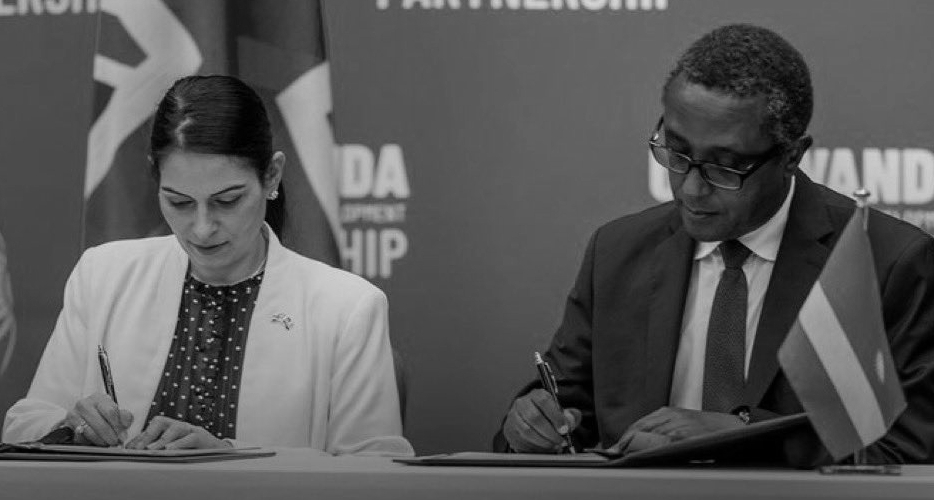
Rwanda has filed legal action against the United Kingdom, seeking payments under a controversial migrant deal abruptly abandoned by London. The East African nation submitted proceedings on Tuesday to the Permanent Court of Arbitration in The Hague , claiming the UK failed to honor its financial and humanitarian obligations. The agreement, signed in 2024 under former UK Prime Minister Rishi Sunak , was intended to send asylum seekers arriving illegally in the UK to Rwanda for resettlement, with Britain paying Rwanda to host them. Only four people traveled voluntarily under the plan. Despite some infrastructure and administrative arrangements being established in Rwanda, the country says it has not received the financial compensation agreed upon, leaving it to bear the costs of preparations without reimbursement.
Shortly after taking office in July 2024, Prime Minister Keir Starmer declared the deal “dead and buried” without prior notice to Rwanda, which described this as “contrary to the spirit of the partnership.” The UK Supreme Court had earlier found the plan unlawful, ruling it violated both domestic and international law. Rwanda claims that the UK breached the treaty’s financial arrangements and violated Articles 18 and 19 by refusing to resettle vulnerable refugees. Two payments of £50 million each, scheduled for April 2025 and April 2026, remain unpaid. While Rwanda indicated it would accept renegotiated terms if the treaty were formally terminated, discussions with the UK did not take place.
The UK maintains it has no intention of making further payments , arguing the Supreme Court’s ruling nullified the agreement domestically. London describes the plan as a “complete disaster” and is defending its actions in the arbitration process, citing both legal and practical concerns. Experts note that the Rwanda-UK deal also raises complex moral questions similar to classic philosophical dilemmas, where decision-makers must weigh humanitarian consequences , balancing harm and benefit. Jonathan Musangwa, a Rwandan international law expert, explains that even if the UK’s domestic courts found the deal unlawful, it may still be liable under international law , as a state cannot unilaterally ignore treaty obligations without following proper termination procedures.
The arbitration will examine whether the UK’s actions constitute an internationally wrongful act and whether Rwanda is entitled to compensation. While infrastructure has been built in Rwanda, the lawsuit seeks to recover the promised financial support, highlighting the broader ethical, legal, and diplomatic stakes of the failed plan. The case underscores the challenges governments face in balancing humanitarian obligations, legal limits, and political realities , dilemmas that echo philosophical debates on consequentialist and categorical moral reasoning.