
Russian strikes kill 3 in Kyiv as US-led peace talks gain momentum
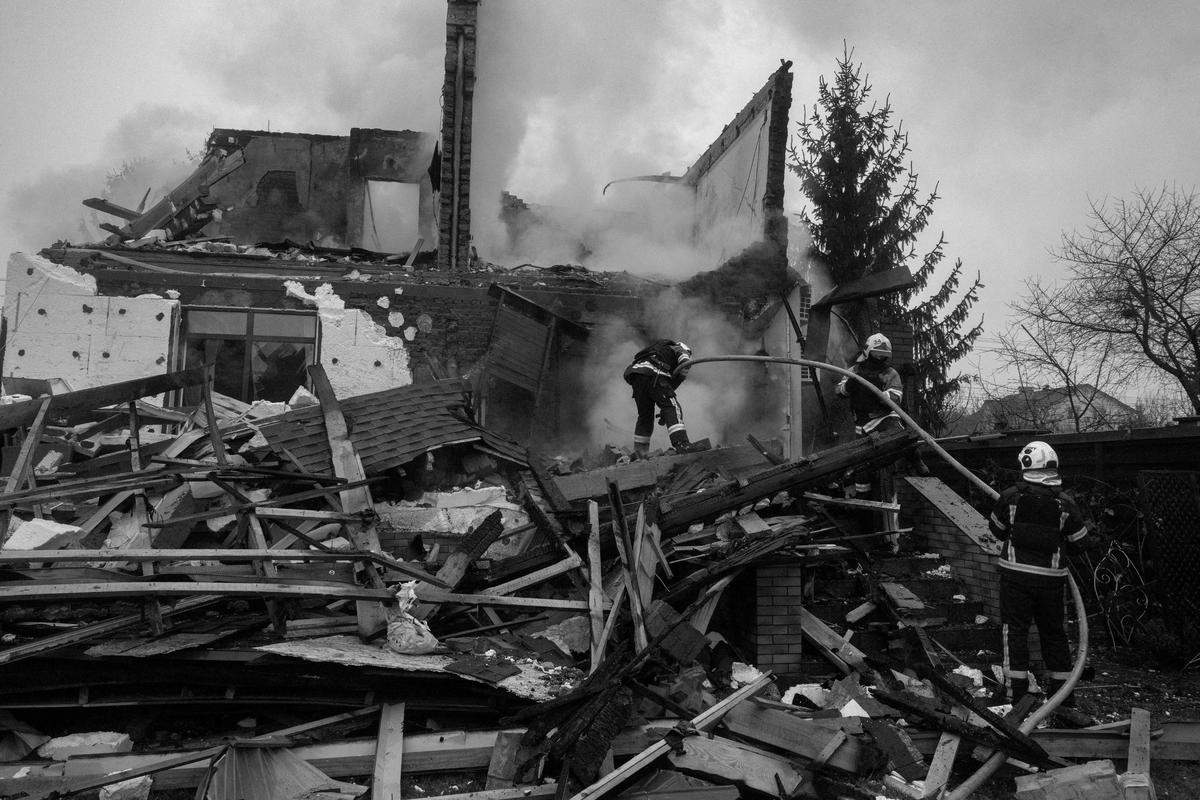
As the Russia-Ukraine war approaches its fourth anniversary, diplomatic efforts have accelerated around a revised US-led peace plan, even as Russian forces launched a massive overnight assault on Kyiv and nearby areas, killing at least three people, including children, and wounding dozens more.
The attacks, occurring Friday night into Saturday, targeted energy infrastructure and civilian sites. Ukrainian air defenses intercepted 558 drones and 19 missiles, but the strikes left over 500,000 residents without power and disrupted water supplies, while emergency responders continued clearing debris and assessing damage. President Volodymyr Zelenskyy reported the rising human toll, highlighting the ongoing vulnerability of Ukraine’s civilian population even as diplomacy intensifies.
The war began on 24 February 2022, when Russia launched a full-scale invasion following years of tension over NATO expansion, Crimea’s annexation in 2014, and separatist movements in the Donbas. Initial rapid advances by Russian forces were met with fierce Ukrainian resistance around Kyiv, Kharkiv, and Mariupol. Over the next two years, frontlines hardened, with Ukraine reclaiming parts of Kherson and Kharkiv, while Russia consolidated control in the east and south. By late 2024, both militaries were exhausted, Western assistance had slowed, and missile and drone strikes on civilian areas intensified, spurring renewed diplomatic engagement.
The current US-brokered peace plan, originally drafted as a stringent 28-point proposal, has been reworked after consultations with Ukraine, European allies, and Russian intermediaries. Kyiv’s negotiating team includes top officials from the president’s office, defense intelligence, and foreign affairs, while US envoys such as special envoy Steve Witkoff and senior national security officials are leading Washington’s side. Russia has indicated that the revised plan could form a “basis for discussion,” though its participation remains indirect at this stage.
The revised plan still envisions security guarantees, a long-term non-aggression pact, restrictions on certain weapons systems, and economic reconstruction funded partly through frozen Russian assets. Crucially, it leaves open Ukraine’s future security choices, including the potential for NATO or EU integration, a key demand for Kyiv. Territorial concessions and military limitations remain sensitive issues, and European allies are monitoring the negotiations closely to prevent any settlement that might undermine Ukraine’s sovereignty.
With both sides militarily strained and Europe warning against the “carving up” of Ukrainian territory, the coming talks may determine whether the war moves toward a political settlement or enters another prolonged phase of conflict, even as Russian attacks continue to exact a heavy human toll.