
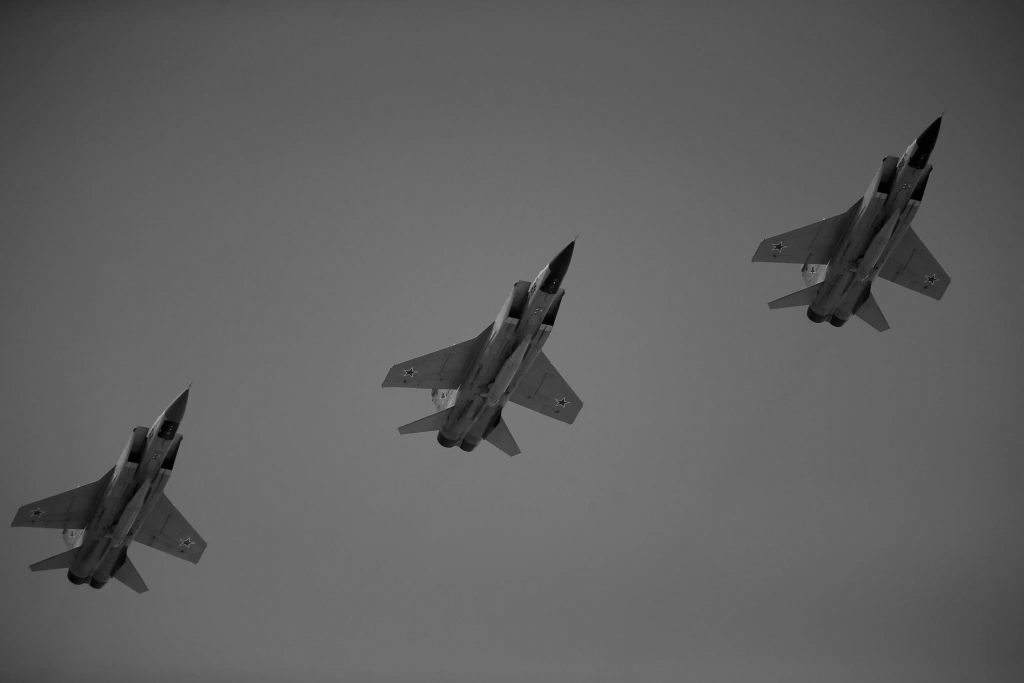
Russian Jets Violate Estonian Airspace - NATO on alert
Estonia accused Russia of a serious breach of NATO airspace after three Russian MiG-31 fighter jets entered its territory on Friday, ignoring signals from Italian jets deployed under (North Atlantic Treaty Organization) NATO’s Baltic Air Policing Mission.
The incursion, which lasted 12 minutes, was confirmed by radar and visual contact, Estonian officials said. The jets entered Estonian skies near Vaindloo Island in the Gulf of Finland between 9:58 a.m. and 10:10 a.m. local time. It marked the fourth such violation this year and the longest since 2003, just before Estonia joined NATO.
Russian denial, Western concern
Russia’s Defence Ministry denied the allegations, insisting its aircraft remained in neutral airspace during a scheduled flight from Karelia to Kaliningrad. Estonian Defence Minister Hanno Pevkur rejected the claim, stressing that multiple NATO radars confirmed the violation.
“This is a very serious violation of NATO airspace,” said Foreign Minister Margus Tsahkna, adding that Estonia would request consultations under NATO’s Article 4, which allows members to convene when their security is threatened.
NATO response
The Russian jets were tracked by Finnish fighters before two Italian F-35s took off from Estonia’s Ämari Air Base and escorted them into international skies. According to Col. Ants Kiviselg, head of Estonia’s Military Intelligence Center, the Russian pilots acknowledged but ignored NATO signals.
“They must have known they were in Estonian airspace,” Kiviselg said, adding that while the jets posed no immediate military threat, their refusal to follow signals kept them in Estonia’s skies longer than usual.
Wider implications
Lithuania’s Defence Minister Dovile Šakaliene suggested NATO should take lessons from Turkey, which shot down a Russian jet in 2015 for a brief airspace violation. But Pevkur dismissed comparisons, noting that Moscow’s actions in Syria directly killed Turkish citizens, whereas the current case did not warrant escalation.
Estonian officials emphasized there was no need to invoke NATO’s Article 5 the collective defense clause despite repeated Russian air and drone incursions, cyberattacks, and other hybrid operations attributed to Moscow. Pevkur suggested Russia’s broader strategy is to stretch NATO resources and distract attention from Ukraine. “They may want us to focus more on our own defense and less on supporting Kyiv,” he warned.