
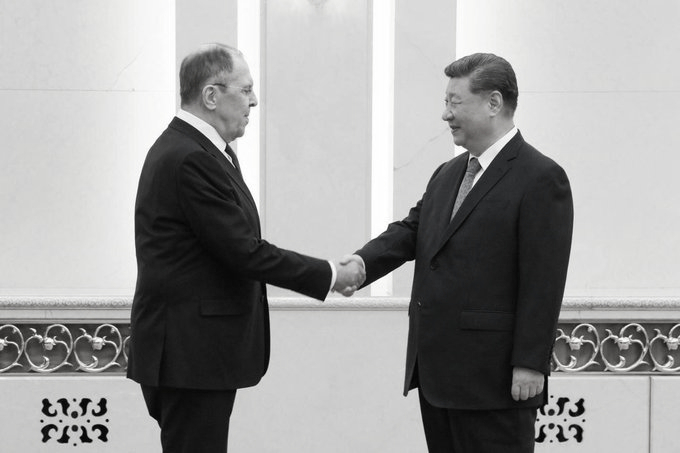
Russia FM Lavrov says Moscow against any form of independence for Taiwan
Russian Foreign Minister Sergey Lavrov has reiterated Moscow’s firm and unchanged position that Taiwan is an inseparable part of China , stating that Russia strongly opposes any form of independence for the island.
In an interview published on Sunday, Lavrov said Russia considers the Taiwan issue to be an internal affair of China and stressed that Beijing has every right to defend its sovereignty and territorial integrity. He remarked that international discussions on Taiwan are often conducted by selectively interpreting facts while ignoring the broader historical and geopolitical context.
Lavrov pointed out that several countries publicly claim to follow the One-China policy but act differently in practice. According to him, such countries support maintaining the status quo while effectively opposing China’s national reunification. He said this contradiction has increasingly turned Taiwan into a tool of military and strategic deterrence against Beijing.
The Russian foreign minister also accused some Western nations of seeking political and economic gains from the situation. He alleged that Taiwan’s financial resources and advanced technological capabilities are being exploited , including through the sale of expensive US weapons to Taipei, which he said contributes to rising tensions in the region.
Reaffirming close ties between Moscow and Beijing, Lavrov recalled that Russia’s support for China on the Taiwan issue is clearly outlined in the Treaty of Good-Neighbourliness and Friendly Cooperation signed in July 2001. He noted that the treaty commits both countries to mutual support in defending national unity and territorial integrity.
Reacting to developments around Taiwan, the United States reiterated that its policy remains unchanged. Washington continues to follow its long-standing one-China policy, while opposing any unilateral attempt to alter the status quo in the Taiwan Strait. US officials have repeatedly stressed the need to maintain peace and stability in the region and have said cross-strait differences should be resolved through peaceful means.
The US has also maintained that it does not support Taiwan’s independence, while continuing to provide defensive arms to Taipei under its domestic laws. American officials say such support is intended to ensure Taiwan’s self-defence capabilities and deter coercive actions.
Taiwan, meanwhile, has strongly rejected claims that it is part of China. Taiwan’s Ministry of Foreign Affairs said Beijing has never governed the island and asserted that Taiwan is a self-governed, democratic entity. The ministry emphasised that neither side of the Taiwan Strait is subordinate to the other and that only the people of Taiwan have the right to decide their future.
Taiwanese officials also warned that cooperation between authoritarian states and rising military pressure in the region threatens peace and stability. They reaffirmed Taiwan’s commitment to strengthening ties with like-minded partners and defending democratic values.
Providing historical context, Lavrov noted that Taiwan has remained self-governed since 1949, following the Chinese Civil War, when Nationalist forces retreated to the island after losing control of mainland China to Communist forces. However, he stressed that this historical reality does not alter Russia’s consistent support for China’s position on Taiwan.