
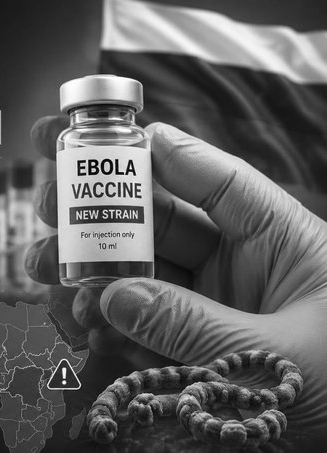
Russia Claims Breakthrough Vaccine Against New Ebola Strain
Russia has announced what it describes as a breakthrough vaccine against a new strain of Ebola , claiming the candidate may also provide protection against the rare Bundibugyo variant. The announcement was made by Russian Health Minister Mikhail Murashko, who said the development reflects advances in the country’s viral research capabilities.
According to scientists involved in the project, early laboratory results suggest potential cross-protection against multiple Ebola strains , including variants not covered by existing licensed vaccines. However, officials have stressed that the findings remain preliminary and require extensive validation through clinical trials.
The claim comes amid rising global concern over the Bundibugyo Ebola outbreak , which the World Health Organization (WHO) has reported as causing around 220 deaths so far, along with continued transmission risks in affected regions of Central and East Africa, including the Democratic Republic of the Congo and Uganda. Health experts warn that the strain is particularly challenging due to limited vaccine coverage and constrained medical infrastructure in outbreak zones.
Currently, vaccines are available primarily for the Zaire strain of Ebola, while no widely approved vaccine exists for Bundibugyo Ebola , making ongoing research efforts critical for global preparedness. Russian scientists have suggested their candidate vaccine may help address this gap, though no peer-reviewed clinical data has yet been released.
Global health specialists have urged caution, emphasising that any Ebola vaccine must undergo multi-phase clinical trials , including large-scale human studies, before regulatory approval. They also highlight the importance of independent verification by international scientific and regulatory bodies.
The announcement has drawn significant attention in the global health community as research institutions worldwide continue working on next-generation vaccines aimed at broader Ebola protection.
While Russia has presented the development as a scientific breakthrough, experts maintain that only transparent data, peer-reviewed studies, and regulatory review will confirm its true effectiveness.