
Russia and Belarus Deploy Nuclear Submarines, Missiles in Major Strategic War Drills
As the Russia-Ukraine war enters its fifth year, Russia and Belarus have carried out one of their most extensive joint nuclear exercises in recent times, deploying intercontinental ballistic missiles, nuclear submarines, strategic bombers and hypersonic weapons in a major show of force aimed at reinforcing Moscow’s nuclear deterrence posture amid escalating regional tensions.
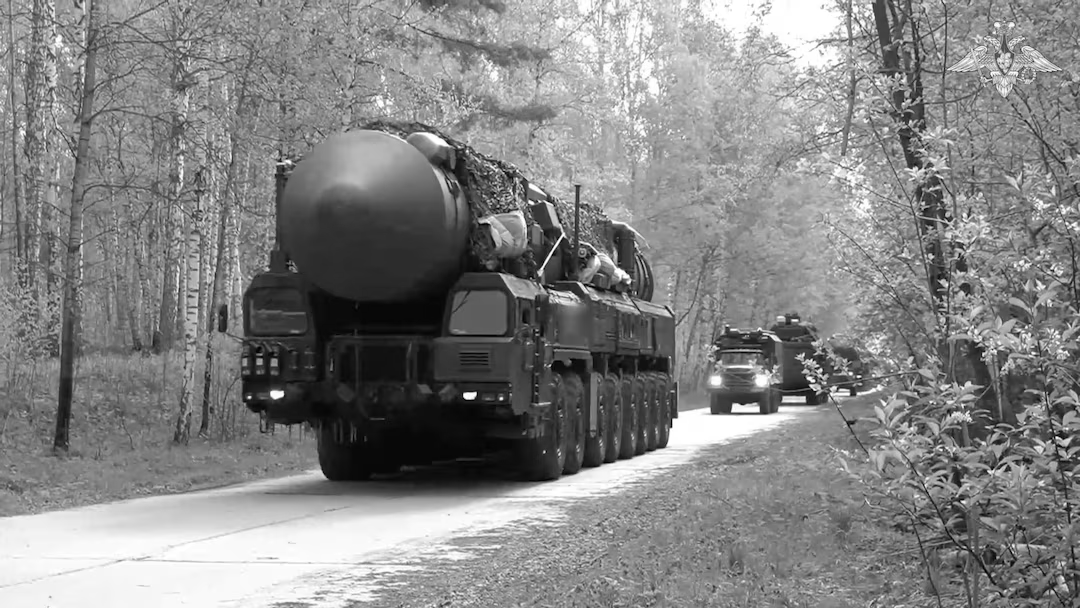
The three-day drills, which concluded Thursday, involved the movement of trucks carrying intercontinental ballistic missiles (ICBMs) through forest routes, the deployment of atomic-powered submarines from Arctic and Pacific naval bases, and combat aircraft crews scrambling into operational positions. Russia’s Defence Ministry said the exercises focused on the “ preparation and use of nuclear forces under the threat of aggression .”
According to official figures, the drills involved around 64,000 troops , more than 200 missile launchers , over 140 aircraft , 73 surface warships and 13 submarines , including eight equipped with nuclear-tipped ballistic missiles. Russia also showcased several advanced weapons systems, including the Iskander , Kinzhal , Zircon , Yars and Sineva missile platforms, highlighting the scale of its strategic military capabilities.
The exercises come amid a sharp increase in Ukrainian drone attacks targeting Russian territory. Recent strikes reportedly hit Moscow suburbs, industrial facilities and energy infrastructure, killing civilians and exposing vulnerabilities deep inside Russia. The attacks have complicated the Kremlin’s long-standing effort to portray the war as distant from everyday Russian life.
A key focus of the drills was Russia’s expanding nuclear cooperation with Belarus . Belarusian President Alexander Lukashenko personally inspected Russian nuclear-capable Iskander ballistic missile systems , openly praising the weapon platform. Belarus currently hosts Russian tactical nuclear weapons and is expected to integrate the newer Oreshnik intermediate-range missile system , believed to possess hypersonic capabilities designed to challenge NATO missile defences.
The military exercises also reflect Moscow’s increasingly aggressive nuclear messaging toward the West. In 2024, Russian President Vladimir Putin revised Russia’s nuclear doctrine, stating that any conventional attack backed by a nuclear power could be treated as a joint assault on Russia, effectively lowering the threshold for possible nuclear retaliation.
The updated doctrine also formally placed Belarus under Russia’s nuclear umbrella, deepening military integration between the two allies and heightening concerns across Eastern Europe and NATO’s eastern flank.