
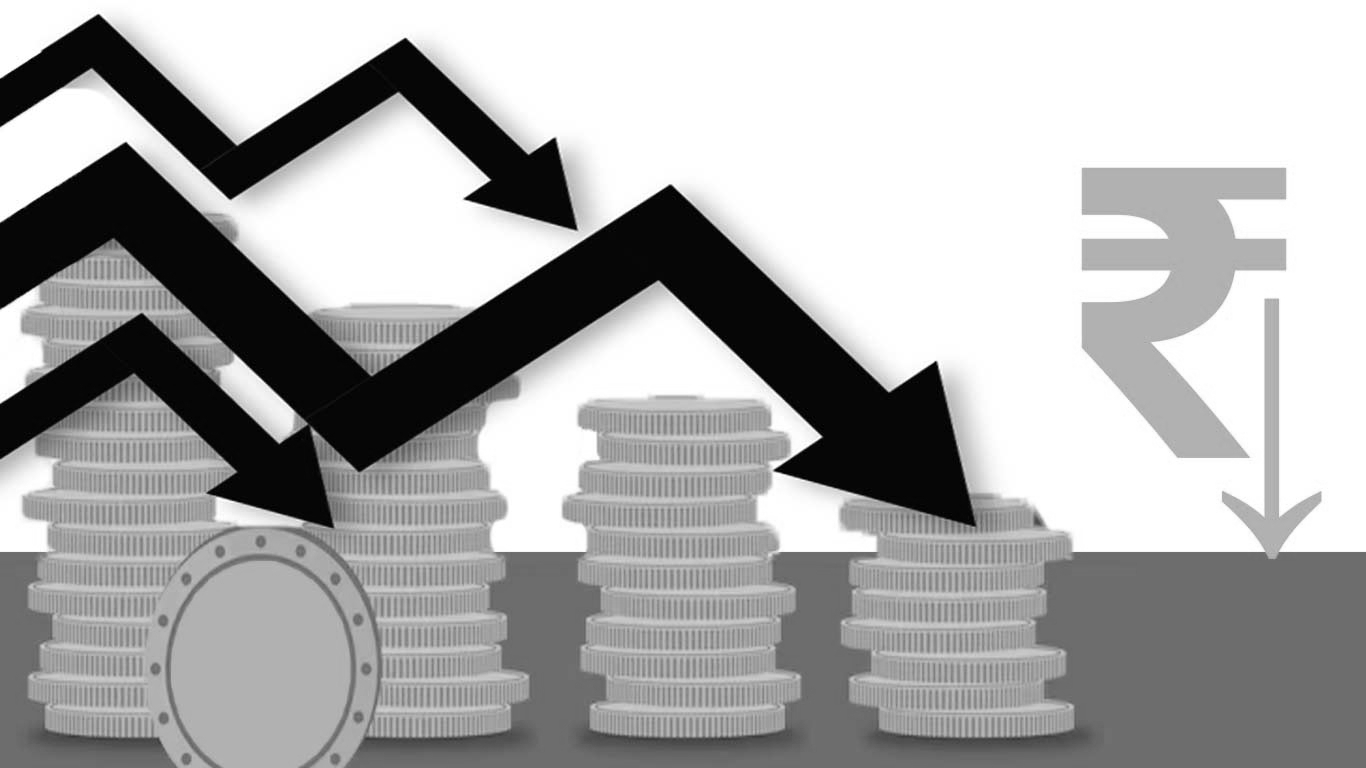
Rupee hits record low of ₹90.20 against US dollar, RBI policy in focus
The Indian rupee slipped past the ₹90-per-dollar mark on Wednesday morning, hitting a fresh all-time low of ₹90.205. Analysts say this depreciation was largely expected due to a mix of domestic and global pressures.
Experts point to India-specific factors such as delays in the India-United States (US) trade deal and continued foreign portfolio investor (FPI) outflows from Indian equities. Jateen Trivedi of LKP Securities noted that repeated delays in the trade agreement heightened uncertainty, prompting accelerated selling. With the Reserve Bank of India (RBI) remaining largely inactive in currency markets, traders had anticipated the rupee crossing this milestone if pressures persisted.
The uncertainty around the India-US trade pact has had a direct impact on the rupee. A confirmed trade deal would signal stronger economic ties, predictable exports and imports, and increased dollar inflows, supporting the currency. Conversely, repeated delays have created apprehension among investors and FPIs, prompting capital outflows and increased demand for US dollars, both of which weaken the rupee. FICCI President Anant Goenka echoed this view, calling the depreciation temporary and expressing optimism that the rupee will strengthen once the trade deal is finalized, which is expected to benefit key sectors like garments, marine products, and gems and jewelry.
Alongside domestic pressures, several global factors are weighing on the rupee. The US Federal Reserve has kept interest rates high, attracting global capital into US assets. This strong demand for the US dollar pushes emerging-market currencies, including the INR, downward. Meanwhile, foreign investors have been reducing exposure to Indian equities and debt, further increasing demand for dollars and adding pressure on the rupee.
India’s high trade deficit and oil imports also contribute to sustained dollar outflows. With imports, particularly crude oil, exceeding exports, more dollars leave the country than enter, structurally weakening the rupee. A rising current account deficit (CAD) further compounds this effect, creating a long-term imbalance between India’s imports and exports. Global risk-off sentiment, driven by geopolitical tensions, oil price volatility, and fears of a global slowdown, encourages investors to seek safe-haven currencies like the USD. Additionally, the interest rate gap between the US and India makes US assets more attractive, causing capital outflows from India.
Kotak Securities’ Anindya Banerjee described ₹90 as a crucial psychological barrier, warning that sustained trading above this zone could trigger further depreciation toward ₹91, stressing the RBI’s role in preventing a one-way trend that could increase volatility. Analysts now point to key technical support in the ₹88.80–₹89.00 zone, with immediate resistance at ₹90.00. CRISIL Chief Economist Dharmakirti Joshi offered a note of optimism, stating that the rupee could strengthen if the India-US trade deal is finalized and global financial conditions remain favourable.
Markets are now closely watching the RBI’s ongoing three-day Monetary Policy Committee (MPC) meeting, with the policy outcome expected on Friday, December 5. Policymakers are likely to maintain focus on inflation and external stability, and any signal regarding currency support or rate adjustments could influence the rupee’s path. Investors are now awaiting the RBI’s policy announcement on December 5, 2025, which could stabilize the currency and prevent further volatility.
Chief Economic Advisor V. Anantha Nageswaran downplayed concerns over the currency breach. Speaking at a CII summit, he said, “I am not losing my sleep over it. Right now it’s not hurting our exports or inflation. If it has to depreciate now, probably is the right time. It will come back next year.”
Global markets show a mixed picture. Japan’s Nikkei 225 rose about 1.6%, while South Korea’s KOSPI gained roughly 1.3%, supported by optimism over potential global interest-rate cuts and strong technology stocks. Markets in China and Hong Kong remained subdued, highlighting that the rupee’s slump is driven more by domestic factors than a broad global currency trend.
The breach of ₹90 marks a historic low for the rupee, driven by domestic trade uncertainty, FPI outflows, and global pressures such as a strong US dollar and rising interest rate gaps. As the rupee navigates these challenging waters, all eyes remain on the RBI’s upcoming policy decision and progress on the India-US trade deal, which could stabilize the currency and restore investor confidence.