
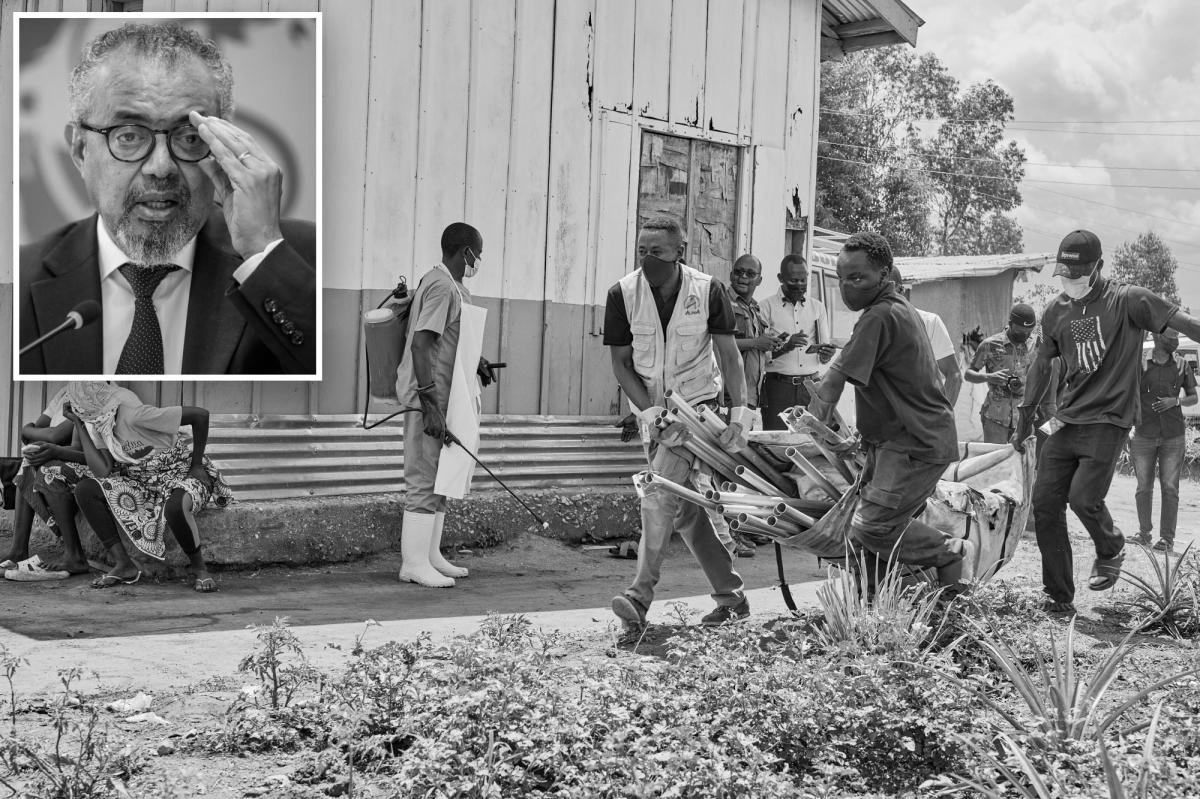
Rubio Blames WHO for Slow Ebola Response After Pulling US Funding, DRC Cases Rise to 600
The WHO confirmed 600 suspected cases and 139 suspected deaths across the Democratic Republic of Congo and Uganda as of May 20, with Director-General Tedros Adhanom Ghebreyesus warning the numbers "are expected to keep increasing", a phrase that, by now, has become this outbreak's grimly recurring refrain. Of these, 51 cases are confirmed in DRC's Ituri and North Kivu provinces, with Uganda reporting two confirmed cases in Kampala both travellers from DRC, one of whom has already died.
The WHO's on-ground team leader in Congo warned the outbreak could last at least another two months , even as aid efforts intensify. UNICEF has already airlifted over 15 tonnes of supplies into Bunia, a logistical feat in a region where conflict has displaced over 100,000 people since late 2025. Residents in eastern Congo are reportedly panic-buying face masks and disinfectants, with prices surging, the market's blunt verdict on public confidence in the official response.
The WHO's formal risk assessment is unambiguous: high risk at national and regional levels, low at the global level , a distinction that will comfort Geneva far more than it comforts Kampala or Kinshasa. The outbreak is driven by the Bundibugyo strain , a rare Ebola variant with a 40% fatality rate and, crucially, no approved vaccine or treatment in existence. Congo is, however, expecting experimental vaccine shipments from the United States and Britain designed for different Ebola strains better than nothing, though only just.
Now, enter Marco Rubio with breathtaking audacity. The US Secretary of State declared the WHO was "a little late" identifying the outbreak, even as Washington has committed a modest $13 million in assistance following sweeping cuts to American foreign aid budgets. This from an administration that withdrew entirely from the WHO , gutting its detection capacity in the world's most vulnerable regions, and is now critiquing the response time of the organisation it starved and abandoned. That's not criticism that's sabotage followed by a press conference.
Tedros responded with restrained but unmistakable sharpness, suggesting Rubio's remarks "could be from a lack of understanding of how International Health Regulations work," noting the WHO supports countries rather than replacing them. Initial tests returned false negatives because kits were calibrated for the common Zaire strain, samples had to travel 1,700 kilometres to Kinshasa for accurate diagnosis. That is not a WHO failure. That is the direct consequence of chronically underfunded health infrastructure in a conflict-ravaged, mining-zone region that the world chose, deliberately and repeatedly, to deprioritise.
The virus doesn't care about politics. The death toll, unfortunately, reflects exactly who does.