
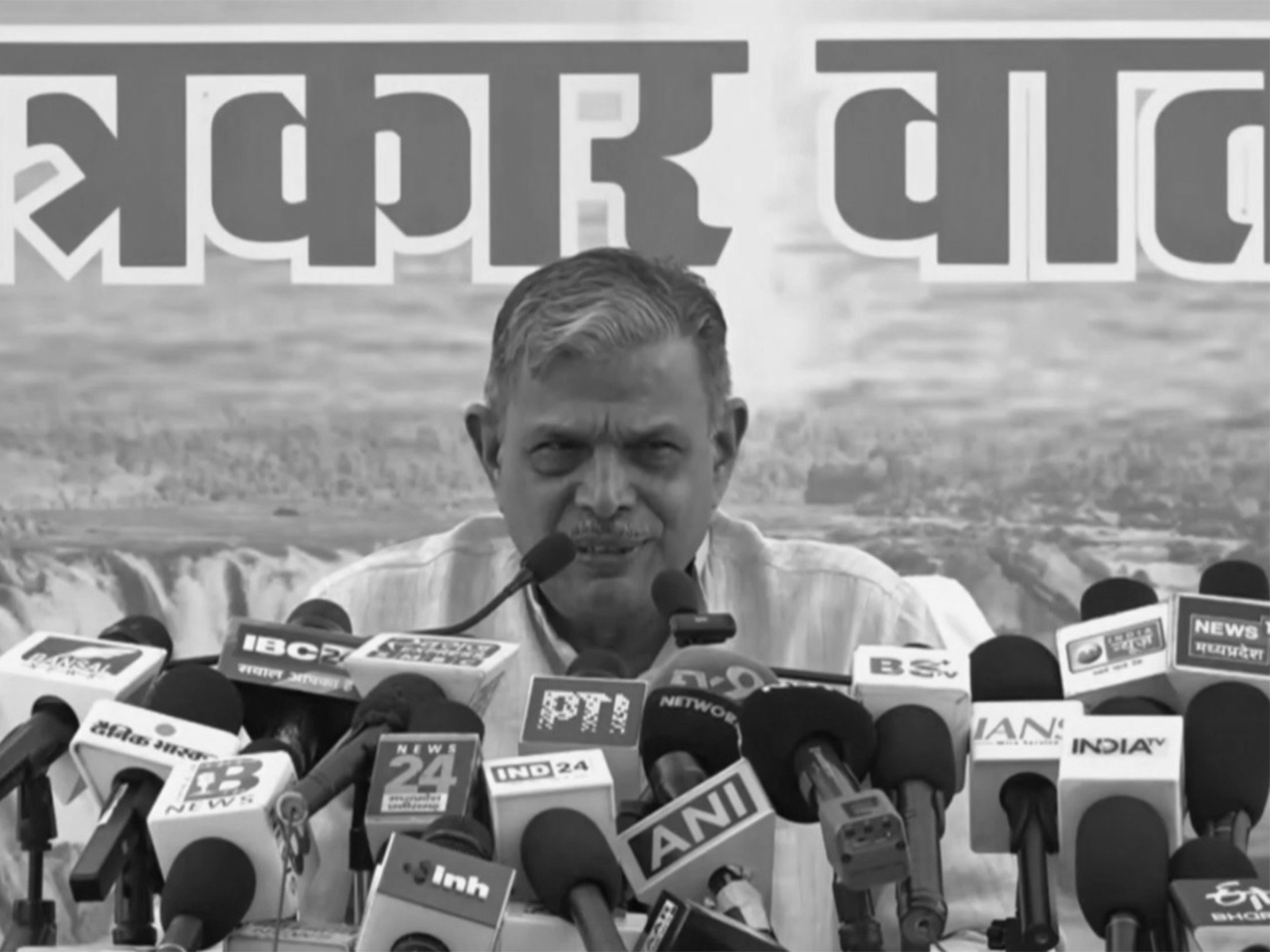
RSS leader Dattatreya Hosabale opposes Mallikarjun Kharge’s call for ban on organisation
Rashtriya Swayamsevak Sangh (RSS) General Secretary Dattatreya Hosabale on Friday opposed Congress President Mallikarjun Kharge’s recent call for banning the organisation, asserting that there must be a valid reason for such a move. Hosabale said the RSS has long been involved in nation-building activities and enjoys acceptance among the public.
“There must be a reason behind the ban. What will be gained by banning an RSS that is engaged in nation-building? The public has already accepted the RSS,” Hosabale said during a press conference in Jabalpur, Madhya Pradesh, after the second day of the Akhil Bharatiya Karyakarni Mandal meeting. The meeting, convened by RSS Sarsanghchalak Mohan Bhagwat, discussed the organisation’s programmes to mark its 100th anniversary and other national issues.
The remarks came days after Congress President Mallikarjun Kharge demanded a ban on the RSS, holding the organisation and the ruling Bharatiya Janata Party (BJP) responsible for the prevailing law and order situation in the country. Kharge urged Prime Minister Narendra Modi to follow the example of Sardar Vallabhbhai Patel, who had banned the RSS in 1948 following the assassination of Mahatma Gandhi. “If the Prime Minister respects the views of Vallabhbhai Patel, this should be done. All the wrongs in the country and all law and order issues here are due to BJP and RSS,” Kharge said.
Earlier, Priyank Kharge, Karnataka minister and son of Mallikarjun Kharge, had also urged Chief Minister Siddaramaiah to bar RSS activities in government schools, colleges, and state-run temples, alleging that the organisation was “brainwashing young minds” and promoting a philosophy contrary to the Constitution.
Founded in 1925 by Keshav Baliram Hedgewar in Nagpur, the RSS recently completed 100 years of its existence. The organisation was temporarily banned after Gandhi’s assassination but later reinstated after an inquiry found no evidence of its direct involvement in the incident.
Constitutionally, banning a socio-political organisation like the RSS involves complex legal considerations. Under Article 19(1)(c) of the Constitution, citizens have the right to form associations, though the State may impose restrictions under Article 19(4) for reasons of sovereignty, integrity, or public order. Any ban would likely be imposed under the Unlawful Activities (Prevention) Act, 1967, subject to review by a judicial tribunal and open to challenge in court.