
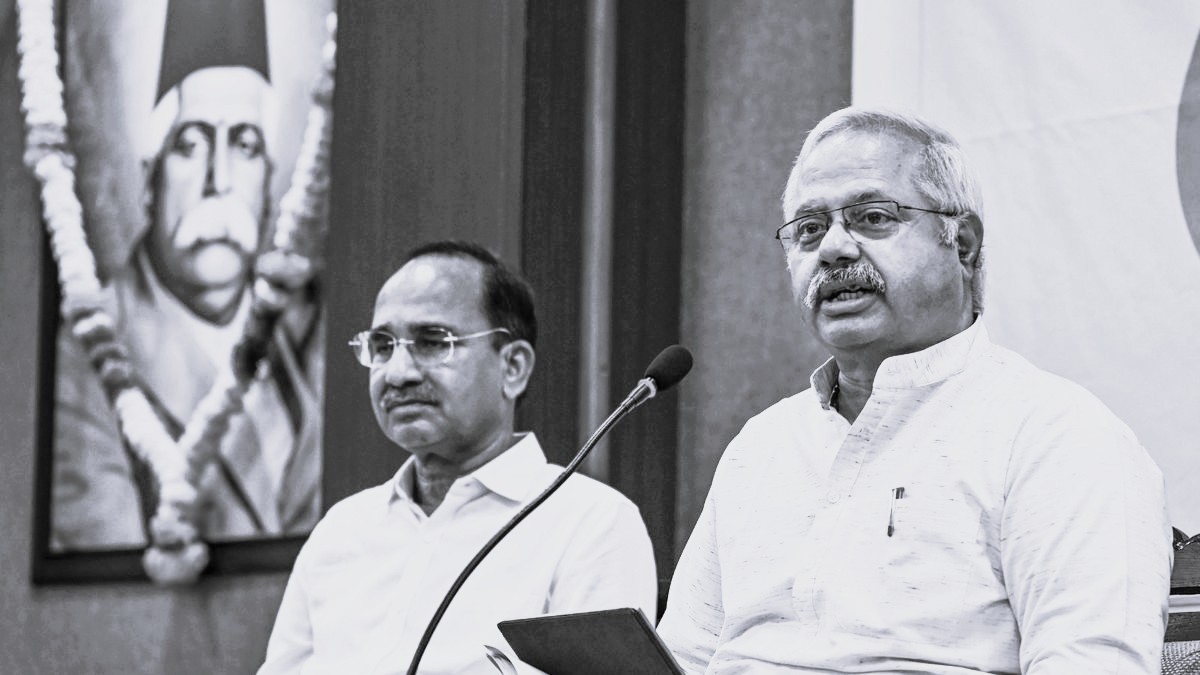
RSS leader applauds new history curriculum
Rashtriya Swayamsevak Sangh (RSS) leader Sunil Ambekar has highlighted several positive changes in India’s school history textbooks, including the removal of honorifics like “the Great” for Mughal emperor Akbar and Mysore ruler Tipu Sultan.
Speaking at the Orange City Literature Festival organized by the SGR Knowledge Foundation on Friday, Ambekar said these revisions aim to present a more accurate account of history while retaining the lessons from the deeds of historical figures.
“History textbooks are changing, and I am happy that the National Council of Educational Research and Training (NCERT) has taken this initiative,” Ambekar said. According to him, the modifications have been introduced in textbooks for 11 of the 15 school grades, with the remaining updates for Classes 9, 10, and 12 set to be implemented next year.
Ambekar emphasized that the revisions do not remove any historical figures from the textbooks. “Nobody has been removed because the new generation should know both the accomplishments and the cruel deeds of these rulers,” he said. “It is important for students to understand the history of victimization and the forces from which we have struggled to be free.”
The RSS leader stressed the importance of India’s rich cultural and intellectual heritage. “India has vast resources of ancient knowledge that, if studied and understood, can greatly benefit our lives and also be shared with the world. Focusing on this knowledge is crucial,” he said.
Ambekar also spoke about Nalanda University, countering common perceptions that it focused only on religious texts like the Vedas, Puranas, Ramayana, and Mahabharata. He noted that Nalanda offered a broad curriculum, including 76 skill-based courses in areas such as farming, urban planning, political governance, mechanization, make-up, and even intelligence work. “The university taught practical skills along with literature, which shows how advanced education was in ancient India,” he said.
Touching upon India’s current progress, Ambekar said the nation is prospering, but warned against compromising culture and values in the pursuit of development. “People around the world have surrendered to markets and new technologies, gaining conveniences but losing personal and family life, values, and relationships,” he said.
The RSS leader also reflected on the significance of the Ram temple in Ayodhya. “It was not just about constructing a temple. The campaign was about understanding our relationship with Lord Ram, the culture he represents, and its connection to our country and future,” he said. Ambekar noted that the movement has inspired youth to take pride in their dharma and cultural identity.
He praised the country’s younger generation for being talented, informed, and patriotic. “The youth today have exposure, ability, and a sense of patriotism. For them, being patriotic is ‘cool,’” he added.
Ambekar concluded by expressing hope that the ongoing reforms in education and society would help the new generation learn from history, embrace India’s rich cultural heritage, and develop a balanced understanding of the past while preparing for the future.