
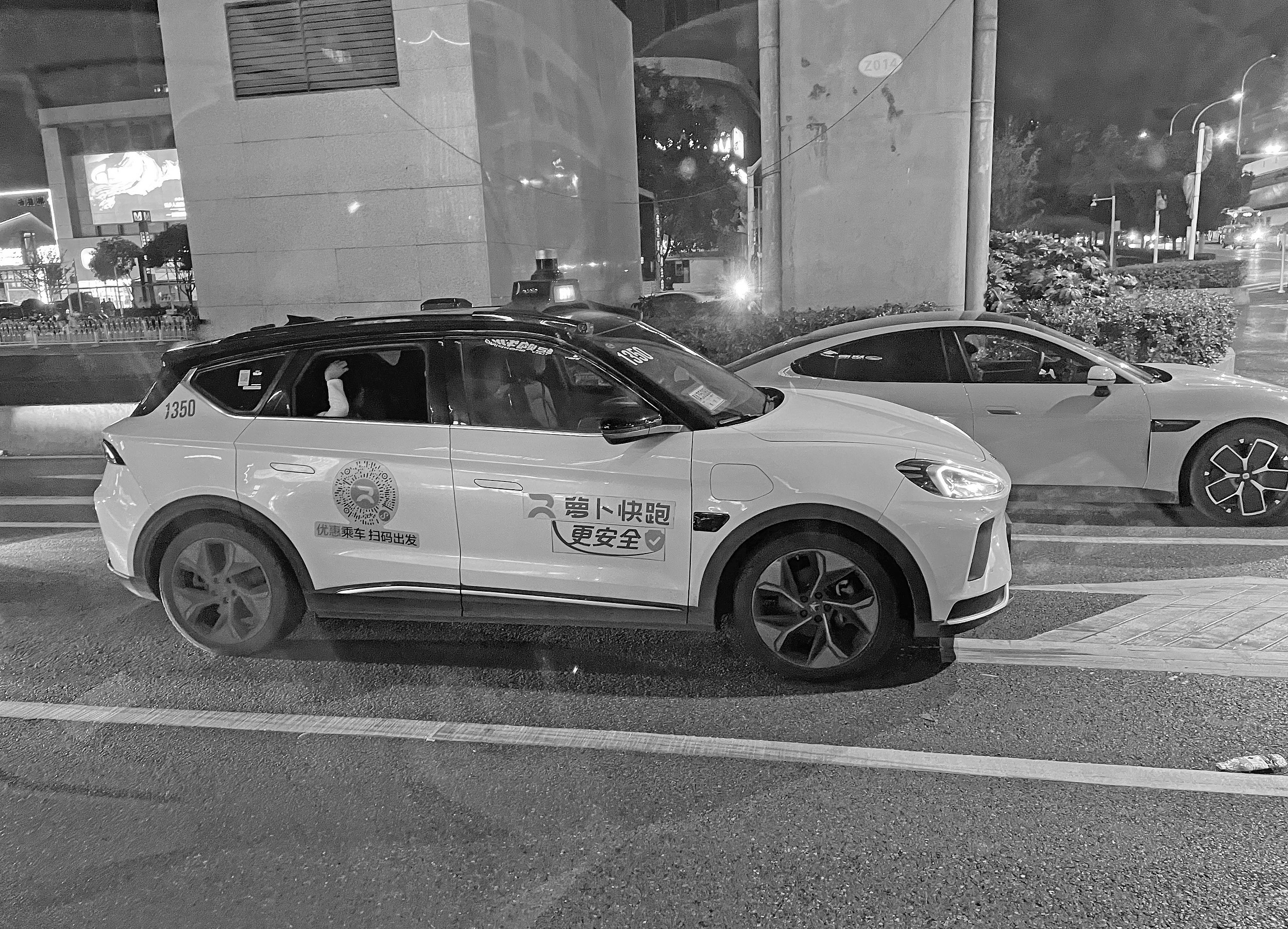
Robotaxi Chaos in Wuhan: Over 100 Autonomous Cars Halt Amid Traffic
Over 100 robotaxis were left stranded in the middle of fast-moving traffic in Wuhan, China , on Wednesday after a system malfunction caused the driverless vehicles to stop, police and media reports said. No injuries were reported, but the incident raised safety concerns for passengers traveling on busy roads.
According to the Wuhan police , the outage began around 9 pm, affecting multiple vehicles simultaneously. Affected passengers reported that screens in the taxis displayed the message: “Driving system malfunction. Staff are expected to arrive in 5 minutes.” When no staff arrived promptly, some passengers used the SOS button, which confirmed help was on the way. While some passengers were able to exit the taxis on their own , others hesitated, especially as several vehicles had stopped on elevated ring roads , where traffic moves at high speeds without traffic lights.
This is the first mass shutdown of robotaxis reported in China. Wuhan has served as an early pilot city for Baidu’s Apollo Go robotaxi service, which currently operates over 1,000 vehicles mostly in China. Baidu did not provide an immediate comment on the cause of the malfunction.
The company has recently been expanding its robotaxi services overseas , launching operations in Abu Dhabi and Dubai , and is working with partners to introduce the service in the United Kingdom and Switzerland .
A similar incident occurred in December last year when Waymo’s self-driving cars in San Francisco came to a halt due to a power outage , leaving passengers temporarily stranded.
Authorities and media reports said multiple people were rescued from the stranded vehicles, and the situation was resolved without injuries. The incident highlights the challenges of scaling autonomous vehicle services in urban areas with dense and high-speed traffic.
Baidu’s ongoing expansion of its Apollo Go service demonstrates the growing role of driverless taxis in global urban transport, but this event underscores the need for robust system reliability and emergency response measures to ensure passenger safety.