
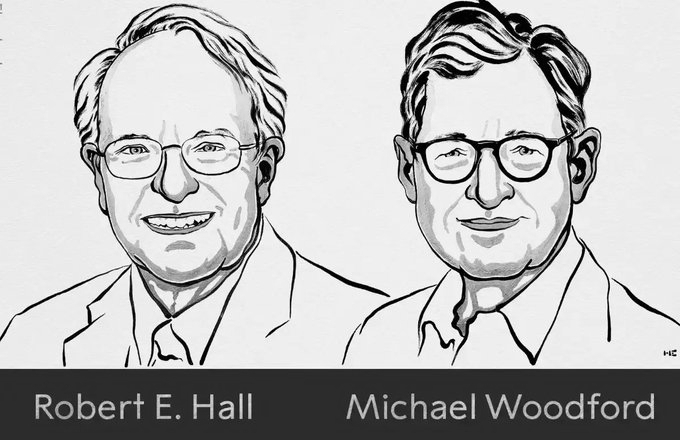
Robert E. Hall, Michael Woodford Win 2026 Nobel Economics Prize for Explaining Economic Stability
American economists Robert E. Hall and Michael Woodford won the 2026 Nobel Memorial Prize in Economic Sciences on Monday for their research on the microeconomic foundations of macroeconomic stabilisation, helping explain how governments and central banks can manage inflation, recessions and economic shocks.
The Royal Swedish Academy of Sciences announced the award, which carries 12 million Swedish kronor, to be shared equally between the two laureates.
Their research addresses a central challenge in economic policymaking: how to reduce the severity of economic booms and downturns without creating other problems, such as rising inflation or unemployment.
Hall and Woodford helped strengthen economic models by examining how individual decisions by households and businesses shape the wider economy. Their work explores how people make choices about spending and saving, how companies decide on investment and pricing, and how expectations about future economic conditions influence those decisions.
The importance of this approach can be understood when energy prices rise sharply. Higher fuel costs increase transport and production expenses, putting pressure on household budgets and business profits. Families may cut spending, while companies may delay investment or expansion. These responses can weaken demand and slow economic growth even as inflation remains high. Understanding these interconnected decisions helps policymakers assess the likely effects of changes in interest rates, taxes and public spending.
Their research also highlights how expectations about future inflation, interest rates and economic policy influence decisions made today. This helps explain why policy announcements and central bank credibility can affect economic behaviour even before a measure takes effect.
The economists' work has contributed to the theoretical foundations of modern stabilisation policies, providing tools to understand how economies respond to shocks and how policy interventions can limit damaging fluctuations.
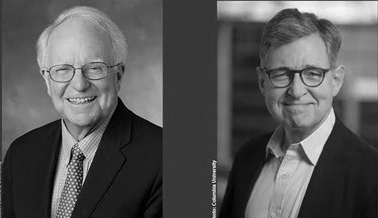
Hall, born in 1943, is a professor at Stanford University in California. Woodford, born in 1955, is a professor at Columbia University in New York.
Formally known as the Sveriges Riksbank Prize in Economic Sciences in Memory of Alfred Nobel, the award was established in 1968 through a donation from Sweden's central bank and was first presented in 1969.