
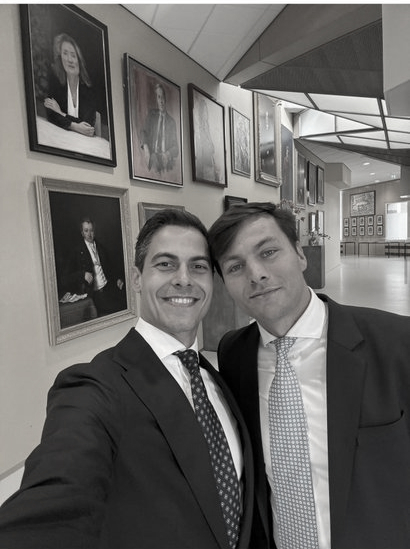
Rob Jetten set to become Netherlands’ youngest and openly gay prime minister after D66’s narrow election
The centrist D66 party, led by Rob Jetten, has narrowly pulled ahead in the Dutch general election. D66 holds a slim lead over Geert Wilders’ far-right PVV and is projected to be the party to lead coalition talks - a result that would make Jetten, 38, the youngest and the first openly gay prime minister of the Netherlands.
With D66 and PVV effectively neck-and-neck at 26 seats each in the 150-seat House (final overseas ballots to be counted), analysts say the result marks voter fatigue with constant confrontation and a tilt back toward moderation and stability.
Speaking to supporters in The Hague, Jetten urged rapid coalition talks and emphasised unity: “We do not want to waste time unnecessarily because the Dutch people are asking us to get to work.” Wilders accepted the setback but vowed to remain an active opposition voice.
From Uden to national leader
Born in Uden in 1987, Jetten joined D66 as a teenager, entered parliament in 2017 and later served as Minister for Climate and Energy, building a reputation as a pragmatic, consensus-driven politician skilled at coalition building. Analysts say his temperament and policy mix of economic innovation, climate action and social liberalism helped broaden D66’s appeal.
Jetten is openly gay and engaged to Nicolás Keenan, a former Argentine-Dutch national field-hockey player. Their visibility has been welcomed by many Dutch voters as a symbol of inclusivity and authenticity and would add symbolic weight to a D66 government in Europe.
Coalition math
To govern, Jetten must assemble at least 76 seats. The likeliest route is a multi-party “grand alliance” - D66 plus combinations of the VVD, CDA, Green/Labour and smaller liberal partners - though VVD scepticism about working with Green/Labour complicates negotiations. Parliament will appoint a “scout” on Tuesday to begin formal exploratory talks; the process may stretch for weeks.
Openly gay heads of Government
If Jetten becomes prime minister, he would join a small group of openly gay national leaders in modern democratic history, including: Jóhanna Sigurðardóttir (Iceland, 2009–2013), who was the world’s first openly LGBT head of government; Elio Di Rupo (Belgium, 2011–2014), the first openly gay man to win a national premiership; Xavier Bettel (Luxembourg, 2013– ), a prominent openly gay European leader; Leo Varadkar (Ireland, first appointed 2017), Ireland’s first openly gay Taoiseach; and Ana Brnabić (Serbia, 2017– ), one of the few openly gay Balkan leaders. Their tenures have been cited widely as landmarks for LGBT visibility in politics.
EU officials have welcomed the centrist outcome as stabilising for the bloc, noting that a D66-led government would likely reaffirm Dutch support for the EU Green Deal, digital governance and cooperative migration policies. Observers say the result could recalibrate debates about populism across Europe.