
Rising Tensions, Rising Prices: China Braces for Fuel Crunch
China has increased retail fuel prices as a precautionary measure amid concerns of a potential fuel shortage caused by the ongoing US-Israel-Iran conflict. The country’s top economic planner, the National Development and Reform Commission (NDRC) , announced that gasoline prices will rise by 1,160 yuan per tonne (around USD 168) and diesel by 1,115 yuan per tonne (USD 159) starting today .
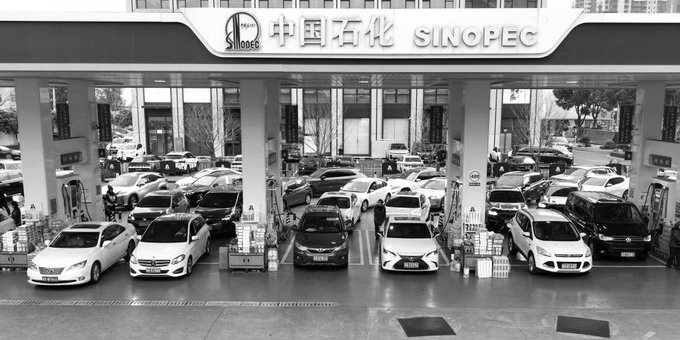
The NDRC stated that the temporary measures are aimed at mitigating the impact of the abnormal rise in international oil prices , reducing the burden on downstream users, and ensuring stable economic operations and social livelihood . Following the announcement, vehicle owners across China rushed to gas stations to fill their tanks, reflecting concerns over potential shortages.
China reportedly maintains around four months of emergency fuel reserves , but the West Asia conflict has heightened supply risks. The Strait of Hormuz , a key shipping route for about 20 per cent of the world’s energy, has been effectively blocked , disrupting crude oil flows. China imports roughly 70 per cent of its crude oil , with about 45 per cent of these imports dependent on shipments through the Strait of Hormuz . This means approximately 30 per cent of China’s total oil supply is exposed to potential disruption.
However, analysts say China is relatively less vulnerable compared to other major economies. Andrew Tilton, a China economics analyst at Goldman Sachs in Hong Kong , noted that the country’s energy consumption and power generation mix reduces exposure to supply shortages from Hormuz disruptions. Additionally, China has gas pipelines linked to Russia and long-term energy contracts with Moscow , providing alternative energy sources.
The move underscores Beijing’s proactive approach to energy security amid geopolitical uncertainty. While the fuel price hike may increase short-term costs for consumers, the government aims to stabilize the economy and prevent broader disruptions in the energy market.
With global oil prices remaining volatile and geopolitical tensions ongoing, China’s strategy highlights its efforts to balance economic stability with energy security , ensuring both businesses and households are prepared for potential shortages.