
Retail Inflation at 3.4% Masks Hidden Fuel Pressures Amid Election-Season Price Freeze
India’s retail inflation rose marginally to 3.4% in March , from 3.21% in February , staying below the 4% target of the Reserve Bank of India , but the headline number appears to understate underlying price pressures as fuel costs remain artificially suppressed. Data released by the National Statistics Office showed that the increase was driven primarily by food inflation , which climbed to 3.87% , alongside selective increases in other categories.
Within the food basket, inflation was elevated in tomato, cauliflower and coconut (copra) , while gold and silver jewellery prices surged amid global uncertainty. However, declines in staples such as onion, potato, garlic, arhar dal and chickpeas helped contain the overall rise. Rural inflation stood higher at 3.63% , compared to 3.11% in urban areas , reflecting persistent pressure in non-urban consumption.
Beneath the surface, however, lies a more consequential story. Despite a sharp rise in global crude oil prices triggered by the ongoing West Asia crisis , retail petrol and diesel prices have remained artificially unchanged , effectively insulating the inflation print from what would otherwise have been a sharper increase. This has resulted in unusually muted readings in the transport segment , which showed no inflation , and only a marginal uptick in the broader fuel-related category .
Economists estimate that, under a full pass-through of global fuel costs, March inflation could have been 20 to 50 basis points higher . The current stability, therefore, is not entirely organic but partly the result of administrative suppression of fuel prices .
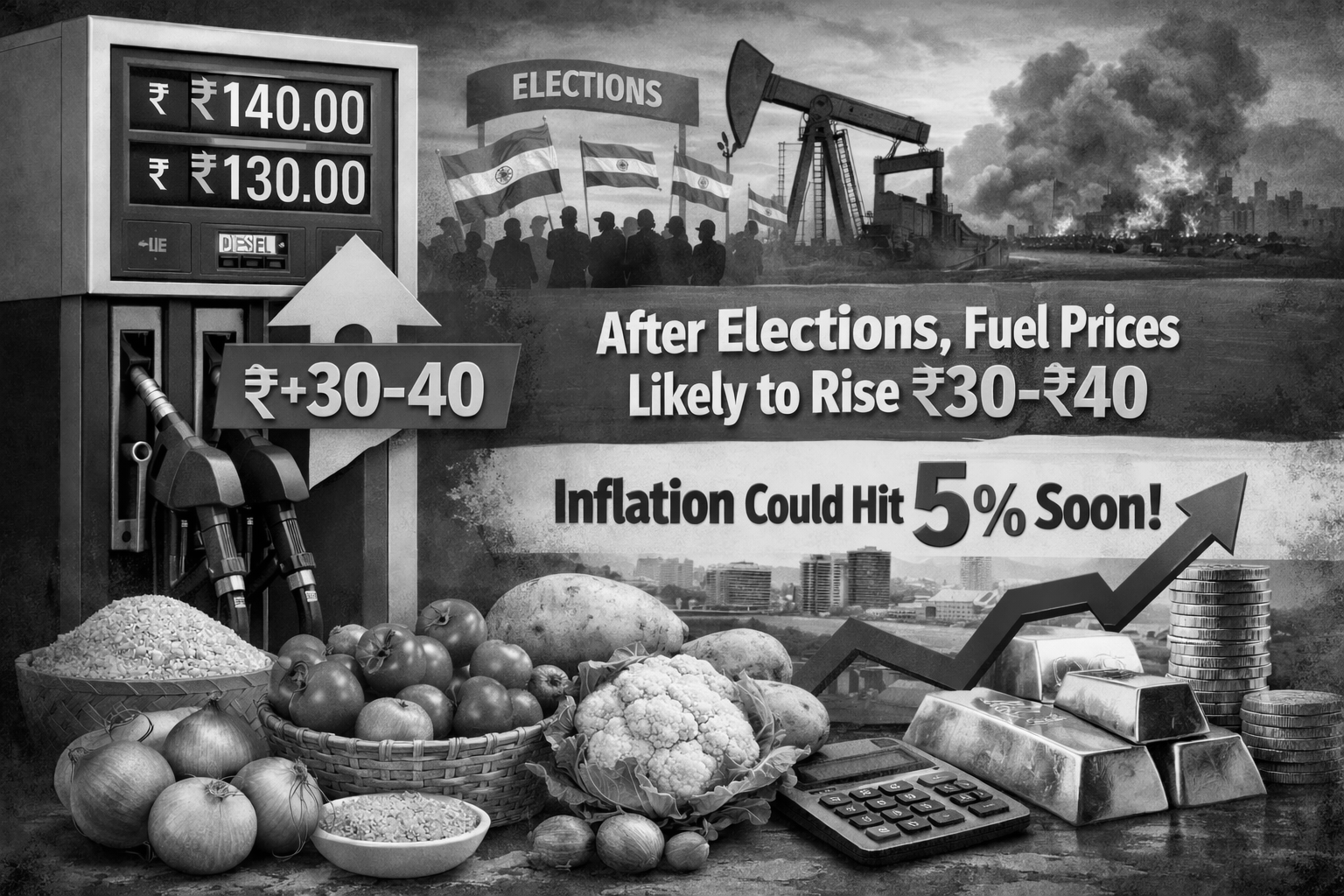
More importantly, this suppression is unlikely to hold indefinitely. With crude prices elevated and domestic fuel rates lagging, there is a growing likelihood that the government will eventually adjust prices to bridge the gap . Such a correction, when it comes, could be sharp. If current trends persist, retail fuel prices could rise 30% to 40% , triggering second-order effects across transport, logistics, and services .
That, in turn, could push inflation well above the 5% mark within a quarter , making the current 3.4% print look deceptively benign. What appears today as price stability may, in reality, be a temporary deferral of inflationary pressure .
At the same time, India’s inflation framework itself is evolving. The new CPI series, with 2024 as the base year , now includes modern consumption elements such as OTT subscriptions, e-commerce pricing and airfares , reflecting changing household spending patterns. While these have not yet driven volatility, they will increasingly shape inflation dynamics in a services-led economy.
For now, inflation remains within tolerance levels. But with food prices firming , precious metals rallying , and fuel costs artificially contained , the March figure may offer a misleading sense of comfort. The real test will come when suppressed price pressures begin to surface and that test may not be too far away.