
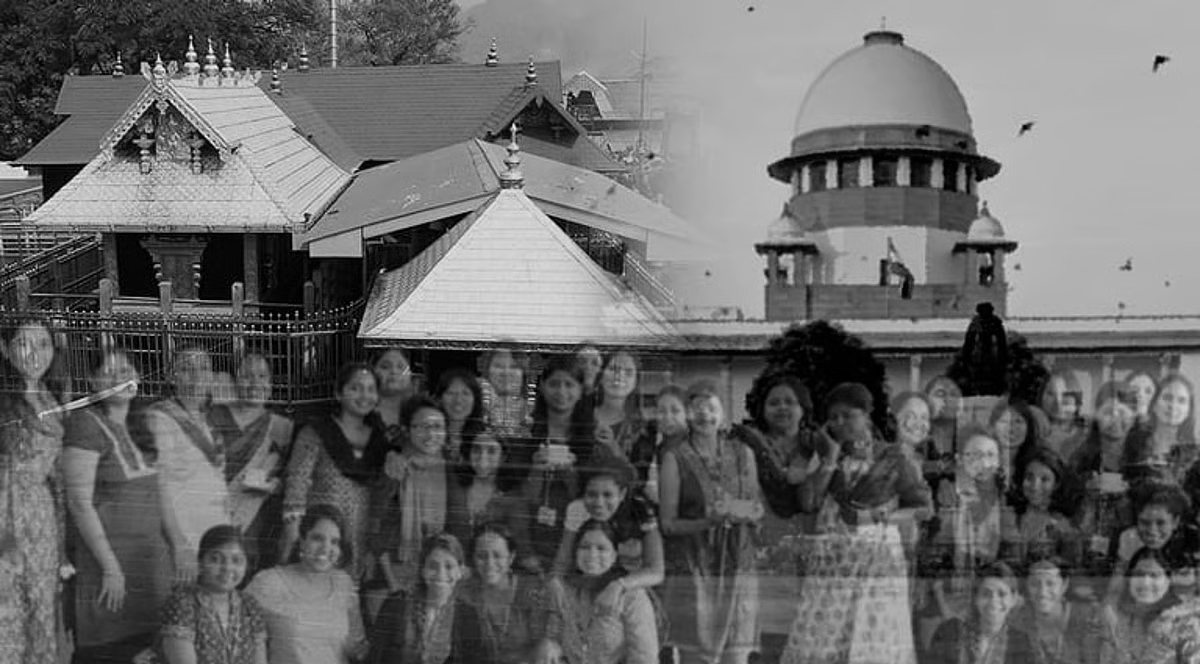
Religious freedom vs equality: SC to hear key petitions on women at places of worship
The Supreme Court will begin hearing a crucial set of petitions on April 7 that deal with alleged discrimination against women at religious places , reopening one of the most significant constitutional debates in India on the balance between religious freedom and gender equality .
A nine-judge Constitution bench , headed by Chief Justice Surya Kant , will examine broader legal questions related to women’s access to places of worship and the scope of religious rights under the Constitution. The bench also includes Justices B V Nagarathna, M M Sundresh, Ahsanuddin Amanullah, Aravind Kumar, Augustine George Masih, Prasanna B Varale, R Mahadevan and Joymalya Bagchi .
The case originates from the landmark 2018 Sabarimala verdict , where a five-judge bench of the Supreme Court ruled by a 4:1 majority that the centuries-old restriction preventing women aged between 10 and 50 from entering the Ayyappa temple in Kerala was unconstitutional. The judgment sparked nationwide debate and protests, leading to multiple review petitions.
In November 2019 , another five-judge bench led by then Chief Justice Ranjan Gogoi decided that the broader constitutional issues raised in the case required examination by a larger bench. The court said questions involving the extent of religious freedom and the rights of religious denominations could not be decided without a deeper interpretation of constitutional principles.
Apart from Sabarimala, the court will also look at related questions involving Muslim women’s entry into mosques and dargahs , and whether Parsi women married to non-Parsi men can enter the sacred Agiary fire temples .
The bench will examine key constitutional questions, including the scope of Article 25 , which guarantees freedom of religion, and how it interacts with Article 26 , which protects the rights of religious denominations to manage their own affairs. It will also consider whether religious practices can be challenged if they conflict with other fundamental rights , the meaning of “morality” in constitutional terms , and the extent of judicial review over religious traditions .
The court is expected to hear arguments in the matter from April 7 to April 22 . Legal experts say the outcome could have far-reaching implications for how India balances faith, tradition and constitutional equality in a diverse and multi-religious society.