
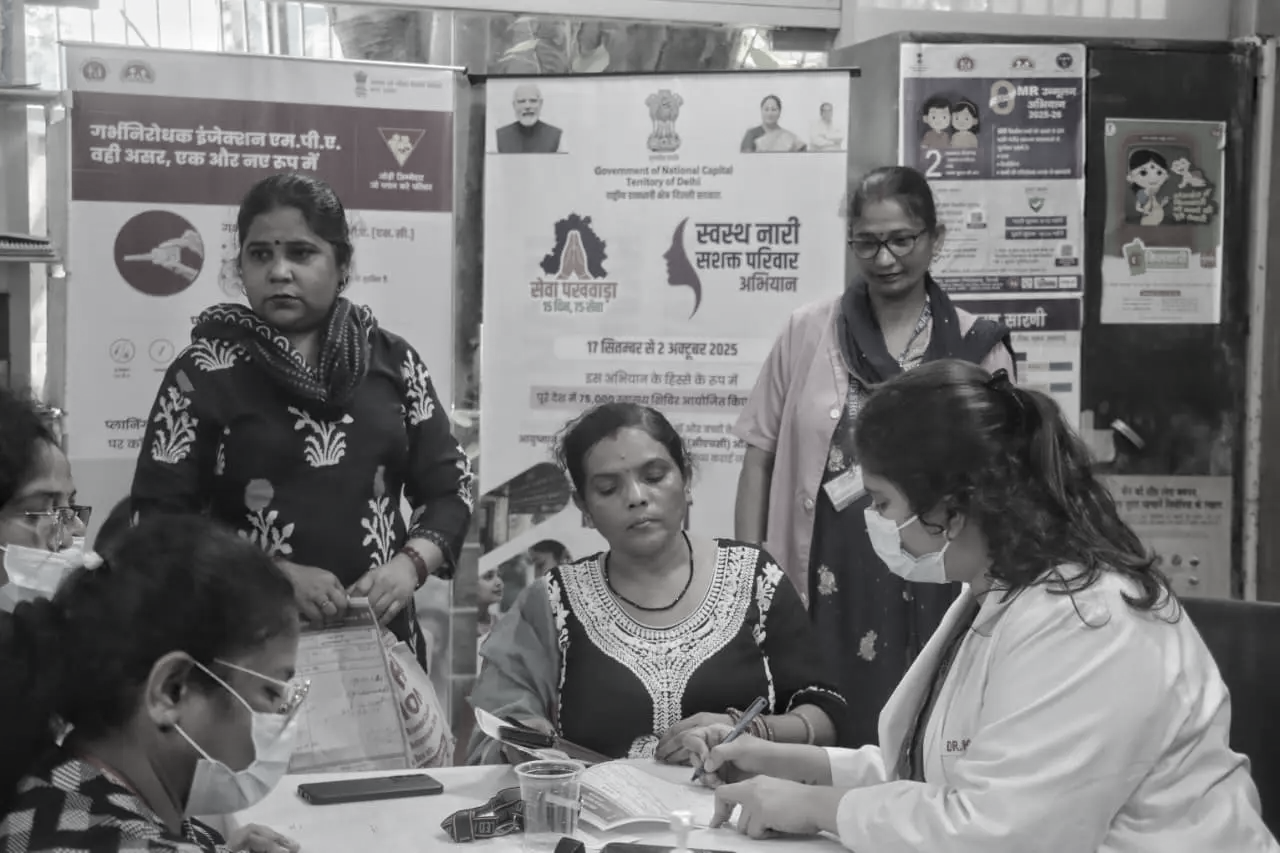
Record reach: 6.5 crore women screened in just two weeks, says Nadda
Union Health Minister J.P. Nadda on Saturday announced that over 6.5 crore women were screened across India through nearly 18 lakh health camps under the ‘Swasth Nari, Sashakt Parivar (Healthy Woman, Empowered Family)’ campaign.
Calling it a "historic milestone," Nadda said the campaign reflects the nation’s collective resolve to prioritise women’s health for stronger families and thriving communities.
Launched on September 17 and concluded on October 2 , the two-week-long drive focused on mass screening for non-communicable diseases, cancers, anaemia, tuberculosis, and maternal and child health. In a post on X, Nadda said the initiative exemplified "the nation’s collective resolve to place women’s health at the heart of strong families and thriving communities," urging every woman to continue regular check-ups and lead a healthier future.
The Health Ministry reported that more than 1.78 crore citizens were screened for hypertension and 1.72 crore for diabetes. Over 37 lakh women underwent breast cancer screening, and 19 lakh were tested for cervical cancer. Oral cancer checks covered 69 lakh people. In addition, 62.6 lakh antenatal check-ups were conducted, 1.43 crore children received life-saving vaccines, and 1.51 crore individuals were screened for anaemia. Screening for tuberculosis reached 85 lakh people, and over 10 lakh were tested for sickle-cell disease. The campaign also facilitated nutrition counselling for over 1.16 crore people, registered 4.3 lakh blood donors, and issued 10.69 lakh Ayushman Bharat or PM-JAY cards.
Across states, the campaign saw extensive participation. In Andhra Pradesh, around 16,000 health camps were organised with the goal of screening 34 lakh women for eight major health parameters including blood pressure, diabetes, and cancer. Nearly 18,000 healthcare workers, including doctors and auxiliary nurses, were mobilised across the state.
In Telangana, the Health Department launched a state-wide effort with more than 20,600 women’s health camps during the campaign period. Camps were held at primary health centres, district hospitals, and teaching institutions, with several “mega camps” staffed by specialist doctors to extend diagnostics and treatment access to rural women.
These examples highlight how the national campaign translated into strong on-ground action, with states tailoring their outreach to meet local health challenges while maintaining the broader national goal of comprehensive screening and preventive care.
The campaign’s success has been hailed as one of India’s largest coordinated public-health exercises for women. However, public health experts say that while the screening figures are remarkable, their long-term impact will depend on sustained follow-ups, timely treatment, and continued community engagement. The momentum built by this drive, they add, could be pivotal in reshaping the country’s preventive healthcare landscape for women.