
Ready To Fight Tonight: NATO Chief Warns Putin Against Attacking Alliance
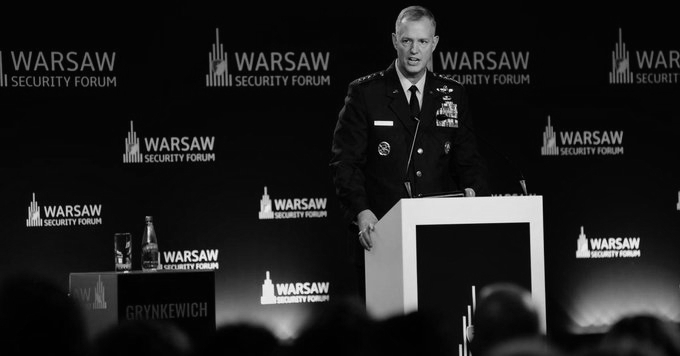
NATO remains “ready to fight tonight” if Russia launches an attack, the alliance’s top military commander, General Alexus G Grynkewich, said on Tuesday, warning Moscow that any aggression would be met with a forceful response.
Speaking at the Warsaw Security Forum in Poland, Grynkewich, NATO’s Supreme Allied Commander Europe, said a conflict with Russia was neither imminent nor inevitable. However, he warned that the alliance would defeat Russian forces and dismantle the systems supporting their military operations if Moscow launched an attack.
“Should the adversary choose to press the attack or commit his reserves, we will break the warfighting system engaged against us,” Grynkewich said. He added that NATO’s response would target not only attacking troops but also the infrastructure, logistics and command structures sustaining them.
His remarks come amid growing European concerns that Russian President Vladimir Putin could expand the war beyond Ukraine. Several European countries have recently reported alleged Russian operations targeting critical infrastructure. Germany said Russia was behind a plot to blow up a Ukrainian aircraft at Leipzig airport, Estonia blamed Moscow for an arson attack on a defence company, and the UK said it had foiled a Russian plot targeting a drone facility near London.
Grynkewich outlined NATO’s three-step strategy of “block, blunt and break”, describing it as the alliance’s “theory of victory” against Russian aggression.
“We will block the initial attack. If the attack persists, we will blunt it and prevent any enemy advance. And if required, we will break the enemy’s forces and the operational war-fighting system arrayed against us,” he said.
Drawing lessons from the wars in Ukraine and West Asia, the general said NATO would combine precision weapons with “affordable mass”, including autonomous systems, drones and electronic warfare capabilities.
He also stressed that NATO would not seek to capture Russian territory, arguing that defeating Moscow’s forces at the tactical and operational levels would deny Putin a justification for further escalation.
Grynkewich reaffirmed Washington’s commitment to NATO, pointing to the deployment of thousands of US personnel along the alliance’s eastern flank. However, questions remain over the extent of American military support under US President Donald Trump, whose approach to Russia and the Ukraine war has raised concerns among European allies.