
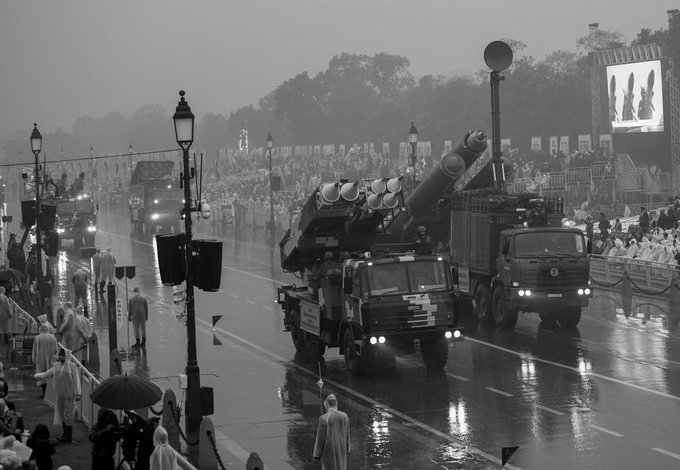
R-Day Parade to see many firsts: Suryastra system, Bhairav Battalion, Bactrian camels
Marking 150 years of “Vande Mataram”, rehearsals are in full swing for the Republic Day event, with troops and contingents training for days along Kartavya Path, including in rain and adverse weather conditions. Officials said the sustained practice, despite challenging weather, reflects the operational resilience and discipline expected of the armed forces ahead of the main ceremony on January 26.
President of the European Commission Ursula von der Leyen and President of the European Council Antonio Costa are scheduled to arrive in New Delhi on January 25 and will attend the parade as chief guests on January 26. Their visit, which will continue until January 27, will include high-level engagements such as the India-EU summit , reflecting the growing strategic and economic depth of the partnership. In a recent address at the World Economic Forum in Davos, von der Leyen described the proposed India-EU trade agreement as the “mother of all deals” , underlining its scale and significance at a time of global economic realignment. A small European Union contingent, led by an officer of colonel rank and followed by four flag-bearers on vehicles, will also take part in the parade.
The 77th Republic Day Parade on January 26 will project a decisive shift in India’s military posture, showcasing indigenous deep-strike systems, agile combat formations and a battle-ready presentation of forces that underline the country’s focus on strategic autonomy and readiness for dynamic warfare. Around 6,000 defence personnel will take part in the 90-minute ceremony , which will feature 18 marching contingents and 13 bands.
A key highlight will be the first public showcasing of the Universal Rocket Launcher System Suryastra , an indigenously developed platform capable of surface-to-surface strikes of up to 300 kilometres. Officials said the system strengthens the Army’s deep-strike capability by enabling precision attacks on enemy command centres, logistics hubs and air defence assets, while reducing reliance on imported weapon systems.
The parade will also feature the newly raised Bhairav light commando battalion, created to bridge the operational gap between conventional infantry and special forces. Raised around October last year, the unit is structured for rapid, high-intensity operations in forward areas and is equipped with drones, counter-drone systems, loiter munitions and advanced communications to respond swiftly to evolving battlefield situations.
Major General Navraj Dhillon, Chief of Staff, Delhi Area, said other key Army assets on display will include BrahMos, the Akash weapon system, the Medium Range Surface-to-Air Missile system, the Advanced Towed Artillery Gun System, the Dhanush artillery gun, Shaktiban platforms and a static display of drones. The newly raised Shaktiban Regiment in the artillery arm, equipped with drone, counter-drone and loiter munition capabilities, will also make its debut.
In a departure from tradition, Army platforms and personnel will move down Kartavya Path in a phased battle array formation, mirroring actual combat deployment. Officials said the sequence will begin with reconnaissance elements and progress through combat systems and logistics units, all in battle gear, reflecting a shift towards network-centric and integrated warfare.
The iconic 61 Cavalry will appear in full battle gear for the first time. Lieutenant General Bhavnish Kumar, General Officer Commanding, Delhi Area, will serve as Parade Commander, while his son, Captain Ahaan Kumar, will lead the 61 Cavalry contingent with his charger Ranveer. An animal contingent comprising Zanskar ponies, Bactrian camels, raptors and Army dogs will also take part, with Remount Veterinary Corps officer Captain Harshita Raghav describing the animals as silent warriors and vital force multipliers.
The aerial component will follow a similar battle array concept, with a flypast of 29 aircraft including Rafale, Su-30, P-8I, MiG-29, Apache, Light Combat Helicopter, Advanced Light Helicopter, Mi-17 helicopters and transport aircraft such as the C-130 and C-295.
The ceremonial event will begin with Prime Minister Narendra Modi paying homage to fallen soldiers at the National War Memorial. Officials said the dominant theme of this year’s celebrations, symbolises the blend of national identity, military strength and self-reliance that India seeks to project amid rapid geopolitical and technological change.