
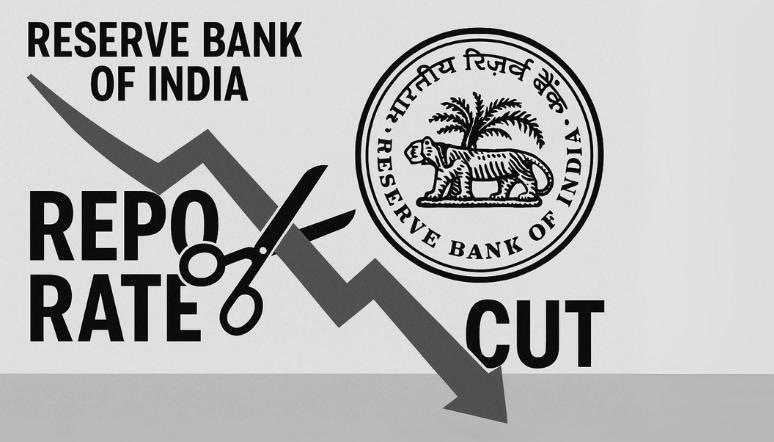
RBI cuts policy rate to 5.25% to boost growth, loans to get cheaper
In a surprise move aimed at boosting economic growth, the Reserve Bank of India (RBI) on Friday cut the key policy repo rate by 25 basis points to 5.25%, making loans cheaper for housing, auto, and commercial borrowers. The decision, announced during the fifth bi-monthly monetary policy review of the current fiscal, was unanimously supported by the Monetary Policy Committee (MPC).
The rate cut comes despite the rupee hitting a historic low, crossing 90 against the US dollar, making this an unexpected step. Typically, lowering rates could weaken the currency further, but analysts say the RBI is confident in the strength and resilience of Indian markets, trusting its economic projections and aiming to stimulate growth through increased money flow.
The move is supported by falling retail inflation, which dropped to a record low of 0.25% in October, the lowest since the Consumer Price Index (CPI) series was introduced. At the same time, India’s GDP grew 8.2% in the second quarter of FY26, a six-quarter high, giving the RBI room to reduce rates without triggering inflation. Reflecting stronger-than-expected performance, the central bank has raised its FY26 GDP growth forecast to 7.3% from 6.8%.
The repo rate has steadily declined over the year. It was cut by 25 basis points in February to 6.00%, another 25 basis points in April to 5.75%, 50 basis points in June to 5.50%, and now 25 basis points in December to 5.25%. While this is low in recent years, it is not the lowest ever. During the COVID‑19 pandemic in 2020, the repo rate had fallen to 4.00% to support the economy.
The rate cut is expected to reduce borrowing costs, stimulate credit demand, and boost investment and spending. Because the rupee is already weak, this move could put slight short-term pressure on the currency, making imports more expensive. However, the RBI is betting that a faster-growing economy and stronger credit flow will support the rupee in the medium term.
Economists describe the move as an indication that the RBI trusts the pace of Indian markets and its own growth projections, choosing to prioritize economic expansion while carefully monitoring inflation. By boosting liquidity, the central bank aims to maintain momentum in investment and consumption, helping the economy navigate currency fluctuations and global uncertainties.