
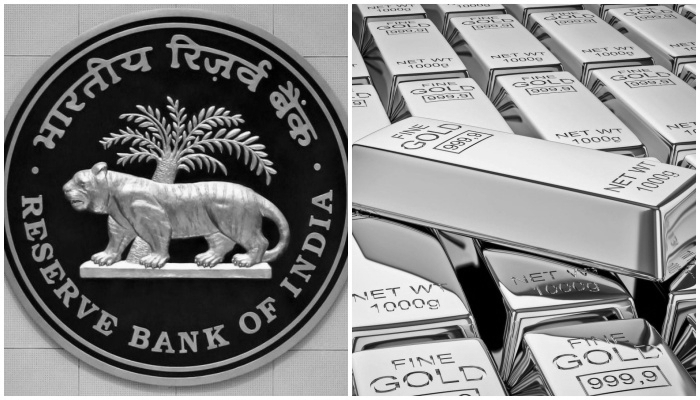
RBI cuts dollar exposure, US Treasury holdings drop under $200 billion
India’s central bank has significantly reduced its US Treasury holdings to below $200 billion , trimming exposure by more than $50 billion in just one year . Holdings fell to about $190.7 billion by October 2025, marking a 21 percent decline year-on-year and the first annual drop in four years. Analysts say this move reflects the RBI’s strategic shift in foreign asset allocation , aimed at reducing reliance on dollar-denominated assets while enhancing reserve stability amid global economic uncertainties.
At the same time, India’s gold reserves climbed to a record 880.18 metric tonnes , now accounting for 13.6 percent of total foreign exchange reserves , up from 9.3 percent a year earlier. This surge in gold holdings underscores the RBI’s push to diversify its reserve portfolio toward safe-haven assets. In global context, India’s official gold reserves are among the top ten central bank holdings worldwide , representing roughly 2.5 percent of total central bank gold , while households and temples are estimated to hold around 25,000 tonnes , making India one of the largest overall gold holders globally. The RBI reported bringing about 64 tonnes of gold back to India in the first half of FY 2026 and increasing the share of gold held domestically to more than 65 percent of its total gold stock, highlighting a strategic approach to reserve location as part of overall management in a volatile global environment .
Despite these compositional changes, India’s overall foreign exchange reserves remain stable at about $685 billion , demonstrating that the RBI’s strategy is focused on diversification and resilience rather than shrinking total reserves. By cutting US Treasury exposure and boosting gold allocations, the central bank strengthens its buffer against currency volatility, rising global bond yields, inflation pressures, and geopolitical tensions .
China has been trimming its US Treasury positions over recent years, with holdings declining from over $900 billion in 2022 to around $756-$780 billion by mid-2025, reflecting a strategy to optimize reserves and reduce reliance on dollar assets. Brazil has also reduced its Treasury holdings, aligned with broader BRICS diversification trends; in some months, China, India, and Brazil collectively cut about $29 billion in Treasuries in a single reporting cycle. Hong Kong’s US Treasury holdings have similarly moved lower year-on-year, reflecting broader reserve diversification, while Saudi Arabia’s holdings declined modestly through 2025, dropping around $4.7 billion year-on-year to total approximately $126-$127 billion, reflecting portfolio shifts and strategic rebalancing. Across the global system, this move away from heavy Treasury exposure toward gold and other assets highlights a nuanced approach by reserve managers. Emerging-market and developing economies are trimming holdings, while advanced economies such as the United Kingdom, Japan, Canada, and UAE have increased Treasury exposure, illustrating varied strategies in response to global economic pressures.
The dollar remains the primary global reserve currency , supported by deep and liquid financial markets. However, sustained diversification by countries like India, China, and Brazil reflects a long-term reassessment of reserve risks and a deliberate effort to build resilience against future shocks.
Overall, India’s latest adjustments cutting US Treasury holdings, raising gold reserves, and maintaining total forex stability reflect a strategic shift in foreign asset allocation , emphasizing less reliance on dollar assets, more emphasis on gold, and broader diversification to strengthen economic stability in an increasingly complex global landscape.