
Razed to Rubble, Rebuilt in Faith: Somnath at 75 Is India's Greatest Comeback Story
There are temples in India that inspire devotion. There are monuments that preserve history. And then there is Somnath, a place where faith, memory, destruction, sacrifice and national resurgence come together in one extraordinary story.
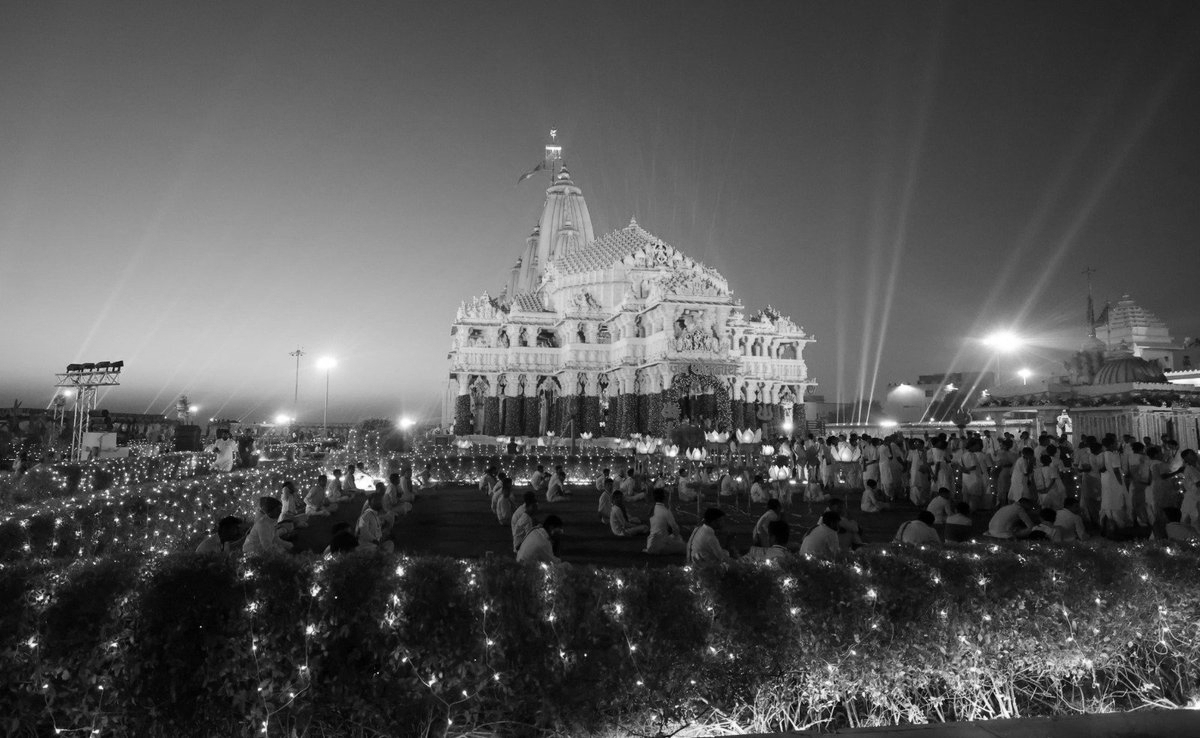
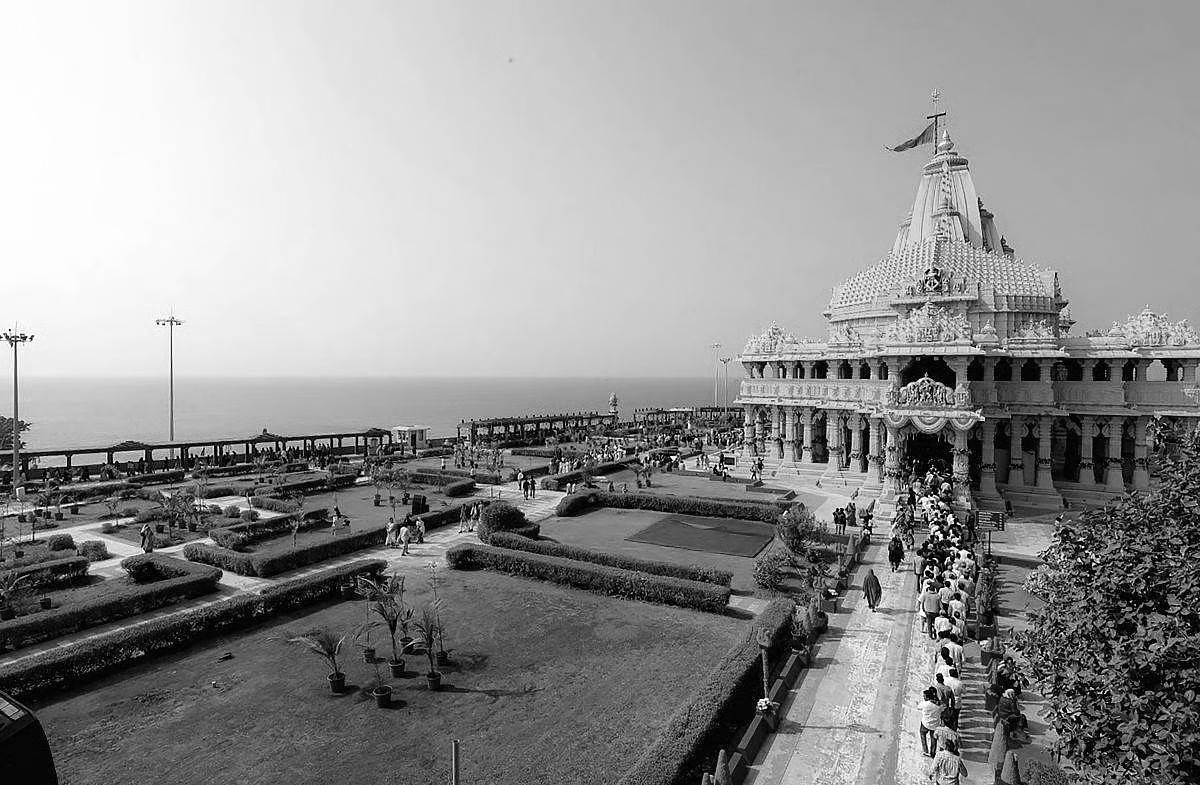
Standing on the shores of the Arabian Sea in Gujarat’s Prabhas Patan, Somnath is not merely a sacred structure. It is a witness to India’s civilisational endurance. For nearly a thousand years, the temple has seen invasions, destruction, rebuilding, political upheaval and cultural revival. Yet it survived. Not just in stone, but in the collective consciousness of millions.
This year marks two deeply symbolic milestones: 1,000 years since the first recorded attack on Somnath in 1026, and 75 years since the temple’s reopening in independent India in 1951. The commemorative event, named Somnath Swabhiman Parv, is not just a celebration of a temple’s history. It is being seen as a reflection of India’s journey from repeated humiliation to cultural confidence.
More Than a Temple
Somnath is regarded as the first among the twelve Jyotirlingas of Lord Shiva, giving it immense spiritual importance in Hindu tradition. Ancient texts and legends connect the temple with Lord Shiva, Chandra Dev, and even the final earthly moments of Lord Krishna.
But what transformed Somnath into a national symbol was not only devotion. It was survival.
The temple’s history is often described as a cycle of destruction and reconstruction. Historians and traditional accounts mention repeated invasions beginning in the 11th century. The attack by Mahmud of Ghazni in 1026 became one of the most defining moments in its history. Over the centuries, the temple was damaged and rebuilt multiple times by kings, devotees and regional rulers who refused to let it disappear.
That is what makes Somnath unique. Many structures vanish after destruction. Somnath kept returning.
From the reconstruction efforts of King Kumarapala in the 12th century to the devotion of Ahilyabai Holkar in the 18th century, every generation added another chapter to its survival story. The temple became less about architecture and more about continuity — the idea that faith could outlive violence.
The Reconstruction That Became a National Statement
After Independence, the ruins of Somnath caught the attention of Sardar Vallabhbhai Patel, who believed that rebuilding the temple was not just a religious act but a civilisational responsibility.
When Patel visited Somnath in 1947, India itself was emerging from Partition, trauma and uncertainty. The decision to reconstruct the temple carried enormous emotional weight. It symbolised a newly independent nation reclaiming its cultural confidence after centuries of foreign rule.
The temple was rebuilt through public participation rather than state funding, making it a people’s movement as much as a national project. On May 11, 1951, India’s first President Dr Rajendra Prasad inaugurated the rebuilt temple and described it as a symbol of the country’s spiritual resurgence.
That moment remains historically significant even today because it represented something larger than religion. It reflected a nation attempting to reconnect with its civilisational roots without apology.
Why Somnath Still Matters Today
In modern India, heritage sites often become frozen monuments of the past. Somnath, however, continues to function as a living institution.
Nearly one crore devotees visit the temple annually, making it one of India’s major pilgrimage centres.
But the transformation of Somnath in recent years has gone beyond religion.
The temple trust has increasingly focused on sustainability, women’s empowerment, skill development and welfare initiatives. Flowers offered at the temple are converted into compost. Plastic waste is recycled into paver blocks. Rainwater harvesting and sewage treatment systems are being used extensively. A Miyawaki forest with thousands of trees has also been developed in the region.
Perhaps the most striking aspect is women’s participation. Hundreds of women are now directly employed in various temple-related services, from managing Bilva Van projects to handling prasad distribution and dining operations. This has turned Somnath into not only a centre of pilgrimage but also a source of local livelihood and economic dignity.
In many ways, the temple today reflects a larger national idea: preserving heritage while adapting to modern realities.
The Politics and Emotion Around Somnath
Somnath has always carried political and cultural significance far beyond Gujarat.
For some, it represents India’s civilisational resilience. For others, it symbolises post-Independence cultural reconstruction. Over decades, the temple has remained deeply connected to conversations about identity, heritage and national memory.
Prime Minister Narendra Modi, who currently chairs the Somnath Trust, has repeatedly described the temple as a symbol of India’s “unconquerable spirit.” His emphasis on the phrase “Vikas Bhi, Virasat Bhi” development along with heritage reflects how the government increasingly presents cultural restoration as part of nation-building.
Yet beyond politics, Somnath continues to evoke something emotional among ordinary Indians. The temple’s story resonates because it mirrors the broader story of Indian civilisation itself — wounded many times, but never erased.
The Forgotten Heroes of Somnath
One of the lesser-known dimensions of the Somnath narrative is the memory of local defenders who fought to protect it.
Among them is Veer Hamirji Gohil, remembered in regional folklore for sacrificing his life while defending the temple during a medieval invasion. Though historical documentation about him remains limited, his memory survives through oral traditions and local reverence.
Such stories reveal an important truth about Somnath: its survival was not only ensured by kings and governments. It was also protected by unnamed devotees, warriors and ordinary people who considered the temple inseparable from their identity.
A Temple That Became an Idea
75 years after its reopening, Somnath stands today not simply as a religious destination, but as a powerful metaphor.
It represents the ability of cultures to survive repeated attacks. It reflects how memory can outlast destruction. And it reminds India that heritage is not preserved only through museums and textbooks, but through living traditions carried across generations.
On the shores where waves endlessly strike the temple walls, Somnath continues to send the same message it has for centuries: structures may fall, but civilisations endure when people refuse to forget who they are.
That is why Somnath is not merely about the past.
It is about India’s continuing conversation with its own soul.