
Rare Wildlife Event in Odisha: First-Ever Wild Male Tiger Enters Similipal Core Zone
A male Royal Bengal Tiger has entered the core area of Similipal Tiger Reserve in Odisha, marking the first documented case of a wild male tiger naturally dispersing into the reserve from an external landscape, forest officials said.
Authorities described the development as a landmark ecological event, with officials confirming that the tiger’s movement represents a rare long-distance dispersal of nearly 1,500 kilometres across multiple forest regions of central and eastern India.
Officials also noted that the overall Royal Bengal Tiger population in India is estimated at around 3,000–3,700 individuals , based on recent national assessments, underscoring the species’ recovery alongside continued habitat fragmentation challenges.
According to Similipal Tiger Reserve field director Prakash Chand Gogineni , the tiger was first recorded entering Odisha during the December–January period. It is believed to have moved through Sundergarh, Deogarh and Dhenkanal districts before reaching Similipal’s core forest zone. However, its exact origin remains unconfirmed.
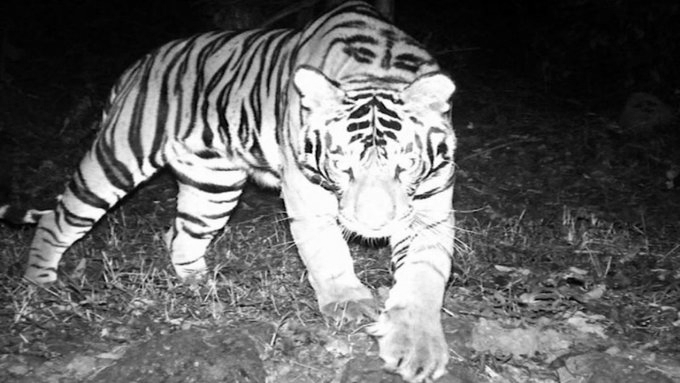
The presence of the big cat was verified through trap cameras installed under the All India Tiger Estimation exercise , which captured images of an adult male tiger inside the protected core area . Officials said its current exact location cannot be precisely determined due to dense forest cover and limited accessibility.
Forest teams are continuing intensive camera-trap monitoring and field surveillance to track the animal in the next survey cycle.
Officials highlighted that while Similipal has previously received translocated tigresses from other states as part of conservation programmes , this is the first-ever recorded instance of a naturally dispersing male tiger entering the reserve from outside India’s central tiger landscapes .
Experts view the development as a strong sign of functional wildlife corridors between central and eastern India , enabling large carnivores to move across fragmented habitats.
Similipal is globally known for its rare melanistic (black) tigers , making it one of the most unique tiger habitats in the world.