
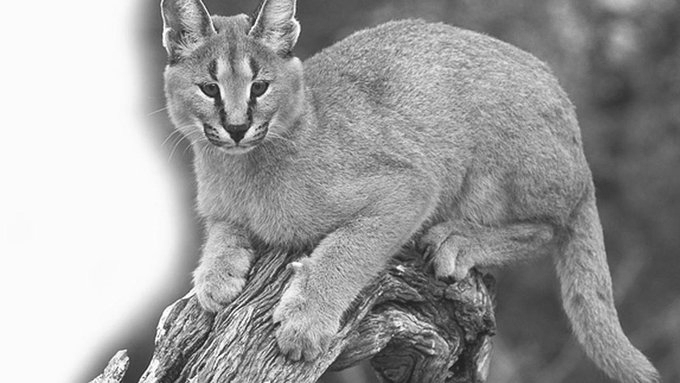
Rare Asiatic Caracals Return To Thar Desert Near India-Pakistan Border
In a significant wildlife development, officials have confirmed the presence of the rare Asiatic caracal (Caracal caracal schmitzi) in the Thar Desert near the India-Pakistan border, reviving hopes for the survival of one of India’s most elusive wild cats.
Forest department officials recorded sightings of two caracals, a male and a female , in the Shahgarh region of Rajasthan’s Jaisalmer district using camera traps and radio-collaring technology . With this confirmation, the total number of recorded individuals in the monitored landscape has now reached three.
The caracal, locally known as ‘padang’, is listed under Schedule I of the Wildlife (Protection) Act , providing it the highest legal protection in India. Once widely distributed across Rajasthan and Gujarat, the species has witnessed a population decline of over 95% , driven by habitat loss, fragmentation, prey depletion, poaching risks, and expanding human activity in desert ecosystems.
According to estimates by the Wildlife Institute of India (WII), fewer than 50–100 individuals are believed to survive in India, mainly in fragmented pockets of Rajasthan and Gujarat. The Ramgarh–Shahgarh landscape in Jaisalmer is considered one of the last potential refuges due to its dry grasslands, scrub vegetation, and low human density , which support a viable prey base.
Officials said one of the caracals has been fitted with a radio collar as part of India’s first structured tracking effort for the species , enabling scientists to study its movement patterns, territorial range, and proximity to human settlements. Continuous monitoring through expanded camera trap grids is also underway, with new installations in Ghotaru and adjoining desert areas.
Deputy Conservator of Forest Kumar Shubham said the ongoing surveillance is helping researchers better understand the species’ ecology and behaviour. Experts added that while the habitat is suitable, seasonal movement of nomadic herders and livestock pressure occasionally leads to conflict situations.
To address this, the Wildlife Institute of India has introduced a “goat bank” community compensation model , where livestock losses due to confirmed predation are replaced through a community-managed system.
Conservationists say the findings highlight both urgency and opportunity, as the caracal remains India’s rarest wild cat , requiring coordinated efforts involving scientific research, habitat protection, and community participation to ensure its long-term survival.